


 Downloader
 Free FTP
Promote Your Product
Got a product, service, or story to share? Promote it directly to our active community and boost your brand today.
Create an Ad
Publish Bulk Blog Posts
Boost Your Reach! 📝
Have articles, guest posts, or bulk stories to publish? Send your content directly to our editorial team and feature on our platform.
Email Us Your PostsUS$ 767.3 Billion Milestone: Global Compound Feed Market Outlook 2036
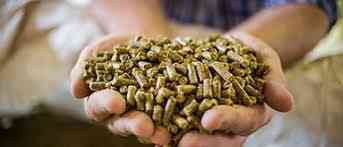
The global compound feed market is transitioning from traditional volume-based production to a high-efficiency, technology-driven sector. As global food systems prioritize sustainability and resource optimization, compound feed—a scientifically formulated blend of raw materials and additives—has become the primary lever for improving Feed Conversion Ratios (FCR) and reducing the environmental footprint of livestock farming.
The global compound feed market was valued at US$ 528.4 Billion in 2025 and is projected to reach US$ 767.3 Billion by 2036, expanding at a CAGR of 3.5% from 2026 to 2036.
- Market Drivers: Protein Demand and Industrialization
The growth toward US$ 767.3 Billion is underpinned by the structural shift in global dietary habits and farming methods:
- Rising Global Protein Consumption: Increasing middle-class populations, particularly in Asia and Africa, are driving a surge in demand for poultry, dairy, and seafood. Poultry remains the largest livestock segment, accounting for approximately 41-48% of the market share due to its rapid production cycles.
- Commercialization of Livestock Farming: The transition from "backyard" farming to large-scale, integrated commercial operations necessitates standardized, nutritionally balanced feed to ensure predictable growth and animal health.
- Expansion of Aquaculture: Aquaculture is one of the fastest-growing end-user segments. As wild-catch fisheries plateau, the reliance on high-protein, specialized aquafeed is critical for global seafood security.
- Technological Evolution: AI and Functional Additives
By 2036, feed formulation is no longer a static recipe but a dynamic, data-driven process.
- Precision Nutrition: Leveraging AI and real-time biometric sensors, producers are adopting "precision feeding." This allows for the micro-adjustment of feed formulations based on the specific age, health, and metabolic velocity of the animal, significantly reducing nutrient waste.
- Antibiotic Alternatives: Regulatory bans on Antibiotic Growth Promoters (AGPs) in the EU and North America have sparked a massive R&D pivot toward functional additives. Probiotics, prebiotics, enzymes, and phytogenics (plant-derived additives) are now standard in compound feed to optimize gut health.
- Alternative Protein Sources: To reduce reliance on traditional soybean meal and fishmeal, the industry is scaling insect protein, algal oils, and single-cell proteins. These circular economy solutions help stabilize feed costs against the volatility of the commodities market.
- Key Market Segments: Form and Livestock
The market is characterized by a preference for forms that minimize waste and maximize digestibility:
- Pellets (Dominant Form): Pelleted feed remains the market leader. The steam-conditioning and extrusion processes involved in pelleting improve nutrient density and reduce selective feeding by animals, leading to better FCR.
- Poultry & Swine: These two segments combined dominate over 65% of the total market volume. Swine production is seeing a recovery and modernization phase, particularly in APAC, following historical disease disruptions (like ASF).
- Ingredients: Cereals (corn, wheat, and barley) continue to be the primary energy source, accounting for over 40% of ingredient weight, followed closely by oilseed cakes and meals.
- Regional Outlook: The Asia-Pacific Epicenter
- Asia-Pacific (Market Leader): Accounting for over 40% of global production, the region is the epicenter of feed innovation. China and India are the primary drivers, with India projected to see significant CAGR (~8.2%–10.1%) as its dairy and poultry sectors industrialize.
- North America: A highly consolidated market focused on premiumization and traceability. Demand is stable but emphasizes high-value beef, dairy, and sustainable poultry operations.
- Europe: Leads the global market in regulatory compliance and sustainability. The focus here is on carbon-neutral feed production and strict adherence to animal welfare standards.
Conclusion: Sustainability as a Competitive Edge
Reaching a valuation of US$ 767.3 Billion by 2036 signifies that the compound feed industry has successfully decoupled growth from environmental degradation. The most successful players of the next decade—such as Cargill, ADM, Nutreco, and CP Group—are those integrating circular economy principles and digital supply chain traceability into their core operations, ensuring that the feed of the future is as efficient as it is ethical.

 English
 Arabic
 Spanish
 Portuguese
 Deutsch
 Turkish
 Dutch
Dutch
 Italiano
 Russian
 Romaian
 Portuguese (Brazil)
 Greek
Greek
