


 Downloader
 Free FTP
Why Your Optical Window Glass Scratches (And How to Stop It)
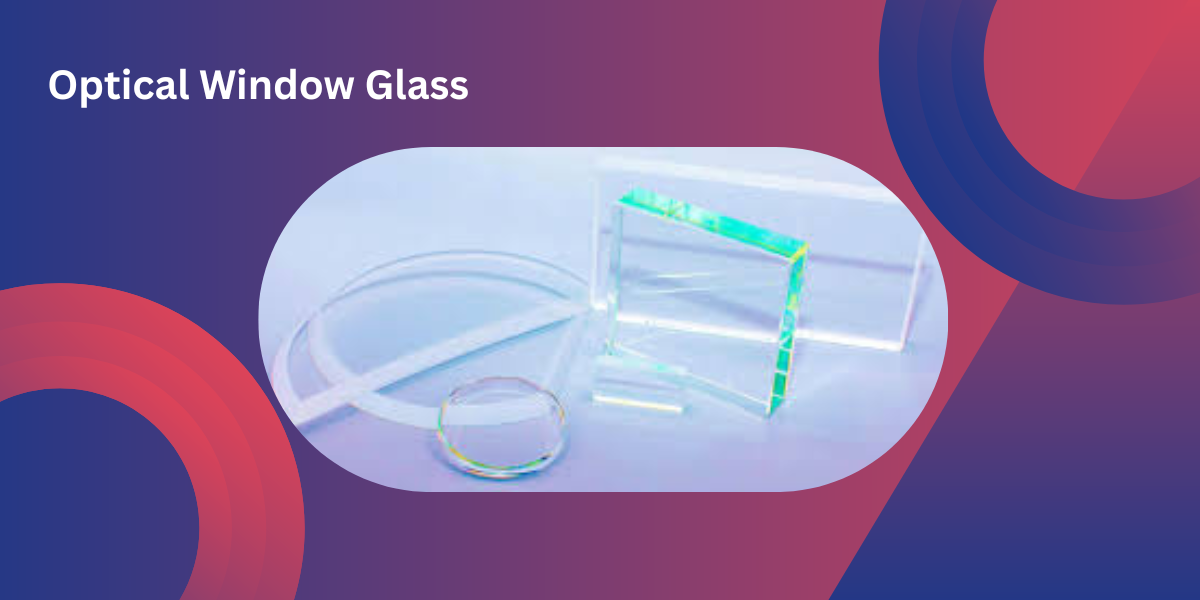
Industrial automation engineers, optical sensor designers, and field procurement managers operate under unforgiving environmental conditions. Whether deploying automated inspection cameras on a heavy manufacturing floor, lidar systems on autonomous mining vehicles, or laser-guided sorting sensors, maintaining pristine physical clarity is critical. To insulate these high-value optical components from harsh external debris, engineering teams build protective housings fronted by a precision optical window glass pane.
However, during routine field deployment or high-velocity processing cycles, technical teams regularly hit a frustrating operational bottleneck: rapid surface scratching and abrasive hazing. Despite using chemically strengthened materials, the high-exposure viewports quickly develop fine micro-scratches from dust particles, metal shavings, or high-pressure washdowns.
For B2B hardware providers and industrial operators, a scratched viewport is a costly liability. Surface abrasions scatter light, throw off sensor calibrations, trigger automated system errors, and demand frequent, expensive maintenance shutdowns. To resolve this problem permanently, engineering leads must look beyond basic glass tempering and implement advanced thin-film surface hard-coatings.
The Attrition Crisis: Why Standard Glass Succumbs to Micro-Abrasion
To eliminate surface scratching, it is vital to analyze the mechanical physics that occur when particulate matter collides with an exposed optical window glass substrate. The failure is rarely caused by a single large impact; rather, it is the cumulative result of low-load microscopic fractures.
[ Incoming Abrasive Particles / Sand / Dust ]
                    │
   ==============   ▼   ==============
   [ Uncoated Glass Surface (Mohs 5.5) ]  --> Deforms and fractures easily
   ==============   ▲   ==============
                    │
                    ▼
[ Light Scatters Across Scratch Grooves ] -> Sensor Recalibration Required
Standard float glass, and even many boron-based optical glasses, possess a baseline material hardness of approximately $5.5\text{ to }6$ on the Mohs scale. When industrial environments blast the window with airborne silica sand (which has a Mohs hardness of $7$), or when a maintenance technician wipes down a viewport covered in microscopic metal dust, the abrasive particles are physically harder than the glass substrate itself.
Under the mechanical force of the contact, the particle edges gouge directly into the glass surface, overcoming its shear strength. This creates microscopic tracks and surface cracks. As these grooves multiply, they act as miniature prisms, scattering incoming light waves irregularly. This surface hazing drops total light transmission, leading to immediate sensor blind spots and data capture errors.
The Feasible Solution: Diamond-Like Carbon (DLC) Coatings and Sapphire Caps
Resolving surface degradation without altering the underlying optical properties requires moving away from bare glass elements and integrating ultra-hard material barriers during the component manufacturing and procurement stages.
1. Implement Plasma-Enhanced Diamond-Like Carbon (DLC) Coatings
The most effective and production-ready solution for high-exposure viewports is specifying a factory-applied Diamond-Like Carbon (DLC) coating via Plasma-Enhanced Chemical Vapor Deposition (PECVD).
  [ Incoming Abrasive Media ]
      /        /        /
==============================
  [ Ultra-Hard DLC Coating ]   <-- Hardness approaches Mohs 9+ (Blocks Scratches)
==============================
  [ Optical Window Glass ]
DLC coatings duplicate the molecular structure of natural diamond on a microscopic scale, combining amorphous carbon matrices with high $sp^3$ bonding content. Applying a sub-micron layer of DLC elevates the surface hardness of your window to over $9$ on the Mohs scale, making it entirely immune to sand, grit, and steel abrasives. This diamond-grade shielding keeps the light path clean under severe continuous friction.
2. Utilize Laminated Sapphire Glass Caps
For ultra-rugged applications where wide-spectrum infrared (IR) transmission is required alongside extreme abrasion resistance, utilize a composite window structure featuring a thin sapphire glass cap bonded to a fused silica base. Single-crystal sapphire possesses exceptional natural hardness. By utilizing an optically clear, index-matched adhesive layer to bond a $0.5\,\text{mm}$ sapphire sheet to the face of your optical window, you create an armor layer that blocks physical scratches while preserving the underlying optical performance of the main glass substrate.
3. Integrate Hydrophobic and Oleophobic Top-Coats
Prevent abrasive friction from occurring by applying a fluoropolymer hydrophobic top-coat over your hard coatings. These specialized nanostructured layers lower the surface energy of the glass, causing oil, water, and sticky mud to slip off effortlessly. Because debris cannot stick to the surface, field technicians can clean the viewports with a simple low-pressure fluid rinse, eliminating the need for aggressive mechanical wiping that often introduces micro-scratches.
B2B Asset Protection and Operational Advantages
Upgrading your optical window surface engineering standards directly cuts your field maintenance costs and extends equipment life cycles.
| Sourcing Parameter | Standard Uncoated Optical Glass | Advanced DLC-Coated Glass Assemblies |
| Surface Hardness | Moderate (Mohs $5.5 - 6$) | Exceptionally High (Mohs $9+$) |
| Abrasion Resistance | Low (Scratches under standard wiping) | Military-Grade (Survives severe desert sand testing) |
| Sensor Downtime | High (Frequent replacement cycles) | Minimal (Maintains calibration for years) |
| B2B Procurement ROI | Low initial cost; high maintenance drag | High initial yield; lowest total cost of ownership |
By upgrading to scratch-resistant architectural window modules, your product engineering team avoids wasting development time on complex software error-correction codes to bypass blurred sensor data. Furthermore, delivering guaranteed scratch-free visibility enables your sales team to confidently win long-term procurement contracts in demanding fields like industrial robotics, maritime navigation, and heavy mining infrastructure.
Conclusion
Surface scratching and visual hazing are serious operational hurdles when managing high-exposure industrial viewports, but they are fully correctable through smart material engineering. Optical degradation is not an unfixable defect of using optical window glass—it is a correctable symptom of low surface hardness. By demanding factory-applied diamond-like carbon coatings, utilizing sapphire-faced composites, and implementing low-energy hydrophobic barriers, development leads can fully secure their optical paths.

 English
 Arabic
 French
 Spanish
 Portuguese
 Deutsch
 Turkish
 Italiano
 Russian
 Romaian
 Portuguese (Brazil)
 Greek
Greek
