


 Downloader
 Free FTP
USFDA Certification: The Complete Guide to Understanding FDA Approval, Compliance, and Global Market Access
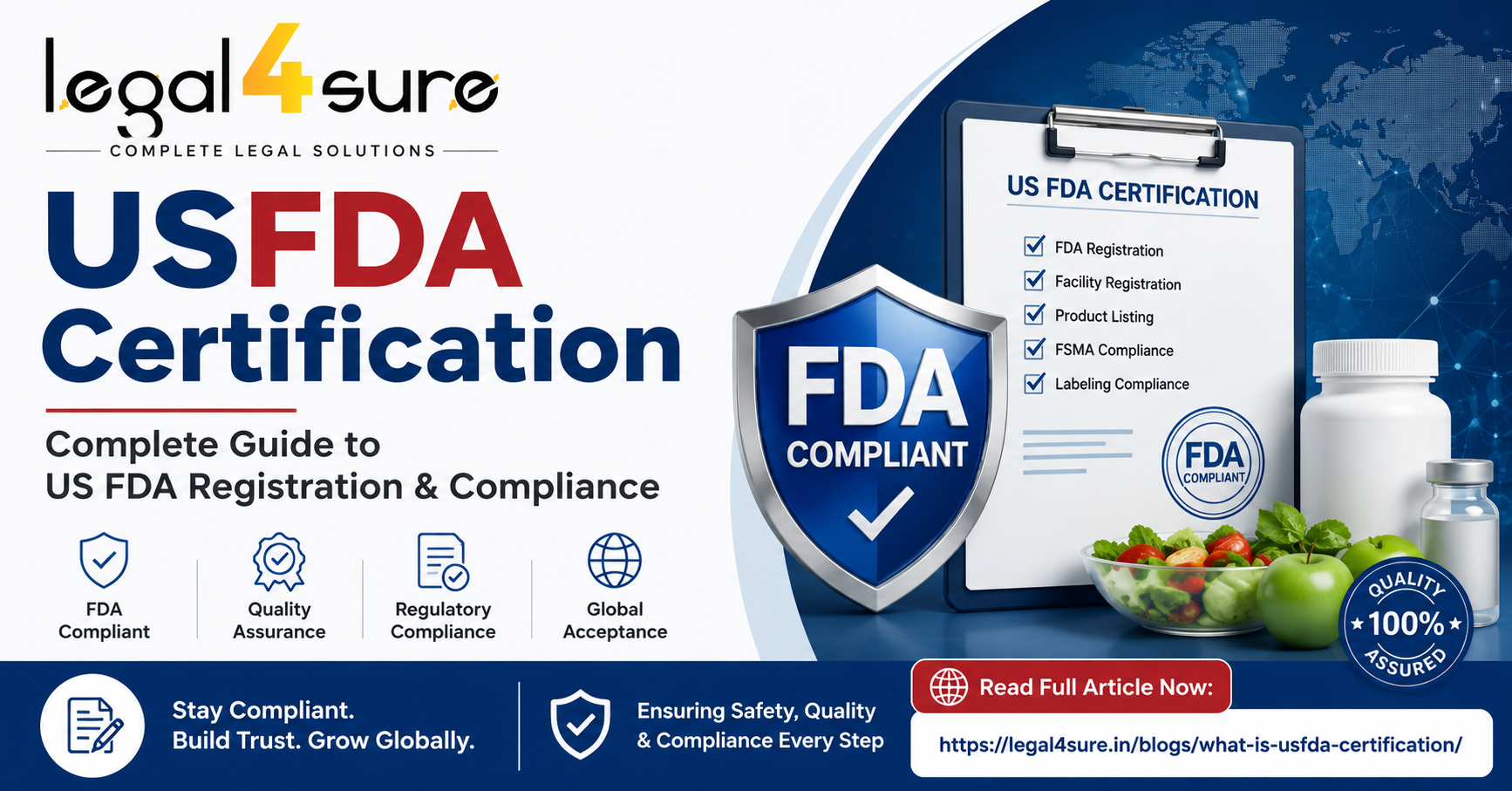
The United States Food and Drug Administration is one of the most respected and stringent regulatory bodies in the world. For any manufacturer, importer, or exporter looking to enter the American market with food products, pharmaceuticals, medical devices, or cosmetics, obtaining USFDA Certification is not merely a procedural formality — it is a fundamental requirement that determines whether a product is legally permitted for sale in the United States. Companies that understand this process early and invest in meeting the necessary standards gain a significant competitive advantage over those who treat compliance as an afterthought.
Over the years, USFDA Certification has become a gold standard in global trade. Whether you are a pharmaceutical company based in India, a food processing unit in Mexico, or a medical device manufacturer in Europe, demonstrating compliance with FDA regulations signals to buyers, distributors, and consumers that your products meet some of the highest safety and quality benchmarks in existence. This article walks you through everything you need to know about USFDA Certification — from its foundational principles and the regulatory framework that governs it, to the application process, post-certification obligations, and why it matters so profoundly for businesses operating in today's global marketplace.
What Is USFDA Certification and Why Does It Matter
The USFDA Certification is a formal recognition granted by the U.S. Food and Drug Administration that a particular product, facility, or process complies with the applicable federal regulations under the Federal Food, Drug, and Cosmetic Act (FD&C Act). It is important to understand that the FDA does not issue a single universal "certification" for all product categories. Rather, the term USFDA Certification broadly refers to the approvals, registrations, clearances, and compliance statuses that various product types must achieve before they can legally enter or remain in the U.S. market.
The reason this certification carries such enormous weight is rooted in the FDA's mandate to protect public health. Every year, millions of consumers in the United States rely on the FDA's oversight to ensure that the medicines they take are effective and not dangerous, the food they eat is free from contamination, and the medical devices implanted in their bodies are safe. When a product or facility earns USFDA Certification or complies with FDA standards, it communicates to the entire supply chain that proper manufacturing practices, quality controls, and safety protocols have been followed at every stage of production.
For businesses, the value extends well beyond legal compliance. Many international buyers and healthcare institutions specifically demand FDA-compliant products. Insurance providers, hospital procurement committees, and large retailers in the U.S. often will not consider suppliers who cannot demonstrate FDA compliance. This makes USFDA Certification not just a regulatory milestone but a strategic business asset that opens doors to one of the world's most lucrative consumer markets.
The Regulatory Framework Behind USFDA Certification
To truly appreciate the depth and scope of USFDA Certification, one must understand the legal and institutional framework within which the FDA operates. The FDA is a federal agency under the U.S. Department of Health and Human Services (HHS). It derives its authority primarily from the Federal Food, Drug, and Cosmetic Act, first enacted in 1938 and significantly amended over the decades, most notably through the Drug Amendments of 1962, the Medical Device Amendments of 1976, and the Food Safety Modernization Act (FSMA) of 2011.
Each of these legislative milestones expanded the FDA's reach and strengthened the requirements that companies must meet to gain or maintain USFDA Certification. The FD&C Act establishes prohibitions on adulteration and misbranding of products and sets the framework for premarket reviews of drugs and devices. FSMA, in particular, shifted the focus of food safety from reactive enforcement to proactive prevention, introducing sweeping new rules around hazard analysis, preventive controls, and supplier verification that food facilities must now follow.
Within the FDA, different centers handle different product categories. The Center for Drug Evaluation and Research (CDER) oversees prescription and over-the-counter drugs. The Center for Biologics Evaluation and Research (CBER) handles vaccines, blood products, and gene therapies. The Center for Devices and Radiological Health (CDRH) regulates medical devices and diagnostic equipment. The Center for Food Safety and Applied Nutrition (CFSAN) oversees food, dietary supplements, and cosmetics. Understanding which center governs your product is the first step toward navigating the USFDA Certification process accurately and efficiently.
Categories of Products That Require USFDA Certification
The scope of products that fall under FDA jurisdiction is vast, and the requirements for each category differ substantially. Pharmaceutical manufacturers, whether domestic or international, must comply with Current Good Manufacturing Practice (cGMP) regulations. These regulations govern every aspect of drug production, from raw material sourcing and environmental controls to batch testing and record-keeping. For a foreign manufacturer to export drugs to the U.S., their facilities must pass FDA inspections and the drugs must receive either New Drug Application (NDA) approval or Abbreviated New Drug Application (ANDA) approval, depending on whether the product is a novel drug or a generic.
Medical device manufacturers face a similarly rigorous pathway to USFDA Certification. Class I devices, which pose the least risk, are generally exempt from premarket review but must still comply with general controls. Class II devices require 510(k) clearance, which means the manufacturer must demonstrate substantial equivalence to a legally marketed predicate device. Class III devices, which include life-sustaining implants and high-risk equipment, require the most rigorous pathway — Premarket Approval (PMA) — which involves extensive clinical data and a thorough review by the FDA.
For food and beverage manufacturers, USFDA Certification involves facility registration under the Bioterrorism Act of 2002, compliance with preventive controls under FSMA, and adherence to FDA-established food safety standards. Foreign suppliers to U.S. food importers must also comply with the Foreign Supplier Verification Program (FSVP), which places responsibility on U.S. importers to verify that their international partners produce food in a manner consistent with U.S. safety standards. Cosmetic products, dietary supplements, and tobacco products each carry their own distinct compliance requirements under the FDA's broad regulatory umbrella.
The Step-by-Step Process of Obtaining USFDA Certification
Pursuing USFDA Certification requires careful planning, significant documentation, and often collaboration with regulatory consultants who specialize in FDA submissions. The process begins with a thorough regulatory assessment to determine the exact classification of your product and the applicable pathway for approval or clearance. This initial step prevents costly mistakes that arise when manufacturers mistakenly submit under the wrong regulatory pathway.
Once the pathway is identified, the manufacturer must prepare a comprehensive technical file or dossier that contains all the information the FDA needs to evaluate the product. For drugs, this includes preclinical data, clinical trial results, chemistry and manufacturing controls (CMC), and proposed labeling. For medical devices, it includes device description, performance data, biocompatibility testing, and software documentation if applicable. For food facilities, it includes hazard analysis plans, sanitation standard operating procedures, and evidence of employee training.
Facility inspection is a critical component of USFDA Certification for pharmaceutical and device manufacturers. The FDA conducts pre-approval inspections (PAIs) to verify that the manufacturing facility is capable of producing the product in accordance with cGMP regulations. These inspections are unannounced for domestic facilities, though foreign facilities typically receive some advance notice. An inspection that results in a Form 483 observation or a Warning Letter can delay or prevent approval, making it essential for companies to maintain inspection readiness at all times.
After submission, the FDA review process varies in length depending on the product type and complexity of the application. Standard drug applications are reviewed within ten to twelve months, while priority review applications may be evaluated within six months. Medical device 510(k) submissions typically receive a decision within 90 days. Throughout the review period, the FDA may issue additional information requests, and the manufacturer must respond promptly and comprehensively to avoid further delays in the USFDA Certification timeline.
Post-Certification Obligations and Maintaining USFDA Certification
Obtaining USFDA Certification is not a one-time achievement that can be set aside after the approval letter arrives. The FDA's regulatory framework places ongoing obligations on certified companies to ensure continued compliance throughout the product's commercial life. Pharmaceutical manufacturers must submit periodic safety update reports, adverse event reports, and annual product quality reviews. Any significant changes to manufacturing processes, formulations, or facilities must be reported to the FDA and may require prior approval depending on the nature of the change.
Medical device manufacturers with USFDA Certification must maintain a robust quality management system (QMS) that aligns with FDA's Quality System Regulation (QSR) under 21 CFR Part 820. This system must cover design controls, purchasing controls, corrective and preventive actions (CAPA), and complaint handling. Device manufacturers must also submit Medical Device Reports (MDRs) whenever a device malfunctions or causes or contributes to a serious injury or death. The FDA uses this data to monitor the real-world safety performance of approved devices and to take regulatory action when necessary.
Food facility registrations under USFDA Certification requirements must be renewed biennially, and any changes to facility ownership, location, or product categories must be updated promptly in the FDA's database. Failure to maintain active registration can result in the suspension of food importation from that facility into the United States. The FDA also conducts routine surveillance inspections of registered food facilities to verify ongoing compliance, and any deficiencies found during these inspections must be corrected through documented corrective action plans.
Common Challenges Companies Face in Achieving USFDA Certification
Despite the well-documented pathways, many companies — particularly those from emerging markets — encounter significant challenges when pursuing USFDA Certification. One of the most common obstacles is inadequate documentation. The FDA requires an extraordinary level of detail and precision in all submissions, and even minor inconsistencies between documents can trigger additional information requests or complete rejection of an application. Companies that lack experience with FDA submission formats often underestimate the volume and specificity of documentation required.
Another frequent challenge is gap in manufacturing standards. Companies that have been operating under local or regional standards such as ISO or WHO GMP sometimes discover during pre-submission audits that their systems fall short of FDA's specific cGMP expectations. Bridging these gaps requires investment in facility upgrades, equipment calibration, personnel training, and documentation system overhauls — all of which take time and financial resources before the pursuit of USFDA Certification can meaningfully progress.
Language and cultural differences can also create communication barriers during the FDA review process. Companies must respond to FDA queries in clear, precise, and scientifically rigorous English. Misinterpreting a query or providing an ambiguous response can set back an application by months. Regulatory consultants with direct experience in FDA interactions can be invaluable in these situations, translating technical complexity into the specific format and language the FDA expects.
The Strategic Value of USFDA Certification in Global Trade
Beyond the legal requirements, USFDA Certification serves as a powerful commercial differentiator in the global marketplace. Countries around the world — from Australia to Brazil, from Saudi Arabia to Japan — have incorporated FDA compliance standards into their own regulatory frameworks or use FDA approval as a benchmark when evaluating foreign products for import. This means that a company that has successfully achieved USFDA Certification often finds that entry into other regulated markets becomes considerably smoother.
For pharmaceutical exporters in countries like India, South Korea, and China, FDA approval is frequently the single most important milestone in a company's international expansion strategy. A drug approved by the FDA commands premium pricing and opens access to the world's largest pharmaceutical market. For food exporters, FSMA compliance and USFDA Certification signals to global buyers and retailers that the exporter meets the gold standard of food safety, which is increasingly required in procurement contracts for major supermarket chains and institutional buyers worldwide.
Investors and capital markets also respond positively to FDA compliance milestones. For biotech startups and medical device companies, receiving FDA clearance or approval can significantly boost valuation, attract new funding rounds, and signal to the market that the company's product portfolio is grounded in solid science and regulatory credibility. The reputational value of USFDA Certification therefore extends into corporate finance, investor relations, and competitive positioning in ways that transcend the purely regulatory dimension.
Frequently Asked Questions About USFDA Certification
What is the difference between FDA registration and FDA approval?
FDA registration is a mandatory listing process where facilities that manufacture, process, pack, or store food, drugs, or devices for the U.S. market must formally register their operations with the FDA. It does not imply that the FDA has reviewed or approved the products made at that facility. FDA approval, on the other hand, is a formal decision by the agency after a comprehensive review of scientific evidence that a specific drug, biologic, or high-risk device is safe and effective for its intended use. Both are components of the broader USFDA Certification landscape, but they serve distinct regulatory functions.
How long does the USFDA Certification process take for pharmaceutical products?
The timeline varies significantly based on the type of product and the regulatory pathway chosen. A standard New Drug Application (NDA) typically undergoes a ten-to-twelve-month review period after filing. Generic drug applications (ANDAs) may take anywhere from eighteen months to several years depending on the backlog and complexity of the submission. Priority review designations can reduce the standard review clock to six months for drugs that address unmet medical needs. Pre-submission preparation can add another one to three years depending on the complexity of clinical development.
Is USFDA Certification required for cosmetics sold in the U.S.?
The FDA does not require premarket approval for most cosmetic products, but it does require that cosmetics meet safety standards and are not adulterated or misbranded. The Modernization of Cosmetics Regulation Act of 2022 (MoCRA) introduced new requirements for cosmetic facility registration and product listing, significantly increasing the regulatory obligations on cosmetic manufacturers. Companies exporting cosmetics to the U.S. must now register their facilities and list their products with the FDA, making compliance with USFDA Certification standards more critical than ever for cosmetic brands.
Can a foreign manufacturer obtain USFDA Certification without a U.S. agent?
Foreign manufacturers of drugs, devices, and food products are generally required to designate a U.S. Agent who serves as the point of contact between the manufacturer and the FDA. While the U.S. Agent does not need to be an attorney, they must be physically located in the United States and be accessible during business hours. The U.S. Agent plays a critical role in receiving FDA communications, facilitating inspections, and ensuring that time-sensitive regulatory correspondence does not go unanswered — all of which are essential to maintaining USFDA Certification status.
What happens if a company fails an FDA inspection?
A failed FDA inspection can have serious consequences, ranging from the issuance of a Form 483 with observations that require a written response, to a Warning Letter that may trigger import alerts, product seizures, or injunctions. In severe cases, the FDA may pursue criminal prosecution of responsible individuals. Any of these outcomes can delay or revoke USFDA Certification for specific products or entire facilities. Companies that receive adverse inspection outcomes must respond promptly with detailed corrective action plans and demonstrate remediation before the FDA will resume or approve product applications from that facility.
Conclusion
The journey toward USFDA Certification is demanding, detailed, and deeply consequential for any business seeking access to the United States market or aiming to build a globally recognized brand built on quality and safety. It demands that companies invest in their internal systems, their documentation practices, their facility standards, and their people — long before a single application form is submitted. But the rewards of achieving and maintaining USFDA Certification are equally significant: legal market access, elevated brand credibility, expanded commercial opportunities, and the quiet confidence that comes from knowing your products meet the highest regulatory standards in the world.
Companies that approach USFDA Certification as a genuine commitment to quality rather than a bureaucratic hurdle tend to navigate the process more successfully and build organizations that are better prepared for long-term growth. In a world where consumers are increasingly informed and regulatory scrutiny is only intensifying, USFDA Certification is not just a badge — it is the foundation of trust between a manufacturer and the market it serves.
Source:- https://ok-gud.com/blogs/108885/USFDA-Certification-The-Complete-Guide-to-Understanding-FDA-Approval-Compliance

 English
 Arabic
 French
 Spanish
 Portuguese
 Deutsch
 Turkish
 Italiano
 Russian
 Romaian
 Portuguese (Brazil)
 Greek
Greek
