


 Downloader
 Free FTP
US$ 15.3 Billion Milestone: Global Electric Wheelchair Market Outlook 2036
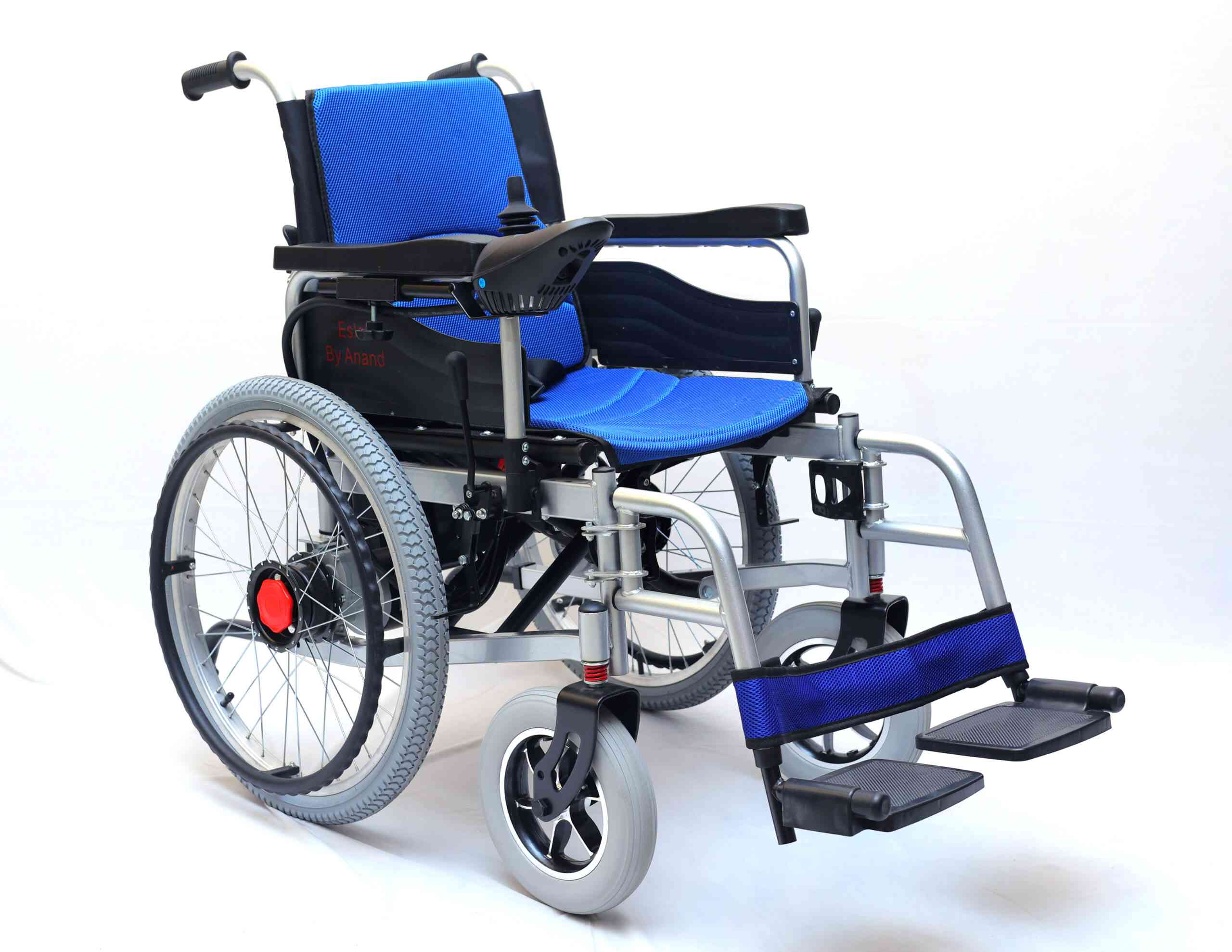
The global electric wheelchair market is moving beyond its traditional role as clinical medical equipment, evolving into a high-tech sector focused on lifestyle mobility and autonomous independence. By 2036, the industry is defined by the integration of AI-assisted navigation, ultra-lightweight carbon fiber frames, and a global demographic shift that prioritizes "aging in place."
The global electric wheelchair market size was valued at US$ 5.8 Billion in 2025 and is projected to reach US$ 15.3 Billion by 2036, expanding at a robust CAGR of 9.2% from 2026 to 2036.
- Market Drivers: Demographic Shifts and Healthcare Policy
The journey toward US$ 15.3 Billion is anchored in a landscape where mobility assistance is becoming a standard health right:
- Global Aging Populations: According to the WHO, the global population aged 60+ will reach 1.4 billion by 2030. This creates a predictable, sustained demand for powered mobility solutions as age-related conditions like arthritis and cardiovascular decline impact independent movement.
- The "Aging in Place" Mandate: Healthcare systems, particularly in Europe and North America, are increasingly funding powered devices that support home-based care. This reduces the burden on long-term care facilities and drives retail and residential sales of compact, indoor-friendly wheelchairs.
- Expansion of Reimbursement: Government initiatives (such as CMS in the U.S. and national health programs in the EU) are expanding coverage for medically necessary power wheelchairs, making high-end technology accessible to a broader demographic.
- Technological Evolution: Smart Systems and Advanced Materials
By 2036, the "heavy, bulky" power chair has been replaced by agile, smart mobility platforms.
- AI and Collision Avoidance: Modern electric wheelchairs feature 360-degree sensor arrays and AI-driven obstacle detection. Similar to automotive safety systems, these chairs can automatically brake or navigate around obstacles, providing peace of mind for users with vision or motor-control impairments.
- Advanced Battery Technology: The shift to high-density Lithium-Ion and Solid-State batteries has extended travel ranges to 20+ miles while significantly reducing the overall weight of the chair. Charging times have dropped from overnight to under two hours.
- Connectivity and Diagnostics: "App-connected" chairs allow for remote mechanical diagnostics and real-time battery monitoring. For caregivers, GPS tracking and "remote-control mode" allow them to assist with docking or navigation via a smartphone.
- Market Segments: Maneuverability vs. Performance
The market caters to distinct environments and user needs:
- Front-Wheel Drive (Maneuverability): Growing rapidly in the Home Care segment due to its tight turning radius, making it ideal for compact indoor living and navigating narrow doorways.
- Rear-Wheel Drive (Stability): Remains the preference for users needing stronger outdoor performance. These models offer better weight distribution and ground clearance for traversing uneven urban terrain.
- Foldable & Lightweight (Fastest Growing): Utilizing carbon fiber and magnesium alloys, these chairs often weigh under 50 pounds. This segment is thriving as users seek travel-ready solutions that fit into standard car trunks and airplane cargo holds.
- Regional Outlook: The APAC Engine and North American Maturity
- North America (41.1% Market Share in 2025): The largest market, driven by sophisticated reimbursement frameworks and high clinical awareness. The region leads in the adoption of premium, smart-assist technologies.
- Asia-Pacific (The Growth Engine): Projected to record the highest CAGR, spearheaded by South Korea (10.2% CAGR), China, and India. Rapid urbanization and government-backed "Smart City" accessibility initiatives are fueling a massive volume surge.
- Europe: A key market focused on high-quality engineering and ergonomics. EU countries are pioneers in "Circular Economy" models for mobility devices, including robust refurbishing and rental programs.
Conclusion: From Mobility Aid to Smart Interface
Reaching a valuation of US$ 15.3 Billion by 2036 signifies that the electric wheelchair is no longer just a chair—it is a sophisticated personal mobility interface. The most successful brands of the next decade will be those that prioritize user dignity and aesthetic design, moving away from "medicalized" looks toward sleek, consumer-tech aesthetics that empower users to engage fully with their communities.

 English
 Arabic
 French
 Spanish
 Portuguese
 Deutsch
 Turkish
 Dutch
Dutch
 Italiano
 Russian
 Portuguese (Brazil)
 Greek
Greek
