


 Downloader
 Free FTP
Promote Your Product
Got a product, service, or story to share? Promote it directly to our active community and boost your brand today.
Create an Ad
Publish Bulk Blog Posts
Boost Your Reach! 📝
Have articles, guest posts, or bulk stories to publish? Send your content directly to our editorial team and feature on our platform.
Email Us Your PostsBailey Rib Contractor in Thoracic Surgery: A Key Tool for Surgical Chest Closure
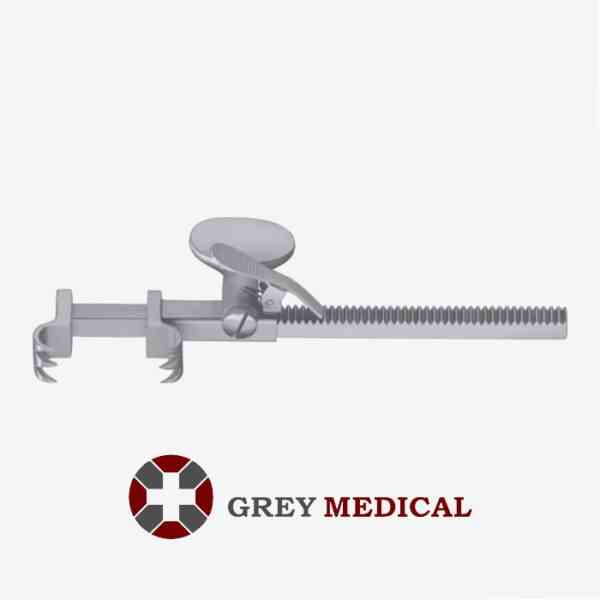
Thoracic procedures demand precision at every stage, from exposure to final closure. While much attention often goes to major operative steps, the quality of chest closure can have a direct effect on healing, stability, and patient recovery. That is where the Bailey Rib Contractor plays an important role.
This specialized rib contractor is designed to help surgeon tools approximate the ribs after thoracotomy. By bringing the rib margins closer together in a controlled way, the instrument supports a more orderly surgical chest closure process. For thoracic surgeons, trainees, and surgical instrument suppliers, understanding how this tool works is essential.
What Is a Bailey Rib Contractor?
The Bailey Rib Contractor is a hand-held surgical instrument used in thoracic surgery to assist with rib approximation during chest closure after a thoracotomy. After the chest has been opened and the required procedure completed, the surgeon must restore the thoracic wall as safely and accurately as possible. This includes aligning and approximating the ribs before final closure.
A rib contractor helps reduce the gap created during surgery. It allows the surgeon to bring the ribs toward one another with control, which can make closure more efficient and support proper anatomical alignment.
Among thoracic surgery instruments, the Bailey Rib Contractor serves a focused but valuable purpose. It is not a general retraction tool. Instead, it is bailey rib contractor used during the closure phase, where controlled rib approximation matters most.
Why Rib Approximation Matters in Thoracic Surgery
Thoracotomy involves opening the chest wall to gain access to the lungs, esophagus, mediastinum, or other thoracic structures. This approach can require significant spreading of the ribs. Once the procedure is complete, careful closure is needed to restore chest wall integrity.
Poor rib approximation can create several problems, including:
- Uneven chest wall closure
- Added tension on surrounding tissues
- Increased discomfort after surgery
- Greater difficulty in securing the final closure
- Risk of impaired healing if alignment is not well managed
This is why specialized thoracic surgery instruments are used not just for access, but also for closure. The Bailey Rib Contractor helps support this step by allowing the surgical team to approximate the ribs in a measured and practical way.
Primary Function of the Bailey Rib Contractor
The primary function of the Bailey Rib Contractor is to approximate ribs during chest closures after thoracotomy procedures. In simple terms, it helps draw the separated ribs back toward their proper position so the surgeon can proceed with closure.
This 喉镜 function is especially important because the thoracic cage is not just a rigid structure. It moves with breathing, protects vital organs, and must maintain shape and stability after surgery. A controlled surgical chest closure supports both immediate and longer-term recovery.
When using a Bailey Rib Contractor, the surgeon places the instrument so that its claws engage the ribs. The device is then adjusted to gently bring the ribs together. This can assist with:
- Restoring rib alignment
- Reducing the space between the ribs
- Improving access for suturing or wiring during closure
- Supporting a more organized closure technique
In thoracic procedures, even a simple mechanical advantage can improve workflow. The Bailey Rib Contractor gives the surgeon better control during one of the most important final steps of the operation.
Key Features of the Bailey Rib Contractor
The value of any surgical instrument depends on design, reliability, and ease of use. The Bailey Rib Contractor stands out because of several practical features.
Adjustable Claw Design
One of the most important features of this rib contractor is its adjustable claw design. The claws are made to engage the ribs securely while allowing controlled approximation.
This adjustability offers several benefits:
- It helps accommodate variation in patient anatomy
- It allows precise positioning during chest closure
- It supports gradual approximation rather than abrupt force
- It can improve surgeon control in a limited operative field
In thoracic surgery, instruments must work with accuracy and predictability. An adjustable claw system gives the operator flexibility while maintaining control over rib positioning.
Durable Stainless Steel Construction
The Bailey Rib Contractor is commonly made from high-grade stainless steel, which remains a standard material for many premium thoracic surgery instruments.
Stainless steel offers key advantages in the surgical setting:
- High strength and durability
- Resistance to corrosion
- Reliable performance through repeated sterilization cycles
- Long service life in demanding operating room use
For hospitals, surgical centers, and equipment distributors, durable construction matters. Instruments used in chest surgery must withstand regular reprocessing without losing function or structural integrity. Stainless steel supports that need well.
Stable Grip and Mechanical Control
A quality Bailey Rib Contractor is designed to give the user a firm grip and smooth mechanical action. During surgical chest closure, stability is critical. Surgeons need tools that respond precisely without slipping or requiring unnecessary force.
Good mechanical control helps with:
- Consistent rib approximation
- Reduced handling difficulty
- Better operating room efficiency
- Improved confidence during closure
Reusable Surgical Instrument Profile
Because of its stainless steel build, the Bailey Rib Contractor is generally a reusable instrument. This makes it practical for institutions that rely on durable surgical sets for thoracic procedures.
Reusable instruments remain a core part of thoracic practice because they offer:
- Long-term value
- Standardization across procedure trays
- Familiar handling for surgical teams
- Dependable performance when maintained correctly
Clinical Application in Thoracotomy Closure
The Bailey Rib Contractor is most often associated with thoracotomy closure. After intrathoracic work is complete, attention shifts to restoring the chest wall. At this point, approximation of the ribs becomes a key technical step.
Use During Chest Wall Re-Approximation
In a thoracotomy, rib spreading allows access to internal thoracic structures. Once the operation is finished, the ribs must be brought back together as part of closure. The Bailey Rib Contractor helps achieve this by mechanically drawing the ribs into closer alignment.
This can make it easier for the surgeon to place closure materials accurately. It also helps create a more controlled environment for final repair of the chest wall layers.
Support for Orderly Surgical Chest Closure
A successful surgical chest closure depends on more than speed. It requires alignment, tension control, and careful handling of tissue and bone. The Bailey Rib Contractor supports this process by giving the surgeon a way to manage the rib position before closure is completed.
In practical terms, this may help the team:
- Improve operative control during closure
- Maintain a cleaner closure field
- Reduce struggle when approximating the ribs manually
- Support a more systematic technique
Relevance for Thoracic Surgeons and Trainees
For experienced surgeons, the Bailey Rib Contractor is a familiar and useful tool. For trainees, it is a good example of how specialized thoracic surgery instruments are designed around very specific procedural needs.
Medical students and residents studying thoracic closure techniques can learn several lessons from this instrument:
- Closure is a critical part of the procedure, not just a final routine step
- Instrument design can directly affect surgical precision
- Rib approximation requires control, not force alone
- Specialized tools improve consistency in complex operations
Benefits for Surgical Equipment Distributors
The Bailey Rib Contractor is also important from a product and procurement perspective. Distributors serving thoracic surgery departments often need instruments that are clearly defined, clinically relevant, and built for repeated use.
For distributors, this rib contractor offers several selling points:
- It serves a distinct role in thoracotomy closure
- It fits within specialized thoracic surgery instruments catalogs
- Its stainless steel construction supports long-term use
- Its adjustable claw design adds functional value
- It appeals to hospitals, surgical centers, and teaching institutions
When describing the instrument to buyers, distributors can focus on its role in rib approximation and surgical chest closure, rather than presenting it as a generic surgical tool. Clear clinical relevance often helps support purchasing decisions.
What to Look for When Evaluating a Bailey Rib Contractor
Not all surgical instruments are equal in finish, fit, or durability. Whether you are a surgeon, buyer, or distributor, it helps to assess a Bailey Rib Contractor using a few practical criteria.
Build Quality
Look for smooth finishing, strong joints, and consistent alignment. The instrument should feel stable in hand and operate without stiffness or looseness.
Claw Precision
The adjustable claw design should allow secure rib engagement and controlled approximation. Precision matters because poor fit can reduce efficiency during closure.
Material Standards
High-quality stainless steel remains the preferred choice. It supports durability, corrosion resistance, and reliable sterilization performance.
Ease of Reprocessing
As with other thoracic surgery instruments, the Bailey Rib Contractor should be easy to clean, inspect, and sterilize according to standard hospital protocols.
Intended Surgical Use
The instrument should be clearly specified for thoracic procedures involving rib approximation after thoracotomy. Product clarity helps reduce confusion and supports proper tray selection.
Why the Bailey Rib Contractor Remains Relevant
Surgical practice continues to evolve, and minimally invasive techniques have changed many areas of thoracic care. Still, open procedures remain necessary in selected cases. When thoracotomy is performed, closure quality remains a major concern.
That is why the Bailey Rib Contractor continues to hold value. It addresses a specific need with a straightforward mechanical solution. It helps support accurate rib approximation, improves control during surgical chest closure, and remains a practical part of many thoracic instrument sets.
Its continued use reflects an important truth in surgery: not every essential instrument is complex. Some of the most useful tools are those that perform one task well, reliably, and safely.
Conclusion
The Bailey Rib Contractor is a specialized rib contractor used to approximate ribs during chest closure after thoracotomy. Its role in surgical chest closure is simple but important. By helping bring the ribs back into alignment, it supports chest wall restoration and a more controlled closure process.
Its adjustable claw design allows precise engagement and gradual approximation, while its durable stainless steel construction ensures strength, corrosion resistance, and repeated usability. For surgeons, students, and surgical equipment distributors, this instrument remains a valuable part of the broader family of thoracic surgery instruments.
If you are building a thoracic instrument set, studying chest closure techniques, or sourcing specialized surgical tools, the Bailey Rib Contractor deserves close attention. A well-designed closure instrument can make a real difference at one of the most important moments in thoracic surgery.

 English
 Arabic
 French
 Spanish
 Portuguese
 Deutsch
 Turkish
 Dutch
Dutch
 Russian
 Romaian
 Portuguese (Brazil)
 Greek
Greek
