


 Downloader
 Free FTP
Risk Management in Stock Market Made Simple
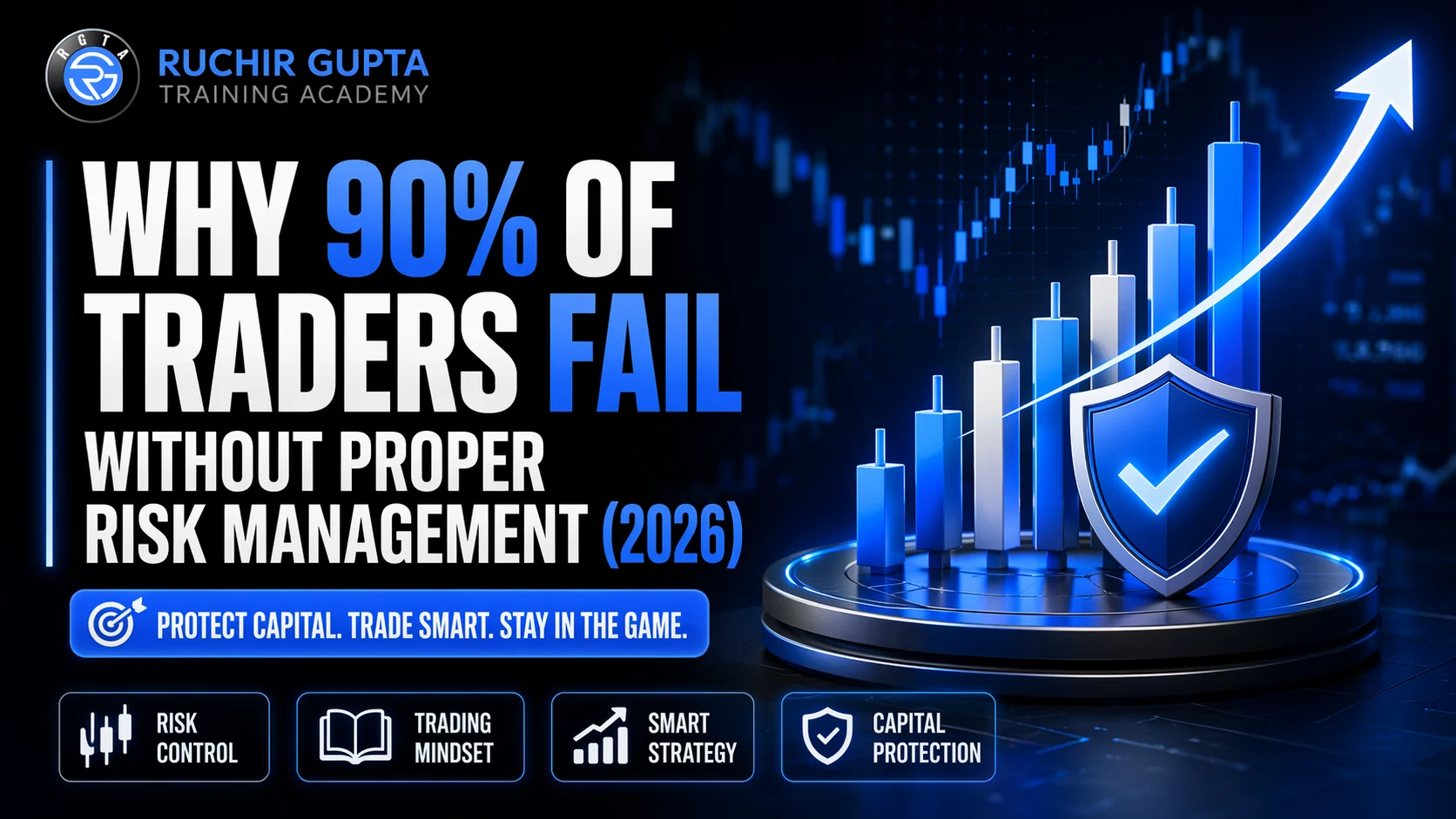
Risk Management: The Smart Investor’s Survival Guide
Introduction
Have you ever wondered why some traders survive market crashes while others lose everything overnight? The answer is not luck—it’s risk management.
Think of trading like driving a car. You can have the fastest vehicle, but without brakes, you’re heading for disaster. Similarly, even the best trading strategy fails without proper risk control.
In this guide, we’ll break down risk management in stock market and risk management in trading in the simplest way possible. Whether you're a beginner or someone exploring the best online stock trading courses in India, this article will help you protect your money and grow it wisely.
Learn risk management in stock market, risk management in trading & best online stock trading courses in India to trade smarter and safer.
What is Risk Management?
Risk management simply means protecting your money while investing or trading.
It’s about asking:
-
How much can I afford to lose?
-
What steps can I take to minimize losses?
Instead of focusing only on profits, smart traders focus on limiting losses first.
Why Risk Management Matters in Trading
Many beginners enter the market chasing quick profits. But the reality? Losses are part of the game.
Key reasons why risk management is crucial:
-
Prevents large losses
-
Protects trading capital
-
Improves long-term survival
-
Builds discipline
Without risk management in trading, even a few bad trades can wipe out your entire account.
Types of Risks in the Stock Market
Understanding risks is the first step to controlling them.
Major types include:
-
Market Risk: Prices move unpredictably
-
Liquidity Risk: Difficulty in buying/selling stocks
-
Volatility Risk: Sudden price fluctuations
-
Systematic Risk: Economic or global events
-
Unsystematic Risk: Company-specific issues
Each risk requires a different strategy to manage effectively.
Risk vs Reward: The Core Concept
Here’s a simple question: Would you risk ₹100 to earn ₹50?
Probably not.
That’s why traders use a risk-reward ratio.
Example:
-
Risk ₹100
-
Target profit ₹300
-
Ratio = 1:3
This means even if you win fewer trades, you can still be profitable.
Position Sizing Explained
Position sizing determines how much money you invest in a single trade.
A common rule:
-
Risk only 1–2% of your total capital per trade
Example:
If you have ₹1,00,000:
-
Risk per trade = ₹1,000–₹2,000
This prevents one bad trade from destroying your portfolio.
Stop Loss: Your Safety Net
A stop loss is a pre-decided exit point to limit losses.
Think of it like an emergency exit in a building—you hope you never use it, but you’re glad it’s there.
Types of stop losses:
-
Fixed stop loss
-
Trailing stop loss
-
Percentage-based stop loss
Using stop loss is one of the most important aspects of risk management in stock market.
Diversification Strategy
“Don’t put all your eggs in one basket.”
That’s diversification.
Instead of investing in one stock, spread your money across:
-
Different sectors
-
Asset types (stocks, mutual funds, bonds)
This reduces the impact of a single loss.
Emotional Control in Trading
Let’s be honest—trading is emotional.
Fear and greed often lead to:
-
Overtrading
-
Ignoring stop losses
-
Holding losing positions
Strong risk management includes emotional discipline.
Ask yourself:
-
Am I trading based on logic or emotion?
Risk Management Tools and Techniques
Modern traders have access to various tools:
-
Stop-loss orders
-
Position calculators
-
Technical indicators
-
Portfolio trackers
These tools help automate and improve your decision-making process.
Common Mistakes to Avoid
Even experienced traders make mistakes. Here are some to avoid:
-
Ignoring stop losses
-
Overleveraging
-
Trading without a plan
-
Chasing losses
-
Putting all money in one trade
Avoiding these mistakes can significantly improve your trading success.
Role of Education in Risk Management
You wouldn’t drive without learning, right?
Similarly, trading requires proper education.
Learning helps you:
-
Understand market behavior
-
Build strategies
-
Apply risk management effectively
This is where structured courses come in.
Best Online Stock Trading Courses in India
If you're serious about trading, investing in education is a smart move.
Popular options include:
-
Ruchir gupta
-
NSE Academy Certification Courses
-
Upstox Learning Center
-
Elearnmarkets
-
Trading academies offering practical training
Look for courses that focus on:
-
Risk management in trading
-
Real-world examples
-
Strategy building
Creating Your Risk Management Plan
Every trader needs a personalized plan.
Steps to create one:
-
Define your capital
-
Set risk per trade (1–2%)
-
Decide risk-reward ratio
-
Use stop loss consistently
-
Track performance
Consistency is key. A plan only works if you follow it.
Real-Life Example of Risk Management
Let’s compare two traders:
Trader A:
-
Invests ₹50,000 in one stock
-
No stop loss
-
Market crashes → loses 40%
Trader B:
-
Invests ₹10,000 per stock in 5 stocks
-
Uses stop loss
-
Loss limited to 5–10%
Who survives longer?
Obviously, Trader B.
That’s the power of smart risk management.
Final Thoughts
At the end of the day, trading is not about winning every time—it’s about staying in the game.
Risk management in stock market is your shield. It protects your capital, controls your emotions, and builds long-term success.
If you remember one thing, let it be this:
“Protect your downside, and the upside will take care of itself.”
FAQs
1. What is risk management in stock market?
Risk management in stock market refers to strategies used to minimize losses and protect investment capital while trading or investing.
2. Why is risk management important in trading?
It prevents large losses, ensures long-term survival, and helps traders stay disciplined and consistent.
3. What is the ideal risk per trade?
Most experts recommend risking only 1–2% of your total capital per trade.
4. Are stop losses necessary?
Yes, stop losses are essential. They automatically limit your losses and protect your capital.
5. Which are the best online stock trading courses in India?
Some of the best include Ruchir gupta, NSE Academy, Elearnmarkets, and Upstox learning platforms, all of which emphasize risk management in trading.

 English
 Arabic
 French
 Spanish
 Portuguese
 Deutsch
 Turkish
 Dutch
Dutch
 Italiano
 Russian
 Romaian
 Greek
Greek
