• ⚑ Illuminate Your Operations 24/7 with Alhamdaan Logistics! πŸ—οΈ πŸŒ‘
    Don't let the sunset stop your progress. Whether it’s a high-stakes construction site, oil & gas facility, or emergency outdoor event, Alhamdaan Logistics premium tower light rentals ensure maximum visibility and safety throughout the night.
    High-Performance Tower Light Rental in KSA.
    We offer professional-grade lighting for demanding environments in Saudi Arabia.
    Why Choose Our Lighting Solutions?
    •Powerful Illumination: Choose between metal halide (4 × 1000W) or energy-efficient LED (4 × 350W) models covering up to 7,000 m².
    •Extended Run Time: Our LED units are designed to run for up to 24 hours on a single tank.
    •Aramco-Compliant: Every unit is maintained to exceed the rigorous safety and operational standards of the energy sector.
    •Mobility & Versatility: Trailer-mounted units with 7m to 9m masts, forklift pockets, and low-noise engines for easy deployment on any terrain.
    •Top Brands: Reliable equipment from Atlas Copco, Generac, Doosan, and Wacker Neuson.
    Serving Your Project Locations:
    πŸ“ Dammam | Khobar | Jubail | Dhahran | Al Ahsa | Qatif | Tanajib
    Keep your night shifts safe, productive, and on schedule with the best portable lighting in the Kingdom.
    Get a Free Quote Today:
    πŸ“ž Phone/WhatsApp: +966 59 606 9993
    πŸ“§ Email: info@alhamdaanlogistics.com
    🏒 Office: Saudi Arabia, Al Amal, Dammam 32311
    🌐 Website: https://alhamdaanlogistics.com/tower-light-rental/
    #AlhamdaanLogistics #TowerLightRental #KSAConstruction #OilAndGasSaudi #NightShiftSafety #Dammam #Jubail #MobileLighting #IndustrialSafety #LEDTowerLights

    ⚑ Illuminate Your Operations 24/7 with Alhamdaan Logistics! πŸ—οΈ πŸŒ‘ Don't let the sunset stop your progress. Whether it’s a high-stakes construction site, oil & gas facility, or emergency outdoor event, Alhamdaan Logistics premium tower light rentals ensure maximum visibility and safety throughout the night. High-Performance Tower Light Rental in KSA. We offer professional-grade lighting for demanding environments in Saudi Arabia. Why Choose Our Lighting Solutions? •Powerful Illumination: Choose between metal halide (4 × 1000W) or energy-efficient LED (4 × 350W) models covering up to 7,000 m². •Extended Run Time: Our LED units are designed to run for up to 24 hours on a single tank. •Aramco-Compliant: Every unit is maintained to exceed the rigorous safety and operational standards of the energy sector. •Mobility & Versatility: Trailer-mounted units with 7m to 9m masts, forklift pockets, and low-noise engines for easy deployment on any terrain. •Top Brands: Reliable equipment from Atlas Copco, Generac, Doosan, and Wacker Neuson. Serving Your Project Locations: πŸ“ Dammam | Khobar | Jubail | Dhahran | Al Ahsa | Qatif | Tanajib Keep your night shifts safe, productive, and on schedule with the best portable lighting in the Kingdom. Get a Free Quote Today: πŸ“ž Phone/WhatsApp: +966 59 606 9993 πŸ“§ Email: info@alhamdaanlogistics.com 🏒 Office: Saudi Arabia, Al Amal, Dammam 32311 🌐 Website: https://alhamdaanlogistics.com/tower-light-rental/ #AlhamdaanLogistics #TowerLightRental #KSAConstruction #OilAndGasSaudi #NightShiftSafety #Dammam #Jubail #MobileLighting #IndustrialSafety #LEDTowerLights
    ALHAMDAANLOGISTICS.COM
    Mobile LED Tower Light Rental services | Dammam Saudi Arabia
    Mobile LED Tower Light Rental Services in Dammam, Saudi Arabia. Rent LED & diesel towers for construction, events & emergencies fast.
    Like
    2
    0 Commenti 0 condivisioni 2K Views 0 Anteprima
  • Australia's #infrastructure system and #construction industry and #mining sector and energy sector experience continuous expansion because high-grade #cables serve as essential infrastructure components.

    Read More: https://znergycable01.wixsite.com/znergycable/post/top-cable-manufacturers-in-australia-a-2026-guide
    Australia's #infrastructure system and #construction industry and #mining sector and energy sector experience continuous expansion because high-grade #cables serve as essential infrastructure components. Read More: https://znergycable01.wixsite.com/znergycable/post/top-cable-manufacturers-in-australia-a-2026-guide
    ZNERGYCABLE01.WIXSITE.COM
    Top Cable Manufacturers in Australia: A 2026 Guide
    Australia's infrastructure system and construction industry and mining sector and energy sector experience continuous expansion because high-grade cables serve as essential infrastructure components. The safety and operational efficiency and durable performance of residential and industrial and renewable energy systems depend on cable manufacturers who provide their products to the market.This guide helps you find the most trustworthy Cable Manufacturer in Australia who will operate in 2026. The
    0 Commenti 0 condivisioni 524 Views 0 Anteprima
  • Self-Aligning Bearings Market to Reach $4.3 Billion by 2030 with 6.5% CAGR

    The global Self-Aligning Bearings market is expanding steadily due to increased demand in automotive, industrial machinery, and renewable energy sectors. Valued at $2.2 billion in 2022, the market is projected to reach $4.3 billion by 2030, growing at a CAGR of 6.5% during 2023–2030. Rising adoption in heavy machinery and high-speed applications is fueling global market growth.

    Read Full Research Study: Self-Aligning Bearings https://marketintelo.com/report/self-aligning-bearings-market
    Self-Aligning Bearings Market to Reach $4.3 Billion by 2030 with 6.5% CAGR The global Self-Aligning Bearings market is expanding steadily due to increased demand in automotive, industrial machinery, and renewable energy sectors. Valued at $2.2 billion in 2022, the market is projected to reach $4.3 billion by 2030, growing at a CAGR of 6.5% during 2023–2030. Rising adoption in heavy machinery and high-speed applications is fueling global market growth. Read Full Research Study: Self-Aligning Bearings https://marketintelo.com/report/self-aligning-bearings-market
    MARKETINTELO.COM
    Self-Aligning Bearings Market Research Report 2033
    As per our latest market intelligence, the Global Self-Aligning Bearings market size was valued at $5.8 billion in 2024, and is forecasted to hit $8.9 billion by 2033, growing at a CAGR of 4.9%.
    0 Commenti 0 condivisioni 793 Views 0 Anteprima
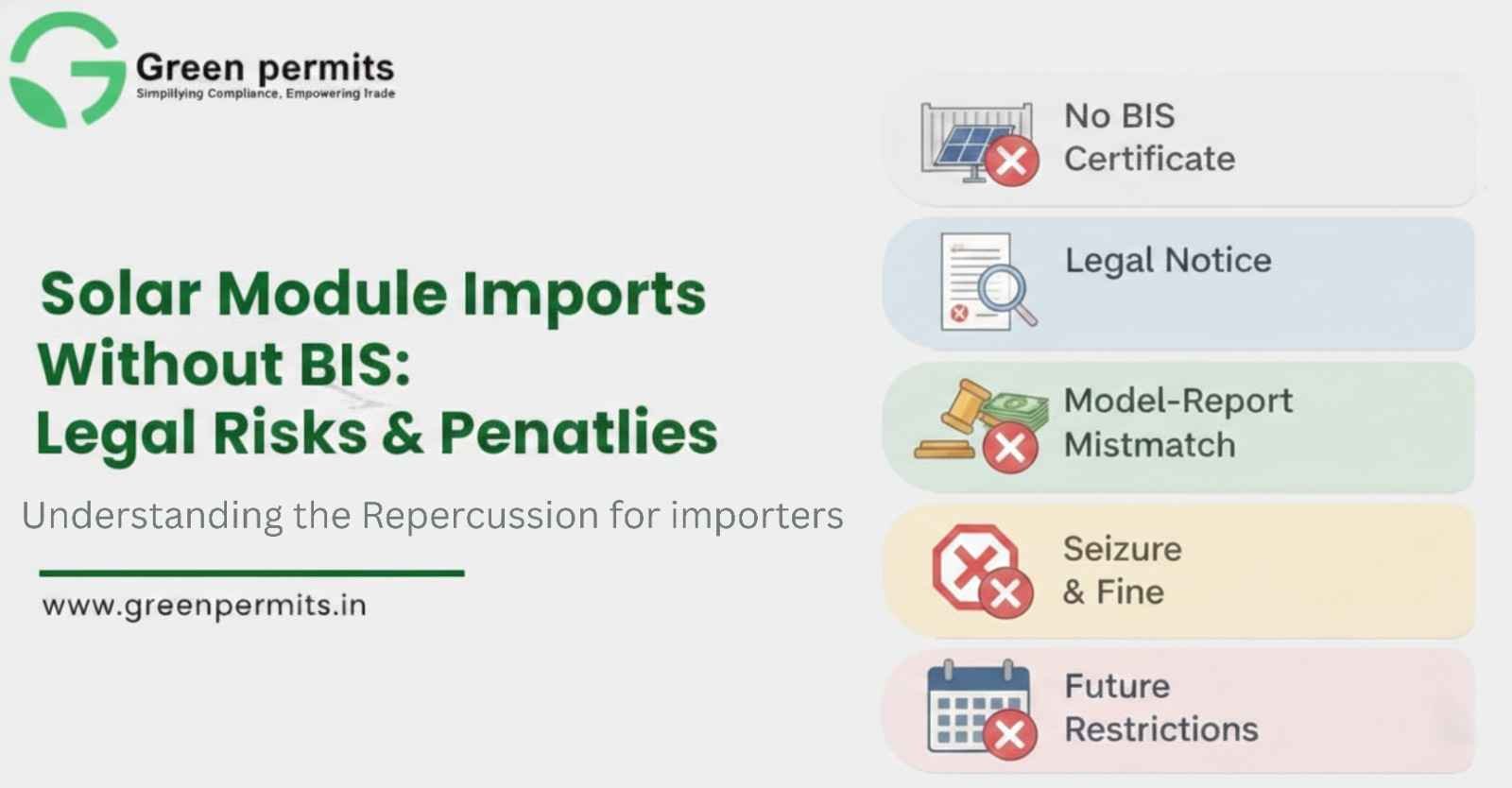
  • Solar Module Imports Without BIS: Legal Risks & Penalties in India
    Green permits
    India’s renewable energy sector is expanding rapidly, but compliance requirements for solar module imports have also become stricter. Importing solar modules without mandatory BIS certification can expose businesses to serious legal risks, penalties, and shipment delays.

    BIS Certification Requirement for Solar Modules
    Under Indian regulations, specific solar photovoltaic (PV) modules must comply with Bureau of Indian Standards (BIS) certification before being imported or sold in the domestic market. BIS ensures quality, safety, and performance standards, protecting both consumers and the power sector ecosystem.

    Legal Risks & Penalties for Non-Compliance
    Importing non-BIS-certified solar modules can result in customs clearance issues, confiscation of goods, financial penalties, and potential blacklisting. Non-compliance may also lead to project delays, financial losses, and reputational damage for importers and EPC contractors.

    Importance of Professional Compliance Support
    The BIS registration process involves product testing, documentation, application filing, and coordination with authorities. Expert assistance helps businesses avoid legal complications, secure timely approvals, and ensure smooth import operations.

    Green Permits Consulting LLC provides end-to-end support for BIS certification, regulatory approvals, and compliance advisory for solar module imports in India.

    For a detailed guide on legal risks and penalties related to solar module imports without BIS, visit:

    πŸ‘‰ https://www.greenpermits.in/02/solar-module-imports-without-bis-legal-risks-penalties-in-india/

    🌐 Website: https://www.greenpermits.in/

    πŸ“ž Call: +91 78350 06182

    πŸ“§ Email: wecare@greenpermits.in

    Book a Consultation with Green Permits and ensure compliant, risk-free solar module imports in India.

    Solar Module Imports Without BIS: Legal Risks & Penalties in India Green permits India’s renewable energy sector is expanding rapidly, but compliance requirements for solar module imports have also become stricter. Importing solar modules without mandatory BIS certification can expose businesses to serious legal risks, penalties, and shipment delays. BIS Certification Requirement for Solar Modules Under Indian regulations, specific solar photovoltaic (PV) modules must comply with Bureau of Indian Standards (BIS) certification before being imported or sold in the domestic market. BIS ensures quality, safety, and performance standards, protecting both consumers and the power sector ecosystem. Legal Risks & Penalties for Non-Compliance Importing non-BIS-certified solar modules can result in customs clearance issues, confiscation of goods, financial penalties, and potential blacklisting. Non-compliance may also lead to project delays, financial losses, and reputational damage for importers and EPC contractors. Importance of Professional Compliance Support The BIS registration process involves product testing, documentation, application filing, and coordination with authorities. Expert assistance helps businesses avoid legal complications, secure timely approvals, and ensure smooth import operations. Green Permits Consulting LLC provides end-to-end support for BIS certification, regulatory approvals, and compliance advisory for solar module imports in India. For a detailed guide on legal risks and penalties related to solar module imports without BIS, visit: πŸ‘‰ https://www.greenpermits.in/02/solar-module-imports-without-bis-legal-risks-penalties-in-india/ 🌐 Website: https://www.greenpermits.in/ πŸ“ž Call: +91 78350 06182 πŸ“§ Email: wecare@greenpermits.in Book a Consultation with Green Permits and ensure compliant, risk-free solar module imports in India.
    WWW.GREENPERMITS.IN
    Solar Module Imports Without BIS: Legal Risks & Penalties - Green Permits
    Solar Module Imports Without BIS can lead to seizure, fines & project delays. Ensure BIS compliance before import. Call Green Permits today.
    0 Commenti 0 condivisioni 1K Views 0 Anteprima
  • Soil Stabilization Market: Unlocking Growth Potential and Addressing Challenges

    United States of America – October 15, 2025 — The Insight Partners is proud to announce its newest market report, "Soil Stabilization Market: An In-depth Analysis of the Soil Stabilization Market (2024–2031)". The report provides a holistic view of the global soil stabilization market and describes the current scenario as well as growth estimates for the market during the forecast period.

    Overview of Soil Stabilization Market
    The soil stabilization market is witnessing substantial growth due to rapid infrastructure development, expanding road and highway construction projects, and increasing demand for durable foundations in industrial and commercial structures. Soil stabilization techniques—both mechanical and chemical—are being widely adopted to enhance soil strength, reduce permeability, and prevent erosion. Governments worldwide are emphasizing sustainable construction practices and cost-efficient land utilization, further driving demand for soil stabilization solutions.
    ________________________________________
    Key Findings and Insights
    Market Size and Growth
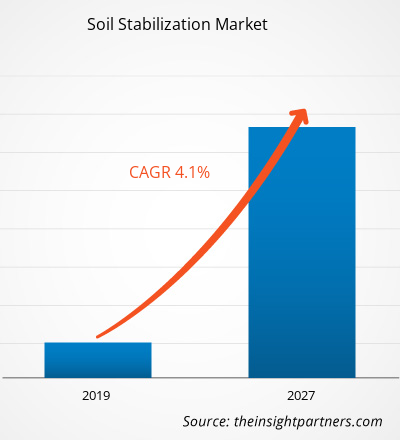
    • soil stabilization market was valued at US$ 21,997.38 Mn in 2018 and is projected to reach US$ 31,843.79 Mn by 2027; it is expected to grow at a CAGR of 4.1% from 2019 to 2027.
    • Key Factors:
    o Increasing road, highway, and airport construction projects.
    o Rising government investments in infrastructure modernization.
    o Growing awareness of sustainable construction and green stabilization materials.
    o Expanding industrial and residential construction in emerging economies.
    o Rising preference for chemical stabilizers like cement, lime, fly ash, and bitumen.
    ________________________________________
    Market Segmentation
    Segmentation Criteria:
    1. By Method:
    o Mechanical Stabilization
    o Chemical Stabilization
    o Thermal Stabilization
    2. By Material:
    o Cement
    o Lime
    o Fly Ash
    o Bitumen
    o Others (e.g., polymers, waste by-products)
    3. By Application:
    o Industrial
    o Agricultural
    o Non-Agricultural (roads, airfields, construction foundations)
    4. By End-Use Industry:
    o Infrastructure
    o Residential Construction
    o Industrial Construction
    5. By Geography:
    o North America
    o Europe
    o Asia-Pacific
    o Latin America
    o Middle East & Africa

    Spotting Emerging Trends
    Technological Advancements
    • Adoption of nano-material-based stabilizers to improve soil binding and durability.
    • Integration of IoT and geotechnical sensors for real-time soil performance monitoring.
    • Development of eco-friendly binders such as enzymes, lignosulfonates, and biopolymers.
    • Use of recycled industrial by-products (fly ash, slag) for sustainable stabilization.
    Changing Consumer Preferences
    • Increased demand for eco-sustainable stabilization solutions to reduce carbon footprint.
    • Shift toward cost-effective, time-saving techniques for large-scale infrastructure projects.
    • Growing adoption of turnkey soil stabilization services by construction contractors.
    Regulatory Changes
    • Implementation of strict government guidelines for infrastructure durability and safety.
    • Policies promoting green construction materials and recycling in soil improvement.
    • Increased funding for smart and sustainable city projects, boosting stabilization demand.
    ________________________________________
    Growth Opportunities
    1. Infrastructure Expansion in Developing Economies:
    Asia-Pacific and Africa offer significant opportunities as urbanization accelerates and road networks expand.
    2. Adoption of Green Stabilizers:
    Bio-based and waste-derived stabilizers present a profitable niche for companies focusing on sustainability.
    3. Public-Private Partnerships (PPP) in Construction:
    Governments are increasingly partnering with private players to fund large-scale infrastructure projects, creating consistent demand.
    4. Technological Integration:
    Companies investing in AI and geotechnical analytics can offer smart stabilization solutions with predictive maintenance capabilities.
    5. Mining and Energy Sector Applications:
    Soil stabilization in mining areas and renewable energy installations (solar farms, wind projects) represents a growing end-use segment.
    ________________________________________
    Conclusion
    The Soil Stabilization Market: Global Industry Trends, Share, Size, Growth, Opportunity, and Forecast 2024–2031 report provides vital insights for businesses aiming to strengthen their position in the construction materials and infrastructure ecosystem. The rising demand for sustainable and durable soil improvement techniques, coupled with government initiatives in smart infrastructure development, presents vast growth opportunities. Companies focusing on innovation in green stabilizers, strategic partnerships, and digital soil monitoring solutions will be well-positioned to lead this evolving market.

    https://www.theinsightpartners.com/reports/soil-stabilization-market

    Soil Stabilization Market: Unlocking Growth Potential and Addressing Challenges United States of America – October 15, 2025 — The Insight Partners is proud to announce its newest market report, "Soil Stabilization Market: An In-depth Analysis of the Soil Stabilization Market (2024–2031)". The report provides a holistic view of the global soil stabilization market and describes the current scenario as well as growth estimates for the market during the forecast period. Overview of Soil Stabilization Market The soil stabilization market is witnessing substantial growth due to rapid infrastructure development, expanding road and highway construction projects, and increasing demand for durable foundations in industrial and commercial structures. Soil stabilization techniques—both mechanical and chemical—are being widely adopted to enhance soil strength, reduce permeability, and prevent erosion. Governments worldwide are emphasizing sustainable construction practices and cost-efficient land utilization, further driving demand for soil stabilization solutions. ________________________________________ Key Findings and Insights Market Size and Growth • soil stabilization market was valued at US$ 21,997.38 Mn in 2018 and is projected to reach US$ 31,843.79 Mn by 2027; it is expected to grow at a CAGR of 4.1% from 2019 to 2027. • Key Factors: o Increasing road, highway, and airport construction projects. o Rising government investments in infrastructure modernization. o Growing awareness of sustainable construction and green stabilization materials. o Expanding industrial and residential construction in emerging economies. o Rising preference for chemical stabilizers like cement, lime, fly ash, and bitumen. ________________________________________ Market Segmentation Segmentation Criteria: 1. By Method: o Mechanical Stabilization o Chemical Stabilization o Thermal Stabilization 2. By Material: o Cement o Lime o Fly Ash o Bitumen o Others (e.g., polymers, waste by-products) 3. By Application: o Industrial o Agricultural o Non-Agricultural (roads, airfields, construction foundations) 4. By End-Use Industry: o Infrastructure o Residential Construction o Industrial Construction 5. By Geography: o North America o Europe o Asia-Pacific o Latin America o Middle East & Africa Spotting Emerging Trends Technological Advancements • Adoption of nano-material-based stabilizers to improve soil binding and durability. • Integration of IoT and geotechnical sensors for real-time soil performance monitoring. • Development of eco-friendly binders such as enzymes, lignosulfonates, and biopolymers. • Use of recycled industrial by-products (fly ash, slag) for sustainable stabilization. Changing Consumer Preferences • Increased demand for eco-sustainable stabilization solutions to reduce carbon footprint. • Shift toward cost-effective, time-saving techniques for large-scale infrastructure projects. • Growing adoption of turnkey soil stabilization services by construction contractors. Regulatory Changes • Implementation of strict government guidelines for infrastructure durability and safety. • Policies promoting green construction materials and recycling in soil improvement. • Increased funding for smart and sustainable city projects, boosting stabilization demand. ________________________________________ Growth Opportunities 1. Infrastructure Expansion in Developing Economies: Asia-Pacific and Africa offer significant opportunities as urbanization accelerates and road networks expand. 2. Adoption of Green Stabilizers: Bio-based and waste-derived stabilizers present a profitable niche for companies focusing on sustainability. 3. Public-Private Partnerships (PPP) in Construction: Governments are increasingly partnering with private players to fund large-scale infrastructure projects, creating consistent demand. 4. Technological Integration: Companies investing in AI and geotechnical analytics can offer smart stabilization solutions with predictive maintenance capabilities. 5. Mining and Energy Sector Applications: Soil stabilization in mining areas and renewable energy installations (solar farms, wind projects) represents a growing end-use segment. ________________________________________ Conclusion The Soil Stabilization Market: Global Industry Trends, Share, Size, Growth, Opportunity, and Forecast 2024–2031 report provides vital insights for businesses aiming to strengthen their position in the construction materials and infrastructure ecosystem. The rising demand for sustainable and durable soil improvement techniques, coupled with government initiatives in smart infrastructure development, presents vast growth opportunities. Companies focusing on innovation in green stabilizers, strategic partnerships, and digital soil monitoring solutions will be well-positioned to lead this evolving market. https://www.theinsightpartners.com/reports/soil-stabilization-market

    WWW.THEINSIGHTPARTNERS.COM
    Soil Stabilization Market by Size, Share & Trends Analysis 2027
    Soil Stabilization Market demand is estimated to soar with a high CAGR to cross US$ 31.84 Billion by 2027. Explore top segments and major trends in this report
    0 Commenti 0 condivisioni 6K Views 0 Anteprima
  • Market Overview
    The global Lightweight Materials Market is experiencing rapid growth due to increasing demand from industries such as automotive, aerospace, construction, and renewable energy. These materials—ranging from aluminum and magnesium to high strength steel and carbon fiber composites—are being increasingly adopted for their ability to reduce weight without compromising strength, durability, or safety.

    Lightweight materials offer several advantages: they reduce overall component weight, improve fuel efficiency in vehicles, lower emissions, and enhance energy performance. As industries move toward greener production and carbon neutrality, the market for these advanced materials is projected to expand significantly in the coming years.

    The global lightweight materials market size is expected to reach USD 499.6 billion by 2034, according to a new study by Polaris Market Research.

    Key Market Growth Drivers
    1. Automotive Lightweighting
    One of the strongest drivers for the lightweight materials market is the growing focus on automotive lightweighting. Governments worldwide are mandating fuel efficiency and stricter emission norms, pushing automakers to develop vehicles that are lighter and more efficient.

    Electric vehicle (EV) manufacturers are particularly focused on using lightweight components to extend driving range and reduce battery consumption. Materials like aluminum, high strength steel, and advanced composites are increasingly replacing traditional materials in vehicle frames, body panels, and interiors. The trend is expected to accelerate as EV adoption rises globally.

    2. Demand in Aerospace and Aviation
    The aerospace industry has been a long-standing user of lightweight materials, particularly carbon fiber composites and titanium alloys, to enhance performance and fuel efficiency. Aircraft manufacturers are integrating more lightweight materials to reduce operational costs and environmental impact.

    With the growth in commercial air travel and defense modernization programs, demand for high-performance lightweight components in fuselage structures, wings, and engine parts continues to increase.

    3. Expansion in Renewable Energy Applications
    In the energy sector, lightweight materials are playing a critical role in supporting the transition to clean power. In renewable energy applications, particularly wind and solar, materials such as fiberglass, composites, and aluminum are used to reduce the weight of turbine blades, solar panel frames, and support structures.

    Lighter components make it easier to transport and install renewable energy systems while improving durability and efficiency. As investment in wind and solar projects continues to rise, this segment will contribute significantly to market growth.

    4. Urbanization and Infrastructure Development
    Rapid urbanization and infrastructure development are creating new opportunities for lightweight construction materials. Builders are increasingly adopting lightweight concrete, foam panels, and polymer-based materials to reduce structural loads, speed up construction timelines, and improve seismic resilience.

    Prefabricated buildings, modular construction, and green architecture trends are also fueling demand for lightweight materials in residential and commercial projects worldwide.

    Market Challenges
    1. High Production Costs
    Despite their benefits, lightweight materials—especially composites and specialty alloys—can be expensive to produce. Carbon fiber composites and titanium, for example, involve complex manufacturing processes and high material costs. This limits their affordability and widespread adoption, particularly in cost-sensitive markets.

    2. Recycling and Environmental Concerns
    While lightweight materials support sustainability by improving energy efficiency, some—like composites—pose challenges in end-of-life recycling. The disposal and recycling of multi-material components can be labor-intensive and costly, raising environmental and regulatory concerns.

    Improving the recyclability of advanced materials remains a key focus area for manufacturers and policymakers.

    3. Technical Limitations
    Each lightweight material comes with its own set of technical constraints. For instance, magnesium is highly flammable, and aluminum may not offer the same level of strength as steel. These limitations can restrict their use in specific applications where strength, impact resistance, or heat resistance is critical.

    Developing hybrid materials or new composites that overcome these limitations is essential for broader adoption.

    4. Limited Supply Chain Infrastructure
    In some regions, the supply chain for lightweight materials is underdeveloped. Access to raw materials, processing technologies, and skilled labor can hinder production and deployment. This is especially true in emerging economies where industrial infrastructure is still evolving.

    Strengthening global supply networks and investing in localized production will be vital to unlocking new market opportunities.

    𝐄𝐱𝐩π₯𝐨𝐫𝐞 π“π‘πž 𝐂𝐨𝐦𝐩π₯𝐞𝐭𝐞 π‚π¨π¦π©π«πžπ‘πžπ§π¬π’π―πž π‘πžπ©π¨π«π­ π‡πžπ«πž: https://www.polarismarketresearch.com/industry-analysis/lightweight-materials-market
    Market Overview The global Lightweight Materials Market is experiencing rapid growth due to increasing demand from industries such as automotive, aerospace, construction, and renewable energy. These materials—ranging from aluminum and magnesium to high strength steel and carbon fiber composites—are being increasingly adopted for their ability to reduce weight without compromising strength, durability, or safety. Lightweight materials offer several advantages: they reduce overall component weight, improve fuel efficiency in vehicles, lower emissions, and enhance energy performance. As industries move toward greener production and carbon neutrality, the market for these advanced materials is projected to expand significantly in the coming years. The global lightweight materials market size is expected to reach USD 499.6 billion by 2034, according to a new study by Polaris Market Research. Key Market Growth Drivers 1. Automotive Lightweighting One of the strongest drivers for the lightweight materials market is the growing focus on automotive lightweighting. Governments worldwide are mandating fuel efficiency and stricter emission norms, pushing automakers to develop vehicles that are lighter and more efficient. Electric vehicle (EV) manufacturers are particularly focused on using lightweight components to extend driving range and reduce battery consumption. Materials like aluminum, high strength steel, and advanced composites are increasingly replacing traditional materials in vehicle frames, body panels, and interiors. The trend is expected to accelerate as EV adoption rises globally. 2. Demand in Aerospace and Aviation The aerospace industry has been a long-standing user of lightweight materials, particularly carbon fiber composites and titanium alloys, to enhance performance and fuel efficiency. Aircraft manufacturers are integrating more lightweight materials to reduce operational costs and environmental impact. With the growth in commercial air travel and defense modernization programs, demand for high-performance lightweight components in fuselage structures, wings, and engine parts continues to increase. 3. Expansion in Renewable Energy Applications In the energy sector, lightweight materials are playing a critical role in supporting the transition to clean power. In renewable energy applications, particularly wind and solar, materials such as fiberglass, composites, and aluminum are used to reduce the weight of turbine blades, solar panel frames, and support structures. Lighter components make it easier to transport and install renewable energy systems while improving durability and efficiency. As investment in wind and solar projects continues to rise, this segment will contribute significantly to market growth. 4. Urbanization and Infrastructure Development Rapid urbanization and infrastructure development are creating new opportunities for lightweight construction materials. Builders are increasingly adopting lightweight concrete, foam panels, and polymer-based materials to reduce structural loads, speed up construction timelines, and improve seismic resilience. Prefabricated buildings, modular construction, and green architecture trends are also fueling demand for lightweight materials in residential and commercial projects worldwide. Market Challenges 1. High Production Costs Despite their benefits, lightweight materials—especially composites and specialty alloys—can be expensive to produce. Carbon fiber composites and titanium, for example, involve complex manufacturing processes and high material costs. This limits their affordability and widespread adoption, particularly in cost-sensitive markets. 2. Recycling and Environmental Concerns While lightweight materials support sustainability by improving energy efficiency, some—like composites—pose challenges in end-of-life recycling. The disposal and recycling of multi-material components can be labor-intensive and costly, raising environmental and regulatory concerns. Improving the recyclability of advanced materials remains a key focus area for manufacturers and policymakers. 3. Technical Limitations Each lightweight material comes with its own set of technical constraints. For instance, magnesium is highly flammable, and aluminum may not offer the same level of strength as steel. These limitations can restrict their use in specific applications where strength, impact resistance, or heat resistance is critical. Developing hybrid materials or new composites that overcome these limitations is essential for broader adoption. 4. Limited Supply Chain Infrastructure In some regions, the supply chain for lightweight materials is underdeveloped. Access to raw materials, processing technologies, and skilled labor can hinder production and deployment. This is especially true in emerging economies where industrial infrastructure is still evolving. Strengthening global supply networks and investing in localized production will be vital to unlocking new market opportunities. 𝐄𝐱𝐩π₯𝐨𝐫𝐞 π“π‘πž 𝐂𝐨𝐦𝐩π₯𝐞𝐭𝐞 π‚π¨π¦π©π«πžπ‘πžπ§π¬π’π―πž π‘πžπ©π¨π«π­ π‡πžπ«πž: https://www.polarismarketresearch.com/industry-analysis/lightweight-materials-market
    WWW.POLARISMARKETRESEARCH.COM
    Lightweight Materials Market Size & Trends | Industry Report, 2034
    With a CAGR of 8.9%, Lightweight Materials Market will reach USD 499.6 billion by 2034.
    0 Commenti 0 condivisioni 7K Views 0 Anteprima
JogaJog https://jogajog.com.bd