• Skip hire Do’s & Don’ts ✅❌
    Got a question about hiring a skip?
    Check this guide out which covers some of our most commonly asked questions 💙
    Book your skip online here, or through the link in our bio 👉🏼
    https://atlanticrecycling.co.uk/skip-hire/
    📲 02920 363888
    💬 07709 713734
    📩 hiredesk@atlanticrecycling.co.uk
    #Cardiff #SouthWales #CardiffBusiness #SkipHire #SkipHireCardiff #WasteManagement
    #SkipHireDosAndDonts #SkipGuide #atlanticrecycling #Educate
    Skip hire Do’s & Don’ts ✅❌ Got a question about hiring a skip? Check this guide out which covers some of our most commonly asked questions 💙 Book your skip online here, or through the link in our bio 👉🏼 https://atlanticrecycling.co.uk/skip-hire/ 📲 02920 363888 💬 07709 713734 📩 hiredesk@atlanticrecycling.co.uk #Cardiff #SouthWales #CardiffBusiness #SkipHire #SkipHireCardiff #WasteManagement #SkipHireDosAndDonts #SkipGuide #atlanticrecycling #Educate
    1 Commentarios 0 Acciones 3K Views 0 Vista previa
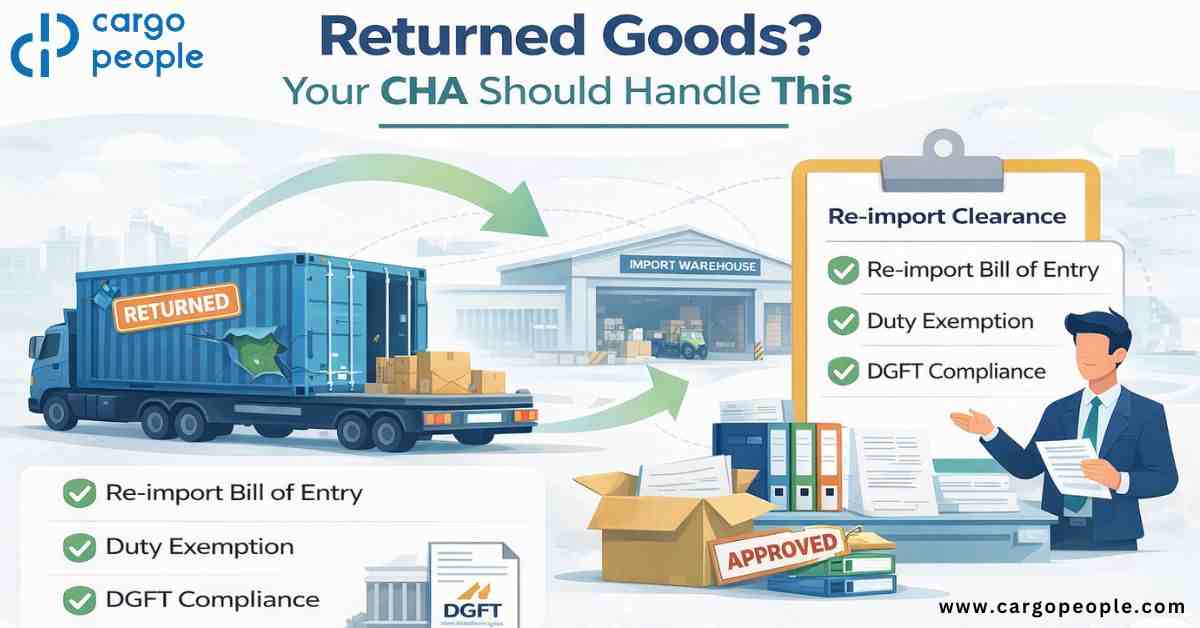
  • Reverse Logistics in India: Role of CHA & Freight Forwarders
    Cargo People
    Reverse logistics is becoming a critical part of India’s supply chain ecosystem, driven by e-commerce returns, sustainability goals, and regulatory requirements around waste and recycling. Efficient reverse logistics ensures the smooth movement of returned, damaged, or end-of-life goods back through the supply chain for reuse, recycling, or disposal.

    Why Reverse Logistics Is Gaining Importance
    With increasing product returns, circular economy initiatives, and EPR regulations, businesses can no longer ignore reverse flows. Poorly managed reverse logistics leads to higher costs, delays, and compliance risks, while optimized reverse logistics improves cost recovery, sustainability performance, and customer satisfaction.

    Role of CHA & Freight Forwarders
    Customs House Agents (CHAs) and freight forwarders play a crucial role in managing cross-border and domestic reverse logistics. From documentation and customs clearance to coordination of returns, scrap movement, and recycling shipments, their expertise ensures regulatory compliance, faster turnaround times, and reduced operational risk.

    How CargoPeople Enables Seamless Reverse Logistics
    CargoPeople acts as a reliable logistics partner, supporting businesses with end-to-end freight forwarding, CHA services, and reverse logistics coordination. Their expertise helps companies move returned goods, recyclable materials, and compliance-sensitive shipments efficiently across India and global trade routes.

    For a detailed insight into reverse logistics and the role of CHA & freight forwarders in India, visit:

    👉 https://www.cargopeople.com/blog/reverse-logistics-india-cha-freight-forwarder-role/

    🌐 Website: https://www.cargopeople.com/

    📞 Call: +91 9311 600 885

    📧 Email: sales@cargopeople.com

    Partner with CargoPeople to simplify reverse logistics and build a smarter, more sustainable supply chain.
    Reverse Logistics in India: Role of CHA & Freight Forwarders Cargo People Reverse logistics is becoming a critical part of India’s supply chain ecosystem, driven by e-commerce returns, sustainability goals, and regulatory requirements around waste and recycling. Efficient reverse logistics ensures the smooth movement of returned, damaged, or end-of-life goods back through the supply chain for reuse, recycling, or disposal. Why Reverse Logistics Is Gaining Importance With increasing product returns, circular economy initiatives, and EPR regulations, businesses can no longer ignore reverse flows. Poorly managed reverse logistics leads to higher costs, delays, and compliance risks, while optimized reverse logistics improves cost recovery, sustainability performance, and customer satisfaction. Role of CHA & Freight Forwarders Customs House Agents (CHAs) and freight forwarders play a crucial role in managing cross-border and domestic reverse logistics. From documentation and customs clearance to coordination of returns, scrap movement, and recycling shipments, their expertise ensures regulatory compliance, faster turnaround times, and reduced operational risk. How CargoPeople Enables Seamless Reverse Logistics CargoPeople acts as a reliable logistics partner, supporting businesses with end-to-end freight forwarding, CHA services, and reverse logistics coordination. Their expertise helps companies move returned goods, recyclable materials, and compliance-sensitive shipments efficiently across India and global trade routes. For a detailed insight into reverse logistics and the role of CHA & freight forwarders in India, visit: 👉 https://www.cargopeople.com/blog/reverse-logistics-india-cha-freight-forwarder-role/ 🌐 Website: https://www.cargopeople.com/ 📞 Call: +91 9311 600 885 📧 Email: sales@cargopeople.com Partner with CargoPeople to simplify reverse logistics and build a smarter, more sustainable supply chain.
    WWW.CARGOPEOPLE.COM
    Role of CHA & Forwarder in Reverse Logistics and Returns Management - Cargopeople Blog
    Understand return shipping, after-sales logistics, and how CHA & freight forwarders help Indian businesses avoid delays and extra duty.
    0 Commentarios 0 Acciones 1K Views 0 Vista previa
  • Recycling in India Is No Longer an Informal Business

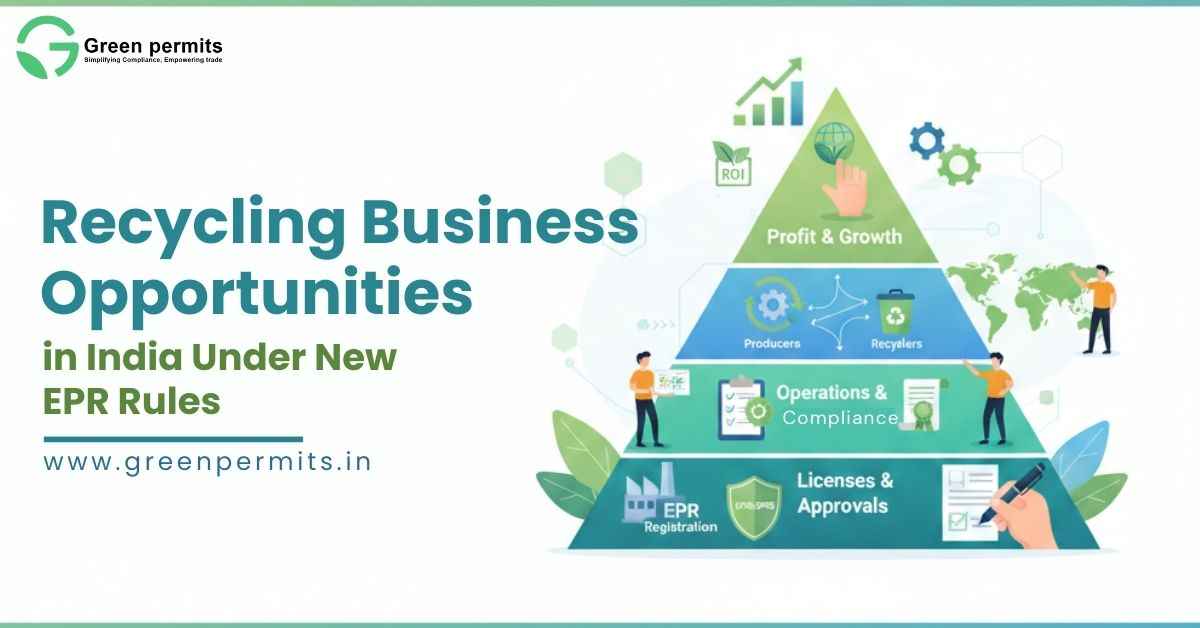
    India’s recycling industry has moved far beyond informal waste processing. With the introduction of Extended Producer Responsibility (EPR) rules, recycling is now a regulated, compliance-driven sector. Producers and brand owners must meet mandatory recycling targets, and they can do so only through registered and compliant recyclers.

    This shift has created structured demand across plastic, e-waste, and battery recycling. However, the opportunity exists only for businesses that understand regulatory requirements early. Without EPR registration, even well-equipped recycling plants struggle to secure serious buyers.

    Why Compliance Decides Who Scales and Who Struggles
    Under the EPR framework, recycling output is directly linked to certificate generation. These certificates allow producers to close their annual compliance obligations, making compliant recyclers essential partners in the value chain.

    Many new recyclers underestimate this shift. They invest in land and machinery but delay EPR registration, only to realise that without certificates, serious buyers remain out of reach. This often leads to idle capacity, delayed cash flow, and unnecessary regulatory stress.

    On the other hand, recyclers who align plant approvals, capacity declarations, and EPR registration from the start are able to operate with greater confidence and predictability.

    Related Article - https://www.greenpermits.in/recycling-business-opportunities-in-india-under-new-epr-rules/

    Where the Real Business Opportunity Lies
    The real opportunity in recycling today is not just in collecting or processing waste, but in being legally eligible to support EPR compliance. Many new recyclers invest in machinery first and address compliance later, leading to delays in certificate generation and revenue blockage.

    Businesses that plan approvals, EPR registration, and plant setup together are able to build long-term relationships with producers, maintain stable pricing, and scale with confidence.

    If you’re exploring recycling or EPR compliance in India and want to enter the sector the right way, connect with Green Permits for expert guidance on approvals, EPR registration, and compliance planning.

    Connect with Green Permits for expert support on battery recycling approvals, EPR compliance, and regulatory planning.

    📞 +91 78350 06182 | 📧 wecare@greenpermits.in
    Recycling in India Is No Longer an Informal Business India’s recycling industry has moved far beyond informal waste processing. With the introduction of Extended Producer Responsibility (EPR) rules, recycling is now a regulated, compliance-driven sector. Producers and brand owners must meet mandatory recycling targets, and they can do so only through registered and compliant recyclers. This shift has created structured demand across plastic, e-waste, and battery recycling. However, the opportunity exists only for businesses that understand regulatory requirements early. Without EPR registration, even well-equipped recycling plants struggle to secure serious buyers. Why Compliance Decides Who Scales and Who Struggles Under the EPR framework, recycling output is directly linked to certificate generation. These certificates allow producers to close their annual compliance obligations, making compliant recyclers essential partners in the value chain. Many new recyclers underestimate this shift. They invest in land and machinery but delay EPR registration, only to realise that without certificates, serious buyers remain out of reach. This often leads to idle capacity, delayed cash flow, and unnecessary regulatory stress. On the other hand, recyclers who align plant approvals, capacity declarations, and EPR registration from the start are able to operate with greater confidence and predictability. Related Article - https://www.greenpermits.in/recycling-business-opportunities-in-india-under-new-epr-rules/ Where the Real Business Opportunity Lies The real opportunity in recycling today is not just in collecting or processing waste, but in being legally eligible to support EPR compliance. Many new recyclers invest in machinery first and address compliance later, leading to delays in certificate generation and revenue blockage. Businesses that plan approvals, EPR registration, and plant setup together are able to build long-term relationships with producers, maintain stable pricing, and scale with confidence. If you’re exploring recycling or EPR compliance in India and want to enter the sector the right way, connect with Green Permits for expert guidance on approvals, EPR registration, and compliance planning. Connect with Green Permits for expert support on battery recycling approvals, EPR compliance, and regulatory planning. 📞 +91 78350 06182 | 📧 wecare@greenpermits.in
    WWW.GREENPERMITS.IN
    Recycling Business Opportunities in India Under New EPR Rules - Green Permits – EPR, BIS Certification & Recycling Plant Setup Experts
    Explore profitable recycling business opportunities in India under new EPR rules. Learn compliance, risks, and how to start the right way. Talk to experts.
    0 Commentarios 0 Acciones 1K Views 0 Vista previa
  • Market Overview
    The global Lightweight Materials Market is experiencing rapid growth due to increasing demand from industries such as automotive, aerospace, construction, and renewable energy. These materials—ranging from aluminum and magnesium to high strength steel and carbon fiber composites—are being increasingly adopted for their ability to reduce weight without compromising strength, durability, or safety.

    Lightweight materials offer several advantages: they reduce overall component weight, improve fuel efficiency in vehicles, lower emissions, and enhance energy performance. As industries move toward greener production and carbon neutrality, the market for these advanced materials is projected to expand significantly in the coming years.

    The global lightweight materials market size is expected to reach USD 499.6 billion by 2034, according to a new study by Polaris Market Research.

    Key Market Growth Drivers
    1. Automotive Lightweighting
    One of the strongest drivers for the lightweight materials market is the growing focus on automotive lightweighting. Governments worldwide are mandating fuel efficiency and stricter emission norms, pushing automakers to develop vehicles that are lighter and more efficient.

    Electric vehicle (EV) manufacturers are particularly focused on using lightweight components to extend driving range and reduce battery consumption. Materials like aluminum, high strength steel, and advanced composites are increasingly replacing traditional materials in vehicle frames, body panels, and interiors. The trend is expected to accelerate as EV adoption rises globally.

    2. Demand in Aerospace and Aviation
    The aerospace industry has been a long-standing user of lightweight materials, particularly carbon fiber composites and titanium alloys, to enhance performance and fuel efficiency. Aircraft manufacturers are integrating more lightweight materials to reduce operational costs and environmental impact.

    With the growth in commercial air travel and defense modernization programs, demand for high-performance lightweight components in fuselage structures, wings, and engine parts continues to increase.

    3. Expansion in Renewable Energy Applications
    In the energy sector, lightweight materials are playing a critical role in supporting the transition to clean power. In renewable energy applications, particularly wind and solar, materials such as fiberglass, composites, and aluminum are used to reduce the weight of turbine blades, solar panel frames, and support structures.

    Lighter components make it easier to transport and install renewable energy systems while improving durability and efficiency. As investment in wind and solar projects continues to rise, this segment will contribute significantly to market growth.

    4. Urbanization and Infrastructure Development
    Rapid urbanization and infrastructure development are creating new opportunities for lightweight construction materials. Builders are increasingly adopting lightweight concrete, foam panels, and polymer-based materials to reduce structural loads, speed up construction timelines, and improve seismic resilience.

    Prefabricated buildings, modular construction, and green architecture trends are also fueling demand for lightweight materials in residential and commercial projects worldwide.

    Market Challenges
    1. High Production Costs
    Despite their benefits, lightweight materials—especially composites and specialty alloys—can be expensive to produce. Carbon fiber composites and titanium, for example, involve complex manufacturing processes and high material costs. This limits their affordability and widespread adoption, particularly in cost-sensitive markets.

    2. Recycling and Environmental Concerns
    While lightweight materials support sustainability by improving energy efficiency, some—like composites—pose challenges in end-of-life recycling. The disposal and recycling of multi-material components can be labor-intensive and costly, raising environmental and regulatory concerns.

    Improving the recyclability of advanced materials remains a key focus area for manufacturers and policymakers.

    3. Technical Limitations
    Each lightweight material comes with its own set of technical constraints. For instance, magnesium is highly flammable, and aluminum may not offer the same level of strength as steel. These limitations can restrict their use in specific applications where strength, impact resistance, or heat resistance is critical.

    Developing hybrid materials or new composites that overcome these limitations is essential for broader adoption.

    4. Limited Supply Chain Infrastructure
    In some regions, the supply chain for lightweight materials is underdeveloped. Access to raw materials, processing technologies, and skilled labor can hinder production and deployment. This is especially true in emerging economies where industrial infrastructure is still evolving.

    Strengthening global supply networks and investing in localized production will be vital to unlocking new market opportunities.

    𝐄𝐱𝐩𝐥𝐨𝐫𝐞 𝐓𝐡𝐞 𝐂𝐨𝐦𝐩𝐥𝐞𝐭𝐞 𝐂𝐨𝐦𝐩𝐫𝐞𝐡𝐞𝐧𝐬𝐢𝐯𝐞 𝐑𝐞𝐩𝐨𝐫𝐭 𝐇𝐞𝐫𝐞: https://www.polarismarketresearch.com/industry-analysis/lightweight-materials-market

    Market Overview The global Lightweight Materials Market is experiencing rapid growth due to increasing demand from industries such as automotive, aerospace, construction, and renewable energy. These materials—ranging from aluminum and magnesium to high strength steel and carbon fiber composites—are being increasingly adopted for their ability to reduce weight without compromising strength, durability, or safety. Lightweight materials offer several advantages: they reduce overall component weight, improve fuel efficiency in vehicles, lower emissions, and enhance energy performance. As industries move toward greener production and carbon neutrality, the market for these advanced materials is projected to expand significantly in the coming years. The global lightweight materials market size is expected to reach USD 499.6 billion by 2034, according to a new study by Polaris Market Research. Key Market Growth Drivers 1. Automotive Lightweighting One of the strongest drivers for the lightweight materials market is the growing focus on automotive lightweighting. Governments worldwide are mandating fuel efficiency and stricter emission norms, pushing automakers to develop vehicles that are lighter and more efficient. Electric vehicle (EV) manufacturers are particularly focused on using lightweight components to extend driving range and reduce battery consumption. Materials like aluminum, high strength steel, and advanced composites are increasingly replacing traditional materials in vehicle frames, body panels, and interiors. The trend is expected to accelerate as EV adoption rises globally. 2. Demand in Aerospace and Aviation The aerospace industry has been a long-standing user of lightweight materials, particularly carbon fiber composites and titanium alloys, to enhance performance and fuel efficiency. Aircraft manufacturers are integrating more lightweight materials to reduce operational costs and environmental impact. With the growth in commercial air travel and defense modernization programs, demand for high-performance lightweight components in fuselage structures, wings, and engine parts continues to increase. 3. Expansion in Renewable Energy Applications In the energy sector, lightweight materials are playing a critical role in supporting the transition to clean power. In renewable energy applications, particularly wind and solar, materials such as fiberglass, composites, and aluminum are used to reduce the weight of turbine blades, solar panel frames, and support structures. Lighter components make it easier to transport and install renewable energy systems while improving durability and efficiency. As investment in wind and solar projects continues to rise, this segment will contribute significantly to market growth. 4. Urbanization and Infrastructure Development Rapid urbanization and infrastructure development are creating new opportunities for lightweight construction materials. Builders are increasingly adopting lightweight concrete, foam panels, and polymer-based materials to reduce structural loads, speed up construction timelines, and improve seismic resilience. Prefabricated buildings, modular construction, and green architecture trends are also fueling demand for lightweight materials in residential and commercial projects worldwide. Market Challenges 1. High Production Costs Despite their benefits, lightweight materials—especially composites and specialty alloys—can be expensive to produce. Carbon fiber composites and titanium, for example, involve complex manufacturing processes and high material costs. This limits their affordability and widespread adoption, particularly in cost-sensitive markets. 2. Recycling and Environmental Concerns While lightweight materials support sustainability by improving energy efficiency, some—like composites—pose challenges in end-of-life recycling. The disposal and recycling of multi-material components can be labor-intensive and costly, raising environmental and regulatory concerns. Improving the recyclability of advanced materials remains a key focus area for manufacturers and policymakers. 3. Technical Limitations Each lightweight material comes with its own set of technical constraints. For instance, magnesium is highly flammable, and aluminum may not offer the same level of strength as steel. These limitations can restrict their use in specific applications where strength, impact resistance, or heat resistance is critical. Developing hybrid materials or new composites that overcome these limitations is essential for broader adoption. 4. Limited Supply Chain Infrastructure In some regions, the supply chain for lightweight materials is underdeveloped. Access to raw materials, processing technologies, and skilled labor can hinder production and deployment. This is especially true in emerging economies where industrial infrastructure is still evolving. Strengthening global supply networks and investing in localized production will be vital to unlocking new market opportunities. 𝐄𝐱𝐩𝐥𝐨𝐫𝐞 𝐓𝐡𝐞 𝐂𝐨𝐦𝐩𝐥𝐞𝐭𝐞 𝐂𝐨𝐦𝐩𝐫𝐞𝐡𝐞𝐧𝐬𝐢𝐯𝐞 𝐑𝐞𝐩𝐨𝐫𝐭 𝐇𝐞𝐫𝐞: https://www.polarismarketresearch.com/industry-analysis/lightweight-materials-market

    WWW.POLARISMARKETRESEARCH.COM
    Lightweight Materials Market Size & Trends | Industry Report, 2034
    With a CAGR of 8.9%, Lightweight Materials Market will reach USD 499.6 billion by 2034.
    0 Commentarios 0 Acciones 7K Views 0 Vista previa
JogaJog https://jogajog.com.bd