
• Strengthening Network Security with Next-Gen NDR Solutions in 2026

    In the rapidly changing world of cybersecurity, Network Detection and Response (NDR) solutions have become essential tools for protecting digital networks from advanced threats. NDR technologies continuously monitor network traffic, detect suspicious behavior, and help security teams respond quickly to risks that traditional tools may miss. The 2025 SPARK Matrix™: Network Detection & Response report by QKS Group offers a detailed evaluation of leading NDR vendors based on their technology strength and customer impact.

    The SPARK Matrix™ is a respected analyst framework that ranks vendors into categories like Leaders, Emerging Leaders, Contenders, and more. This helps IT leaders and security professionals make informed decisions when selecting NDR platforms that best suit their organization’s needs.

    Click Here For More: https://qksgroup.com/market-research/spark-matrix-network-detection-response-q4-2025-9170

    Why NDR Matters in Today’s Security Landscape

    Modern threats such as ransomware, fileless attacks, and advanced persistent threats (APTs) can move inside networks without being noticed by traditional firewalls or antivirus tools. NDR fills this gap by using advanced analytics, machine learning, and behavioural detection techniques to spot hidden abnormalities. These systems review network flows, identify patterns, and flag anomalies in real time, enabling teams to detect and mitigate threats faster and with greater accuracy.

    As the global attack surface continues to expand with hybrid cloud, remote work, and IoT devices, the role of Network Detection and Response becomes even more critical. Organizations now need platforms that can handle encrypted traffic, support high-speed data flows, and integrate seamlessly with existing security tools and workflows.

    WatchGuard: Cloud-Native Threat Detection and Response

    WatchGuard was recognized as a Leader in the 2025 SPARK Matrix™ for its ThreatSync NDR solution. According to the report, WatchGuard’s NDR delivers continuous network monitoring with strong threat detection capabilities and user-friendly automation. Its AI-based design lets organizations spot unusual behaviour quickly and respond with clear risk scores and automated policies.

    A key strength highlighted by QKS Group is WatchGuard’s cloud-native architecture, which avoids complex hardware setups and enables rapid deployment. The platform also offers deep network visibility and compliance-ready reporting, making it suited for midsize enterprises and managed service providers (MSPs).

    NETSCOUT: High-Fidelity Insights for Intelligent Security Operations

    On the other hand, NETSCOUT also earned a Leader position in the same 2025 SPARK Matrix™ for its Omnis Cyber Intelligence platform. QKS Group praised NETSCOUT for its detailed packet-level visibility, real-time analytics, and automated forensic features that help security teams uncover stealthy threats.

    The integration with threat frameworks like MITRE ATT&CK supports threat hunting and investigation, enabling faster, data-driven responses across hybrid and cloud environments. NETSCOUT’s approach underscores the importance of deep visibility and contextual threat intelligence for effective network security.

    Talk To Analyst: https://qksgroup.com/analyst-briefing?analystId=22&reportId=9170

    Conclusion

    The 2025 SPARK Matrix™: NDR report clearly reflects how advanced Network Detection and Response solutions are transforming cybersecurity. Leaders like WatchGuard and NETSCOUT demonstrate innovation in network visibility, AI-driven detection, and response automation — all vital capabilities in today’s threat landscape. For organizations looking to strengthen their security posture, these insights can guide intelligent investment and deployment of NDR technologies.

    #NDR #NetworkThreatDetection #Cybersecurity #NetworkMonitoring #ThreatIntelligence #Threatintelligence #CloudNetworkSecurity #NetworkSecurity #CyberThreatDetection #Network #NetworkDetectionAndResponse #Cybersecurity #NDRSecurity #NDRSolutions #NDRNetworkDetectionAndResponse #NDRCybersecurity #NetworkDetectionAndResponseTools #NDRTools #NetworkThreatDetection #NetworkDetectionAndResponseSolutions
    Strengthening Network Security with Next-Gen NDR Solutions in 2026 In the rapidly changing world of cybersecurity, Network Detection and Response (NDR) solutions have become essential tools for protecting digital networks from advanced threats. NDR technologies continuously monitor network traffic, detect suspicious behavior, and help security teams respond quickly to risks that traditional tools may miss. The 2025 SPARK Matrix™: Network Detection & Response report by QKS Group offers a detailed evaluation of leading NDR vendors based on their technology strength and customer impact. The SPARK Matrix™ is a respected analyst framework that ranks vendors into categories like Leaders, Emerging Leaders, Contenders, and more. This helps IT leaders and security professionals make informed decisions when selecting NDR platforms that best suit their organization’s needs. Click Here For More: https://qksgroup.com/market-research/spark-matrix-network-detection-response-q4-2025-9170 Why NDR Matters in Today’s Security Landscape Modern threats such as ransomware, fileless attacks, and advanced persistent threats (APTs) can move inside networks without being noticed by traditional firewalls or antivirus tools. NDR fills this gap by using advanced analytics, machine learning, and behavioural detection techniques to spot hidden abnormalities. These systems review network flows, identify patterns, and flag anomalies in real time, enabling teams to detect and mitigate threats faster and with greater accuracy. As the global attack surface continues to expand with hybrid cloud, remote work, and IoT devices, the role of Network Detection and Response becomes even more critical. Organizations now need platforms that can handle encrypted traffic, support high-speed data flows, and integrate seamlessly with existing security tools and workflows. WatchGuard: Cloud-Native Threat Detection and Response WatchGuard was recognized as a Leader in the 2025 SPARK Matrix™ for its ThreatSync NDR solution. According to the report, WatchGuard’s NDR delivers continuous network monitoring with strong threat detection capabilities and user-friendly automation. Its AI-based design lets organizations spot unusual behaviour quickly and respond with clear risk scores and automated policies. A key strength highlighted by QKS Group is WatchGuard’s cloud-native architecture, which avoids complex hardware setups and enables rapid deployment. The platform also offers deep network visibility and compliance-ready reporting, making it suited for midsize enterprises and managed service providers (MSPs). NETSCOUT: High-Fidelity Insights for Intelligent Security Operations On the other hand, NETSCOUT also earned a Leader position in the same 2025 SPARK Matrix™ for its Omnis Cyber Intelligence platform. QKS Group praised NETSCOUT for its detailed packet-level visibility, real-time analytics, and automated forensic features that help security teams uncover stealthy threats. The integration with threat frameworks like MITRE ATT&CK supports threat hunting and investigation, enabling faster, data-driven responses across hybrid and cloud environments. NETSCOUT’s approach underscores the importance of deep visibility and contextual threat intelligence for effective network security. Talk To Analyst: https://qksgroup.com/analyst-briefing?analystId=22&reportId=9170 Conclusion The 2025 SPARK Matrix™: NDR report clearly reflects how advanced Network Detection and Response solutions are transforming cybersecurity. Leaders like WatchGuard and NETSCOUT demonstrate innovation in network visibility, AI-driven detection, and response automation — all vital capabilities in today’s threat landscape. For organizations looking to strengthen their security posture, these insights can guide intelligent investment and deployment of NDR technologies. #NDR #NetworkThreatDetection #Cybersecurity #NetworkMonitoring #ThreatIntelligence #Threatintelligence #CloudNetworkSecurity #NetworkSecurity #CyberThreatDetection #Network #NetworkDetectionAndResponse #Cybersecurity #NDRSecurity #NDRSolutions #NDRNetworkDetectionAndResponse #NDRCybersecurity #NetworkDetectionAndResponseTools #NDRTools #NetworkThreatDetection #NetworkDetectionAndResponseSolutions
    QKSGROUP.COM
    SPARK Matrix?: Network Detection & Response, Q4 2025
    QKS Group's Network Detection and Response market research includes a comprehensive analysis of the ...
    0 Commentaires 0 Parts 9KB Vue 0 Aperçu
  • Active Optical Cable Market Report: Unlocking Growth Potential and Addressing Challenges


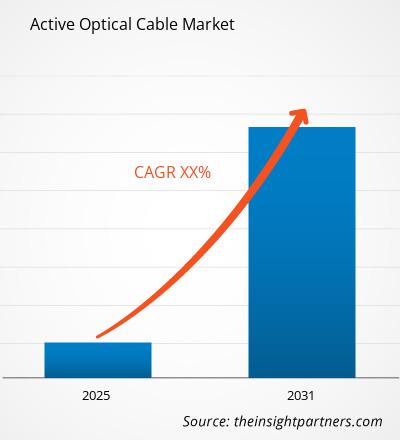
    United States of America – October 23, 2025 – The Insight Partners proudly announces its newest market report, “Active Optical Cable Market: An In-depth Analysis of Global Trends, 2023–2031.” The report provides a comprehensive view of the Active Optical Cable (AOC) Market, highlighting key developments, technological advancements, and strategic opportunities that will shape the market’s trajectory through 2031.

    Overview of the Active Optical Cable Market
    The Active Optical Cable Market is witnessing robust growth as industries increasingly prioritize high-speed, low-latency data transmission solutions to meet the demands of cloud computing, 5G infrastructure, and artificial intelligence (AI) applications. Active optical cables, which combine the benefits of optical fiber with electrical interfaces, are rapidly replacing traditional copper cables due to their superior performance in data centers, consumer electronics, and telecommunication networks.
    From hyperscale data centers to high-definition multimedia setups, AOCs enable faster, longer-distance, and energy-efficient connectivity. The market’s evolution is being driven by the convergence of cloud technology, IoT, and high-performance computing (HPC) — all demanding ultra-fast, reliable interconnections.
    ________________________________________
    Key Findings and Insights
    Market Size and Growth
    • Historical Overview: The Active Optical Cable Market has grown steadily in the last few years, propelled by the expansion of global data center networks, 4K/8K video content consumption, and accelerated adoption of AI-driven workloads.
    • Growth Drivers: Rising data traffic, increasing deployment of high-speed interconnects in enterprise and hyperscale data centers, and the shift from copper to fiber optics for higher bandwidth efficiency are key growth drivers.
    • Sustainability Focus: AOCs contribute to reduced energy consumption in large-scale IT infrastructures compared to copper cables, aligning with green data center initiatives worldwide.
    ________________________________________
    Market Segmentation
    The Active Optical Cable Market is segmented across multiple parameters to capture the full scope of applications and innovations:
    • By Type:
    o InfiniBand – Popular in high-performance computing and supercomputing environments.
    o Ethernet – Widely used in enterprise data centers and cloud networks.
    o HDMI, USB, DisplayPort, and Others – Growing adoption in consumer electronics and professional AV systems.
    • By Material:
    o Plastic Optical Fiber (POF) – Cost-effective and ideal for short-distance connections.
    o Glass Optical Fiber (GOF) – Preferred for high-speed, long-distance, and data-intensive applications.
    • By End User:
    o Data Centers – Primary consumer of high-bandwidth AOCs for rack-to-rack and inter-data-center connectivity.
    o Telecommunications – Leveraging AOCs for 5G backhaul and cloud edge infrastructure.
    o Consumer Electronics – Used in gaming consoles, high-definition displays, and VR/AR systems.
    o Healthcare, Aerospace & Defense, and Industrial Automation – Niche but fast-growing end-user segments.
    • By Region:
    o North America, Europe, Asia Pacific, Latin America, and Middle East & Africa — each contributing uniquely to market expansion through infrastructure investments and technology adoption.
    ________________________________________
    Spotting Emerging Trends
    • Technological Advancements:
    Next-generation AOCs are incorporating co-packaged optics, silicon photonics, and machine learning-based monitoring systems to improve data throughput, energy efficiency, and network reliability. The adoption of 200G and 400G AOCs is accelerating as enterprises modernize networks for AI and cloud workloads.
    • Changing Consumer Preferences:
    Enterprises and consumers are increasingly choosing high-speed, plug-and-play optical connectivity solutions that reduce latency and power usage. Demand for lightweight, flexible, and EMI-immune cabling systems has spurred AOC adoption across commercial and home setups.
    • Regulatory Changes:
    Government initiatives supporting 5G deployment and digital transformation — especially in regions like the U.S., China, and the EU — are driving infrastructure upgrades that rely on optical interconnects. Compliance with international energy efficiency and data transmission standards is further shaping production and innovation in AOC manufacturing.
    ________________________________________
    Growth Opportunities
    The Active Optical Cable Market presents significant opportunities for innovation and expansion:
    • Rising Cloud Adoption: The global move toward multi-cloud and hybrid cloud environments is fueling demand for faster interconnects among data centers.
    • 5G and Edge Computing: AOCs are becoming critical for backhaul connections, enabling seamless communication between core and edge networks.
    • AI & Machine Learning Workloads: The explosion of AI-driven applications in sectors like healthcare, automotive, and fintech requires high-speed, low-latency interconnects that AOCs provide.
    • Product Innovation: Development of thinner, more flexible, and cost-effective AOCs is opening new use cases in consumer electronics and industrial automation.
    • Strategic Partnerships: Collaborations among optical component manufacturers, cloud service providers, and telecom operators are driving technology standardization and scalability.
    ________________________________________
    Global and Regional Analysis
    • North America: Dominates the market with large-scale data center infrastructure and early adoption of next-gen network technologies. The U.S. remains a hub for hyperscalers like Google, Amazon, and Microsoft investing heavily in high-speed optical interconnects.
    • Europe: Driven by sustainable digital infrastructure investments and rising adoption of 5G networks. The region emphasizes low-latency, high-reliability connectivity for enterprises.
    • Asia Pacific: Expected to witness the fastest growth due to extensive 5G rollouts, rapid data center construction, and increased consumer demand for advanced electronics in China, India, Japan, and South Korea.
    • Latin America: Gaining traction with expanding cloud services and digital transformation initiatives in Brazil and Mexico.
    • Middle East & Africa: Emerging opportunities in smart city projects, telecom modernization, and enterprise cloud adoption.
    https://www.theinsightpartners.com/reports/active-optical-cable-market
    Active Optical Cable Market Report: Unlocking Growth Potential and Addressing Challenges United States of America – October 23, 2025 – The Insight Partners proudly announces its newest market report, “Active Optical Cable Market: An In-depth Analysis of Global Trends, 2023–2031.” The report provides a comprehensive view of the Active Optical Cable (AOC) Market, highlighting key developments, technological advancements, and strategic opportunities that will shape the market’s trajectory through 2031. Overview of the Active Optical Cable Market The Active Optical Cable Market is witnessing robust growth as industries increasingly prioritize high-speed, low-latency data transmission solutions to meet the demands of cloud computing, 5G infrastructure, and artificial intelligence (AI) applications. Active optical cables, which combine the benefits of optical fiber with electrical interfaces, are rapidly replacing traditional copper cables due to their superior performance in data centers, consumer electronics, and telecommunication networks. From hyperscale data centers to high-definition multimedia setups, AOCs enable faster, longer-distance, and energy-efficient connectivity. The market’s evolution is being driven by the convergence of cloud technology, IoT, and high-performance computing (HPC) — all demanding ultra-fast, reliable interconnections. ________________________________________ Key Findings and Insights Market Size and Growth • Historical Overview: The Active Optical Cable Market has grown steadily in the last few years, propelled by the expansion of global data center networks, 4K/8K video content consumption, and accelerated adoption of AI-driven workloads. • Growth Drivers: Rising data traffic, increasing deployment of high-speed interconnects in enterprise and hyperscale data centers, and the shift from copper to fiber optics for higher bandwidth efficiency are key growth drivers. • Sustainability Focus: AOCs contribute to reduced energy consumption in large-scale IT infrastructures compared to copper cables, aligning with green data center initiatives worldwide. ________________________________________ Market Segmentation The Active Optical Cable Market is segmented across multiple parameters to capture the full scope of applications and innovations: • By Type: o InfiniBand – Popular in high-performance computing and supercomputing environments. o Ethernet – Widely used in enterprise data centers and cloud networks. o HDMI, USB, DisplayPort, and Others – Growing adoption in consumer electronics and professional AV systems. • By Material: o Plastic Optical Fiber (POF) – Cost-effective and ideal for short-distance connections. o Glass Optical Fiber (GOF) – Preferred for high-speed, long-distance, and data-intensive applications. • By End User: o Data Centers – Primary consumer of high-bandwidth AOCs for rack-to-rack and inter-data-center connectivity. o Telecommunications – Leveraging AOCs for 5G backhaul and cloud edge infrastructure. o Consumer Electronics – Used in gaming consoles, high-definition displays, and VR/AR systems. o Healthcare, Aerospace & Defense, and Industrial Automation – Niche but fast-growing end-user segments. • By Region: o North America, Europe, Asia Pacific, Latin America, and Middle East & Africa — each contributing uniquely to market expansion through infrastructure investments and technology adoption. ________________________________________ Spotting Emerging Trends • Technological Advancements: Next-generation AOCs are incorporating co-packaged optics, silicon photonics, and machine learning-based monitoring systems to improve data throughput, energy efficiency, and network reliability. The adoption of 200G and 400G AOCs is accelerating as enterprises modernize networks for AI and cloud workloads. • Changing Consumer Preferences: Enterprises and consumers are increasingly choosing high-speed, plug-and-play optical connectivity solutions that reduce latency and power usage. Demand for lightweight, flexible, and EMI-immune cabling systems has spurred AOC adoption across commercial and home setups. • Regulatory Changes: Government initiatives supporting 5G deployment and digital transformation — especially in regions like the U.S., China, and the EU — are driving infrastructure upgrades that rely on optical interconnects. Compliance with international energy efficiency and data transmission standards is further shaping production and innovation in AOC manufacturing. ________________________________________ Growth Opportunities The Active Optical Cable Market presents significant opportunities for innovation and expansion: • Rising Cloud Adoption: The global move toward multi-cloud and hybrid cloud environments is fueling demand for faster interconnects among data centers. • 5G and Edge Computing: AOCs are becoming critical for backhaul connections, enabling seamless communication between core and edge networks. • AI & Machine Learning Workloads: The explosion of AI-driven applications in sectors like healthcare, automotive, and fintech requires high-speed, low-latency interconnects that AOCs provide. • Product Innovation: Development of thinner, more flexible, and cost-effective AOCs is opening new use cases in consumer electronics and industrial automation. • Strategic Partnerships: Collaborations among optical component manufacturers, cloud service providers, and telecom operators are driving technology standardization and scalability. ________________________________________ Global and Regional Analysis • North America: Dominates the market with large-scale data center infrastructure and early adoption of next-gen network technologies. The U.S. remains a hub for hyperscalers like Google, Amazon, and Microsoft investing heavily in high-speed optical interconnects. • Europe: Driven by sustainable digital infrastructure investments and rising adoption of 5G networks. The region emphasizes low-latency, high-reliability connectivity for enterprises. • Asia Pacific: Expected to witness the fastest growth due to extensive 5G rollouts, rapid data center construction, and increased consumer demand for advanced electronics in China, India, Japan, and South Korea. • Latin America: Gaining traction with expanding cloud services and digital transformation initiatives in Brazil and Mexico. • Middle East & Africa: Emerging opportunities in smart city projects, telecom modernization, and enterprise cloud adoption. https://www.theinsightpartners.com/reports/active-optical-cable-market
    WWW.THEINSIGHTPARTNERS.COM
    Active Optical Cable Market Trends, Growth and Size - 2031
    According to New Research Active Optical Cable Market is Growing at high CAGR with detailed analysis of drivers, and challenges by 2031: Download Sample PDF
    0 Commentaires 0 Parts 19KB Vue 0 Aperçu
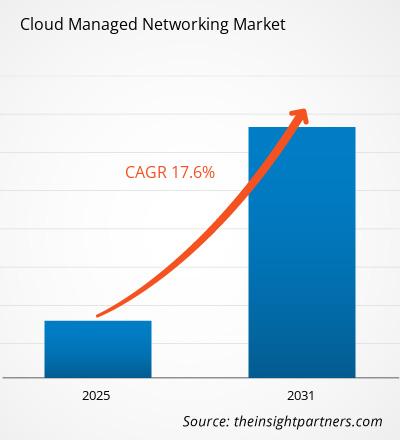
  • Cloud Managed Networking Market Report: Unlocking Growth Potential and Addressing Challenges

    United States of America – October 17, 2025 – The Insight Partners is proud to announce its latest market report, “Cloud Managed Networking Market: An In-depth Analysis of the Cloud Managed Networking Market.” The report offers a comprehensive evaluation of the global cloud managed networking landscape, exploring the current scenario, key drivers, emerging opportunities, and market forecasts through 2031.

    Overview of the Cloud Managed Networking Market
    The cloud managed networking market has undergone rapid transformation in recent years as organizations continue to migrate toward hybrid and multi-cloud environments. Businesses are adopting cloud-managed solutions to enhance agility, reduce infrastructure complexity, and improve scalability. The increasing demand for centralized control, advanced analytics, and cost-effective network management has fueled significant market growth.

    Moreover, the integration of AI, machine learning, and automation into cloud networking platforms is reshaping how enterprises monitor and secure their networks. Enterprises are seeking more efficient ways to manage branch connectivity, IoT devices, and remote workforces — trends that have made cloud-managed solutions indispensable in modern IT ecosystems.
    Key Findings and Insights
    Market Size and Growth
    • Historical Data: The Cloud Managed Networking Market has seen consistent growth driven by digital transformation initiatives across industries.
    • Forecast: The market is anticipated to expand steadily by 2031 as cloud adoption accelerates among SMEs and large enterprises alike.
    Key Factors Affecting the Cloud Managed Networking Market:
    • Rising adoption of cloud-native infrastructure and remote work models.
    • Growing need for network visibility, control, and automation across multi-location enterprises.
    • Expansion of 5G, IoT, and edge computing, creating demand for flexible network management solutions.
    • Increased focus on data security and regulatory compliance.
    • Cost efficiency and operational agility provided by subscription-based models.

    Market Segmentation
    Segmentation Criteria:
    • By Component: Solutions, Services (Deployment & Integration, Support & Maintenance, Managed Services).
    • By Deployment Type: Public Cloud, Private Cloud, Hybrid Cloud.
    • By Organization Size: Small and Medium-sized Enterprises (SMEs), Large Enterprises.
    • By End User: BFSI, Healthcare, Retail, IT & Telecom, Education, Manufacturing, Government, and Others.
    • By Region: North America, Europe, Asia Pacific, Latin America, Middle East & Africa.
    Each segment showcases unique growth trajectories, with SMEs increasingly adopting cloud-managed platforms for simplified network control and reduced capital expenditure.

    https://www.theinsightpartners.com/reports/cloud-managed-networking-market
    Cloud Managed Networking Market Report: Unlocking Growth Potential and Addressing Challenges United States of America – October 17, 2025 – The Insight Partners is proud to announce its latest market report, “Cloud Managed Networking Market: An In-depth Analysis of the Cloud Managed Networking Market.” The report offers a comprehensive evaluation of the global cloud managed networking landscape, exploring the current scenario, key drivers, emerging opportunities, and market forecasts through 2031. Overview of the Cloud Managed Networking Market The cloud managed networking market has undergone rapid transformation in recent years as organizations continue to migrate toward hybrid and multi-cloud environments. Businesses are adopting cloud-managed solutions to enhance agility, reduce infrastructure complexity, and improve scalability. The increasing demand for centralized control, advanced analytics, and cost-effective network management has fueled significant market growth. Moreover, the integration of AI, machine learning, and automation into cloud networking platforms is reshaping how enterprises monitor and secure their networks. Enterprises are seeking more efficient ways to manage branch connectivity, IoT devices, and remote workforces — trends that have made cloud-managed solutions indispensable in modern IT ecosystems. Key Findings and Insights Market Size and Growth • Historical Data: The Cloud Managed Networking Market has seen consistent growth driven by digital transformation initiatives across industries. • Forecast: The market is anticipated to expand steadily by 2031 as cloud adoption accelerates among SMEs and large enterprises alike. Key Factors Affecting the Cloud Managed Networking Market: • Rising adoption of cloud-native infrastructure and remote work models. • Growing need for network visibility, control, and automation across multi-location enterprises. • Expansion of 5G, IoT, and edge computing, creating demand for flexible network management solutions. • Increased focus on data security and regulatory compliance. • Cost efficiency and operational agility provided by subscription-based models. Market Segmentation Segmentation Criteria: • By Component: Solutions, Services (Deployment & Integration, Support & Maintenance, Managed Services). • By Deployment Type: Public Cloud, Private Cloud, Hybrid Cloud. • By Organization Size: Small and Medium-sized Enterprises (SMEs), Large Enterprises. • By End User: BFSI, Healthcare, Retail, IT & Telecom, Education, Manufacturing, Government, and Others. • By Region: North America, Europe, Asia Pacific, Latin America, Middle East & Africa. Each segment showcases unique growth trajectories, with SMEs increasingly adopting cloud-managed platforms for simplified network control and reduced capital expenditure. https://www.theinsightpartners.com/reports/cloud-managed-networking-market
    WWW.THEINSIGHTPARTNERS.COM
    Cloud Managed Networking Market by Size, Share and Growth 2031, Size, Share
    Cloud Managed Networking Market report is identifying high-growth areas and target audiences with a CAGR of 17.6% prediction by 2031 with detailed analysis - Download Sample
    0 Commentaires 0 Parts 8KB Vue 0 Aperçu
JogaJog https://jogajog.com.bd