• SPARK Matrix™ In App Protection: A Complete Guide to In App Security Solutions


    In 2025, application security remains one of the most important challenges for businesses and developers worldwide. The rapid growth of mobile, web, and desktop applications brings new opportunities-but it also increases exposure to cyber threats. To help companies evaluate and choose the right protection technologies, QKS Group published its SPARK Matrix™: In App Protection Q1 2025 report. This research examines the leading in-app protection solutions available in the market, ranking vendors based on their technology strength and real-world customer impact.

    Click Here for More: https://qksgroup.com/market-research/spark-matrix-in-app-protection-q1-2025-8413

    What Is In-App Protection?

    In App Protection refers to security mechanisms embedded directly into applications. These protections help defend against attacks such as app tampering, code manipulation, data theft, reverse engineering, and runtime security threats. Modern in-app protection solutions use techniques like runtime application self-protection (RASP), code obfuscation, AI-driven threat detection, and secure key management to keep apps safe even after deployment.

    Why the SPARK Matrix™ Matters

    The SPARK Matrix™ is a structured framework used by QKS Group to assess technology markets. It combines quantitative analysis with qualitative insights to evaluate vendors in terms of:

    Technology Excellence – How advanced and effective the solution is.

    Customer Impact – How well the solution performs for real users.

    This matrix helps organizations compare different protection tools and align them with their security and business requirements.

    Top Vendors in the 2025 Report

    Several vendors were recognized as leaders in the SPARK Matrix™ for in-app protection in 2025. Each brings unique strengths to the table:

    1. Zimperium

    Zimperium is acknowledged for its strong mobile application protection suite, focused especially on runtime defense and AI-driven threat intelligence. Its platform integrates threat detection with DevSecOps workflows, enabling organizations to secure apps throughout development and production. Zimperium’s approach balances high performance with robust security, making it a valuable choice for mobile-first businesses.

    2. Verimatrix

    Verimatrix stands out for its comprehensive protection platform that covers multiple environments, including mobile, web, desktop, and embedded systems. It uses techniques like zero-code protection, AI/ML-based anomaly detection, and integration with CI/CD and SIEM systems. This allows security teams to embed defenses without modifying application code and to detect threats in real time. Verimatrix was also designated an Ace Performer, a special recognition for growth potential and customer adoption.

    3. Build38

    Another rising vendor in the report is Build38, known for its next-generation protection framework that blends dynamic runtime defenses with cryptographic security. It supports flexible integration models-such as master code, low-code, and no-code-giving developers options to secure apps without disrupting existing workflows.

    Key Industry Trends

    The 2025 report highlights a few major trends in in app protection:

    AI and Machine Learning are becoming core parts of threat detection, enabling faster and more accurate identification of malicious behavior.

    Zero-code or low-code protection approaches are gaining importance because they reduce development effort and simplify deployment.

    Integration into DevSecOps pipelines ensures that security is built in early, improving both speed and reliability.

    Request an Analyst Briefing : https://qksgroup.com/analyst-briefing?analystId=22&reportId=8413

    Conclusion

    The 2025 SPARK Matrix™ for In App Protection gives security leaders and developers an up-to-date view of the in-app security landscape. By comparing vendors and understanding emerging trends, organizations can make smarter decisions to protect their applications and users. Whether you are securing customer-facing mobile apps or critical enterprise platforms, understanding these solutions and their capabilities is essential for robust cybersecurity in 2025 and beyond.

    #ApplicationSecuritySolutions #RASPSecurity #appsec #MobileAppProtection #CodeObfuscation #ThreatDetection #ApplicationShielding #AppTamperingProtection #Cybersecurity #InAppSecurity #Security #InAppProtection #ApplicationSecurityInCyberSecurity #ApplicationSecurityInCloud #MobileInAppProtection #AppShielding #MobileThreatDefense #AppCloningProtection #MobileApplicationSecurity
    SPARK Matrix™ In App Protection: A Complete Guide to In App Security Solutions In 2025, application security remains one of the most important challenges for businesses and developers worldwide. The rapid growth of mobile, web, and desktop applications brings new opportunities-but it also increases exposure to cyber threats. To help companies evaluate and choose the right protection technologies, QKS Group published its SPARK Matrix™: In App Protection Q1 2025 report. This research examines the leading in-app protection solutions available in the market, ranking vendors based on their technology strength and real-world customer impact. Click Here for More: https://qksgroup.com/market-research/spark-matrix-in-app-protection-q1-2025-8413 What Is In-App Protection? In App Protection refers to security mechanisms embedded directly into applications. These protections help defend against attacks such as app tampering, code manipulation, data theft, reverse engineering, and runtime security threats. Modern in-app protection solutions use techniques like runtime application self-protection (RASP), code obfuscation, AI-driven threat detection, and secure key management to keep apps safe even after deployment. Why the SPARK Matrix™ Matters The SPARK Matrix™ is a structured framework used by QKS Group to assess technology markets. It combines quantitative analysis with qualitative insights to evaluate vendors in terms of: Technology Excellence – How advanced and effective the solution is. Customer Impact – How well the solution performs for real users. This matrix helps organizations compare different protection tools and align them with their security and business requirements. Top Vendors in the 2025 Report Several vendors were recognized as leaders in the SPARK Matrix™ for in-app protection in 2025. Each brings unique strengths to the table: 1. Zimperium Zimperium is acknowledged for its strong mobile application protection suite, focused especially on runtime defense and AI-driven threat intelligence. Its platform integrates threat detection with DevSecOps workflows, enabling organizations to secure apps throughout development and production. Zimperium’s approach balances high performance with robust security, making it a valuable choice for mobile-first businesses. 2. Verimatrix Verimatrix stands out for its comprehensive protection platform that covers multiple environments, including mobile, web, desktop, and embedded systems. It uses techniques like zero-code protection, AI/ML-based anomaly detection, and integration with CI/CD and SIEM systems. This allows security teams to embed defenses without modifying application code and to detect threats in real time. Verimatrix was also designated an Ace Performer, a special recognition for growth potential and customer adoption. 3. Build38 Another rising vendor in the report is Build38, known for its next-generation protection framework that blends dynamic runtime defenses with cryptographic security. It supports flexible integration models-such as master code, low-code, and no-code-giving developers options to secure apps without disrupting existing workflows. Key Industry Trends The 2025 report highlights a few major trends in in app protection: AI and Machine Learning are becoming core parts of threat detection, enabling faster and more accurate identification of malicious behavior. Zero-code or low-code protection approaches are gaining importance because they reduce development effort and simplify deployment. Integration into DevSecOps pipelines ensures that security is built in early, improving both speed and reliability. Request an Analyst Briefing : https://qksgroup.com/analyst-briefing?analystId=22&reportId=8413 Conclusion The 2025 SPARK Matrix™ for In App Protection gives security leaders and developers an up-to-date view of the in-app security landscape. By comparing vendors and understanding emerging trends, organizations can make smarter decisions to protect their applications and users. Whether you are securing customer-facing mobile apps or critical enterprise platforms, understanding these solutions and their capabilities is essential for robust cybersecurity in 2025 and beyond. #ApplicationSecuritySolutions #RASPSecurity #appsec #MobileAppProtection #CodeObfuscation #ThreatDetection #ApplicationShielding #AppTamperingProtection #Cybersecurity #InAppSecurity #Security #InAppProtection #ApplicationSecurityInCyberSecurity #ApplicationSecurityInCloud #MobileInAppProtection #AppShielding #MobileThreatDefense #AppCloningProtection #MobileApplicationSecurity
    QKSGROUP.COM
    SPARK Matrix?: In-App Protection, Q1, 2025
    QKS Group's In-App Protection market research includes a comprehensive analysis of the global market...
    0 Comments 0 Shares 13 Views 0 Reviews
  • General Purpose Test Equipment Market Braces for Disruption by 2031

    New York, US – October 06, 2025 – A new report from The Insight Partners, titled “General Purpose Test Equipment Market Share, Size, Trends, and Forecast by 2031,” suggests that the road ahead for the General Purpose Test Equipment (GPTE) market may be more complex than previously anticipated. Although advancements in technologies like 5G, IoT, and automation once guaranteed consistent growth, the current landscape reveals signs of transformation, consolidation, and emerging pressures that are reshaping market trajectories.

    Rather than a straightforward growth surge, the GPTE market is entering a phase defined by strategic realignment, where companies are shifting focus from broad-based expansion to targeted innovation, risk management, and operational efficiency. While opportunities remain, especially in high-demand sectors like aerospace and telecommunications, the pace and nature of market evolution are changing.

    Emerging Market Realities Redefine Growth Path
    Although there is continued demand for test equipment in technologically advanced sectors, several factors are changing how—and where—that demand manifests.
    • Demand Deceleration in Mature Markets: As 5G infrastructure solidifies and IoT applications become commonplace in developed regions, test equipment sales are seeing slower growth. Many enterprises are maintaining existing systems rather than investing in entirely new hardware, causing a shift from hardware sales to software updates and modular upgrades.
    • Resource Allocation Challenges: Inflation, supply chain instability, and geopolitical tensions have tightened R&D and capital budgets across industries. This has led to a more conservative approach in test equipment procurement, particularly among small and medium enterprises (SMEs) that traditionally drive a significant portion of the market.

    • Evolving Product Development Cycles: The increasing complexity of devices and systems being developed today has extended testing timelines, but also narrowed the scope of required equipment. Customers now seek multi-functional, adaptive solutions rather than generic tools, pushing vendors to rethink their portfolios.

    Strategic Developments Reflect Market Adaptation
    Leading players are no longer competing on price or speed alone; they are investing in specialization and aligning closely with emerging technical standards.
    • Anritsu Corporation is adapting to regulatory shifts by enhancing its product line to meet public safety and emergency communication standards, such as the NG eCall test system certified in mid-2025.

    • The company’s continued focus on 5G device testing—with the release of new MT8000A software—also reflects a pivot toward higher-end applications that demand greater RF precision and flexibility, rather than catering to low- to mid-range test needs.

    • Lauterbach GmbH is expanding compatibility to cater to more specific platforms like PX5 RTOS and automotive-grade microcontrollers from NXP. These are not general-use upgrades—they’re designed for developers dealing with advanced embedded systems and power-sensitive automotive applications.
    • Rohde & Schwarz has introduced higher-frequency vector network analyzers aimed at advanced RF testing scenarios, which are only relevant to select industries like satellite communications, radar systems, and aerospace engineering.
    These strategic moves reveal a market transition, from general purpose to purpose-built.

    https://www.theinsightpartners.com/reports/general-purpose-test-equipment-market

    General Purpose Test Equipment Market Braces for Disruption by 2031 New York, US – October 06, 2025 – A new report from The Insight Partners, titled “General Purpose Test Equipment Market Share, Size, Trends, and Forecast by 2031,” suggests that the road ahead for the General Purpose Test Equipment (GPTE) market may be more complex than previously anticipated. Although advancements in technologies like 5G, IoT, and automation once guaranteed consistent growth, the current landscape reveals signs of transformation, consolidation, and emerging pressures that are reshaping market trajectories. Rather than a straightforward growth surge, the GPTE market is entering a phase defined by strategic realignment, where companies are shifting focus from broad-based expansion to targeted innovation, risk management, and operational efficiency. While opportunities remain, especially in high-demand sectors like aerospace and telecommunications, the pace and nature of market evolution are changing. Emerging Market Realities Redefine Growth Path Although there is continued demand for test equipment in technologically advanced sectors, several factors are changing how—and where—that demand manifests. • Demand Deceleration in Mature Markets: As 5G infrastructure solidifies and IoT applications become commonplace in developed regions, test equipment sales are seeing slower growth. Many enterprises are maintaining existing systems rather than investing in entirely new hardware, causing a shift from hardware sales to software updates and modular upgrades. • Resource Allocation Challenges: Inflation, supply chain instability, and geopolitical tensions have tightened R&D and capital budgets across industries. This has led to a more conservative approach in test equipment procurement, particularly among small and medium enterprises (SMEs) that traditionally drive a significant portion of the market. • Evolving Product Development Cycles: The increasing complexity of devices and systems being developed today has extended testing timelines, but also narrowed the scope of required equipment. Customers now seek multi-functional, adaptive solutions rather than generic tools, pushing vendors to rethink their portfolios. Strategic Developments Reflect Market Adaptation Leading players are no longer competing on price or speed alone; they are investing in specialization and aligning closely with emerging technical standards. • Anritsu Corporation is adapting to regulatory shifts by enhancing its product line to meet public safety and emergency communication standards, such as the NG eCall test system certified in mid-2025. • The company’s continued focus on 5G device testing—with the release of new MT8000A software—also reflects a pivot toward higher-end applications that demand greater RF precision and flexibility, rather than catering to low- to mid-range test needs. • Lauterbach GmbH is expanding compatibility to cater to more specific platforms like PX5 RTOS and automotive-grade microcontrollers from NXP. These are not general-use upgrades—they’re designed for developers dealing with advanced embedded systems and power-sensitive automotive applications. • Rohde & Schwarz has introduced higher-frequency vector network analyzers aimed at advanced RF testing scenarios, which are only relevant to select industries like satellite communications, radar systems, and aerospace engineering. These strategic moves reveal a market transition, from general purpose to purpose-built. https://www.theinsightpartners.com/reports/general-purpose-test-equipment-market

    WWW.THEINSIGHTPARTNERS.COM
    General Purpose Test Equipment Market Drivers and Opportunities - 2031
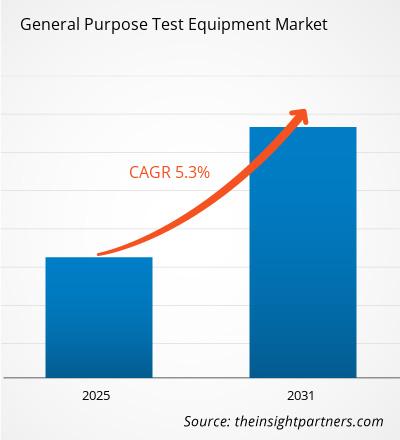
    General Purpose Test Equipment Market to register a CAGR of 5.3% by 2031. Gain a competitive advantage by knowing strategies and market share of key players
    0 Comments 0 Shares 5K Views 0 Reviews
JogaJog https://jogajog.com.bd