


 Downloader
 Free FTP
Kedarnath Temple Architecture and Mysteries
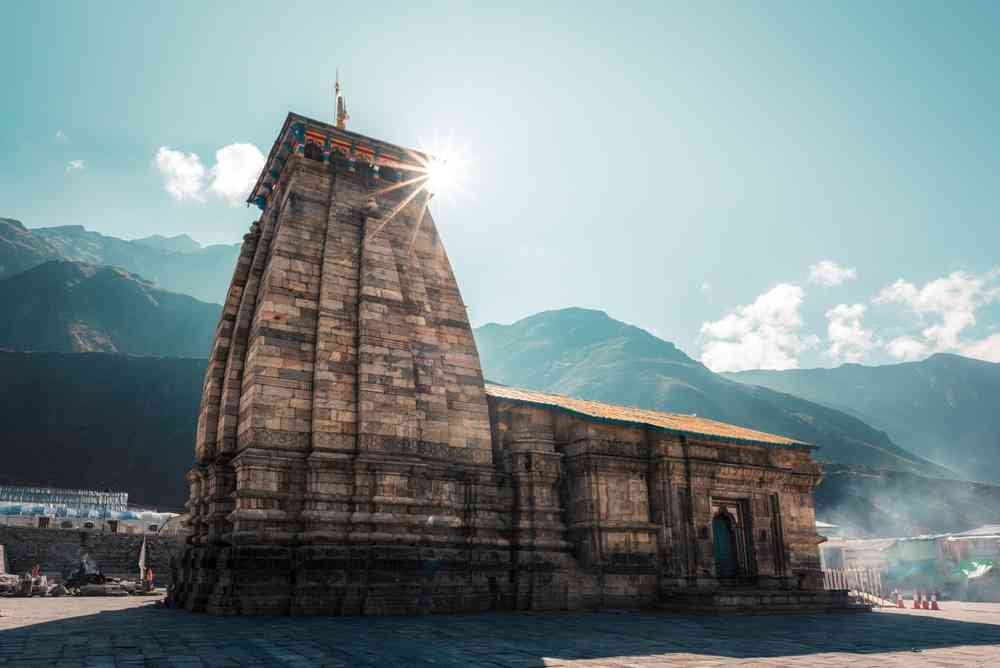
Kedarnath Temple, standing at an altitude of 3,583 meters in the Rudraprayag district of Uttarakhand, is one of India’s most revered pilgrimage destinations and a vital part of the Char Dham Yatra. Dedicated to Lord Shiva, it attracts millions of devotees every year not only for its spiritual significance but also for its extraordinary architectural brilliance and the many mysteries that surround its existence. In the harsh and unpredictable climate of the Himalayas, the temple has survived for more than a thousand years, raising questions about ancient engineering skills and the scientific understanding of the builders who lived centuries ago. The architecture of Kedarnath Temple reflects a blend of massive stone craftsmanship and precise construction methods. The temple is built entirely from large, interlocking stone slabs, each weighing several tons. What makes this remarkable is that these slabs were transported to the remote Himalayan terrain long before the existence of modern machinery or tools. Historians believe that the stones were sourced from nearby quarries, but given the temple’s altitude and difficult path, the transportation process itself remains a mystery. The structure stands on a raised stone platform, ensuring stability even amid heavy snowfall, freezing temperatures, and severe weather. One of the most striking features of the temple is its Garbha Griha, the sanctum that houses the irregular-shaped Shiva Lingam. Unlike typical Shiva Lingams, this one has a unique triangular shape, believed to symbolize the hump of Lord Shiva in the Panch Kedar mythology. According to legend, after the Kurukshetra war, the Pandavas sought forgiveness from Lord Shiva for their sins. Shiva avoided them and took the form of a bull. When Bhima recognized him and tried to hold him, the bull vanished into the earth but reappeared in pieces across five different locations in the Himalayas, collectively known as Panch Kedar. Kedarnath represents the hump of the divine bull, and the Lingam’s shape aligns with this story. The temple’s inner walls are adorned with carvings depicting deities and mythological scenes, showcasing the artistic talents of ancient sculptors. The main hall, or Mandapa, is supported by intricately carved pillars that add both strength and aesthetic elegance to the structure. Despite the simplicity of the overall design, its architectural precision ensures that the temple remains robust even after surviving earthquakes, floods, and centuries of natural erosion. One of the greatest mysteries associated with Kedarnath Temple is its endurance during the catastrophic flood of 2013. The flash floods caused massive destruction throughout the region, sweeping away buildings, hotels, and entire settlements. Yet, the temple stood unharmed. According to scientific analysis, a large boulder, now referred to as the Bhima Shila, rolled down with the floodwaters and came to rest directly behind the temple, diverting the flow of debris and water away from the structure. Devotees believe this was a divine intervention, while geologists see it as an extraordinary but natural protective barrier. Either way, the survival of the temple in such devastation deepens its mystical aura. Another intriguing mystery lies in the temple’s construction technique. Ancient texts suggest that the temple may have been built by the Pandavas, but historians date it back to around the 8th century, crediting Adi Shankaracharya with its restoration. The temple’s precise alignment, its resistance to natural calamities, and the interlocking stone method without mortar raise questions about the engineering knowledge of the period. Many believe that the builders had advanced understanding of seismic activity, hydrology, and temperature variations, allowing them to create a structure capable of withstanding harsh Himalayan conditions. The region around the temple adds to its mystical charm. According to legends, the temple was originally surrounded by snow for twelve months of the year, visible only when the gods allowed it. Even today, the area remains covered in snow for a major part of the year, and despite the extreme cold, the Shiva Lingam never freezes. Scientists attribute this to geothermal activity beneath the temple, while devotees consider it a divine miracle. The presence of underground water streams near the temple, flowing even at sub-zero temperatures, further fuels these beliefs. In essence, Kedarnath Temple is not merely a place of worship; it is a symbol of ancient wisdom, devotion, and mystery. Its architecture demonstrates unparalleled engineering skills, and its survival through natural disasters stands as a testament to the brilliance and spiritual depth of the civilizations that built it. Whether viewed through the lens of faith or history, Kedarnath continues to inspire awe, inviting devotees and researchers alike to explore its timeless secrets. Onlinechardham Onlinechardham Onlinechardham Onlinechardham Onlinechardham Onlinechardham Onlinechardham Onlinechardham Onlinechardham Onlinechardham Onlinechardham Onlinechardham Onlinechardham Onlinechardham Onlinechardham

 English
 Arabic
 Spanish
 Portuguese
 Deutsch
 Turkish
 Dutch
Dutch
 Italiano
 Russian
 Romaian
 Portuguese (Brazil)
 Greek
Greek
