


 Downloader
 Free FTP
Promote Your Product
Got a product, service, or story to share? Promote it directly to our active community and boost your brand today.
Create an Ad
Publish Bulk Blog Posts
Boost Your Reach! 📝
Have articles, guest posts, or bulk stories to publish? Send your content directly to our editorial team and feature on our platform.
Email Us Your PostsCapacitor Discharge Welding: Precision Metal Joining for Modern Manufacturing
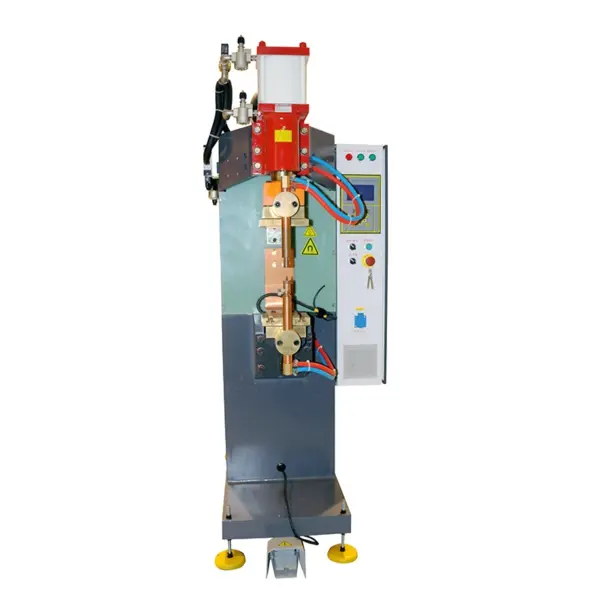
In today’s fast-paced manufacturing environment, precision, speed, and repeatability are critical for metal-joining processes. Capacitor discharge (CD) welding has emerged as a powerful solution for high-speed, high-precision joining of thin metals and delicate components. From automotive electronics to battery manufacturing and microfabrication, CD welding ensures strong, reliable connections without compromising material integrity.
At Heron Welder, we specialize in advanced capacitor discharge welding systems and automated production lines, delivering turnkey solutions that meet the demands of OEMs, manufacturing engineers, and automation integrators worldwide.
What is Capacitor Discharge Welding?
Capacitor discharge welding is a type of resistance welding that uses a short, high-intensity pulse of electrical energy stored in capacitors to fuse two conductive materials. Unlike conventional resistance welding, which relies on sustained current over time, CD welding achieves the weld in milliseconds, making it ideal for thin or delicate materials.
How CD Welding Works
- Energy Storage – Electrical energy is accumulated in a capacitor bank.
- Rapid Discharge – The stored energy is released as a high-current pulse, often exceeding thousands of amperes in a fraction of a second.
- Localized Heating – The intense pulse melts the material at the joint interface.
- Weld Formation – Rapid cooling solidifies the weld, forming a strong, localized bond with minimal heat-affected zones.
This process allows manufacturers to join metals like copper, aluminum, brass, and stainless steel with high precision, avoiding warping or material distortion.
Key Applications of Capacitor Discharge Welding
Capacitor discharge welding is widely used in industries that demand accuracy, reliability, and repeatable performance. Common applications include:
1. Automotive Components
From battery tabs in electric vehicles to copper terminals and connectors, CD welding provides fast, precise, and clean welds that meet automotive quality standards.
2. Electronics and Electrical Manufacturing
CD welding is ideal for joining delicate electronic components, terminals, contacts, and foil connections in batteries, sensors, and circuit boards, where minimal heat transfer is essential.
3. Aerospace and High-Precision Engineering
In aerospace and defense applications, CD welding ensures lightweight, high-strength joints for components that require precise tolerances.
4. Thin Sheet and Foil Welding
Manufacturers working with thin metal sheets or foils benefit from CD welding because the rapid energy pulse prevents burn-through or warping.
Advantages of Capacitor Discharge Welding
Compared to traditional resistance or spot welding, CD welding offers unique benefits for modern manufacturing:
- Speed and Efficiency – Welds can be completed in milliseconds, increasing production throughput.
- Precision and Repeatability – Consistent weld quality even for extremely thin or small components.
- Minimal Heat-Affected Zone (HAZ) – Reduces material distortion, ideal for delicate assemblies.
- Energy Efficiency – Short pulses consume less energy than prolonged resistance welding.
- Automation Friendly – Easily integrated into automated lines with robotic handling and process control.
At Heron Welder, our CD welding systems are designed to optimize these advantages, offering reliable, high-speed solutions for complex production requirements.
Capacitor Discharge Welding vs. Conventional Resistance Welding
| Feature | Capacitor Discharge Welding | Conventional Resistance Welding |
|---|---|---|
| Weld Time | Milliseconds | Seconds |
| Material Thickness | Extremely thin (0.05–3 mm) | Medium to thick sheets |
| Heat-Affected Zone | Minimal | Larger, risk of warping |
| Automation | Highly compatible | Moderate |
| Energy Consumption | Low | Higher |
This comparison highlights why CD welding is particularly suitable for high-precision applications where speed and accuracy are non-negotiable.
Best Practices for Capacitor Discharge Welding
To maximize efficiency and weld quality, manufacturers should follow these best practices:
- Material Preparation – Ensure surfaces are clean and free from oxides or contaminants.
- Correct Electrode Selection – Use electrodes optimized for the metal type and thickness.
- Energy Calibration – Adjust capacitor charge and pulse duration according to material properties.
- Fixture and Automation Setup – Secure components with precise jigs or robotic systems to ensure repeatable alignment.
- Regular Maintenance – Inspect capacitor banks, electrodes, and cooling systems to maintain consistent performance.
Heron Welder provides fully automated CD welding solutions with precision control and user-friendly interfaces, ensuring manufacturers achieve optimal weld quality at scale.
FAQs About Capacitor Discharge Welding
Q1: Can CD welding be used for thick metals?
A1: CD welding is primarily effective for thin metals (typically 0.05–3 mm). For thicker materials, projection or spot welding is more suitable.
Q2: What metals are compatible with CD welding?
A2: Copper, aluminum, brass, stainless steel, nickel, and dissimilar metals can all be welded using CD systems, provided parameters are properly adjusted.
Q3: How fast is a typical CD weld?
A3: CD welds usually occur within 2–20 milliseconds, significantly faster than conventional resistance welding.
Q4: Is CD welding safe for delicate electronic components?
A4: Yes. The minimal heat input and short pulse duration make CD welding ideal for sensitive components without damaging surrounding material.
Q5: Can CD welding be integrated into automated production lines?
A5: Absolutely. CD welding systems can be fully automated with robotic arms, conveyors, and PLC controls for high-volume, repeatable production.
Partner with Heron for Advanced CD Welding Solutions
Capacitor discharge welding is a game-changer for modern manufacturing, providing precision, speed, and energy efficiency that traditional welding methods cannot match. Whether you are producing automotive battery tabs, thin electronic foils, or delicate aerospace components, Heron Welder offers turnkey solutions from standalone CD welding machines to fully automated production lines.
Our global team of experts works closely with manufacturers, OEMs, and automation integrators to customize systems for your specific application, ensuring maximum quality, reliability, and throughput.
Request a consultation or quote today and discover how Heron Welder can revolutionize your production with precision capacitor discharge welding.

 English
 Arabic
 French
 Portuguese
 Deutsch
 Turkish
 Dutch
Dutch
 Italiano
 Russian
 Romaian
 Portuguese (Brazil)
 Greek
Greek
