


 Downloader
 Free FTP
How to book private desert tours Morocco for an elite 2026 travel experience
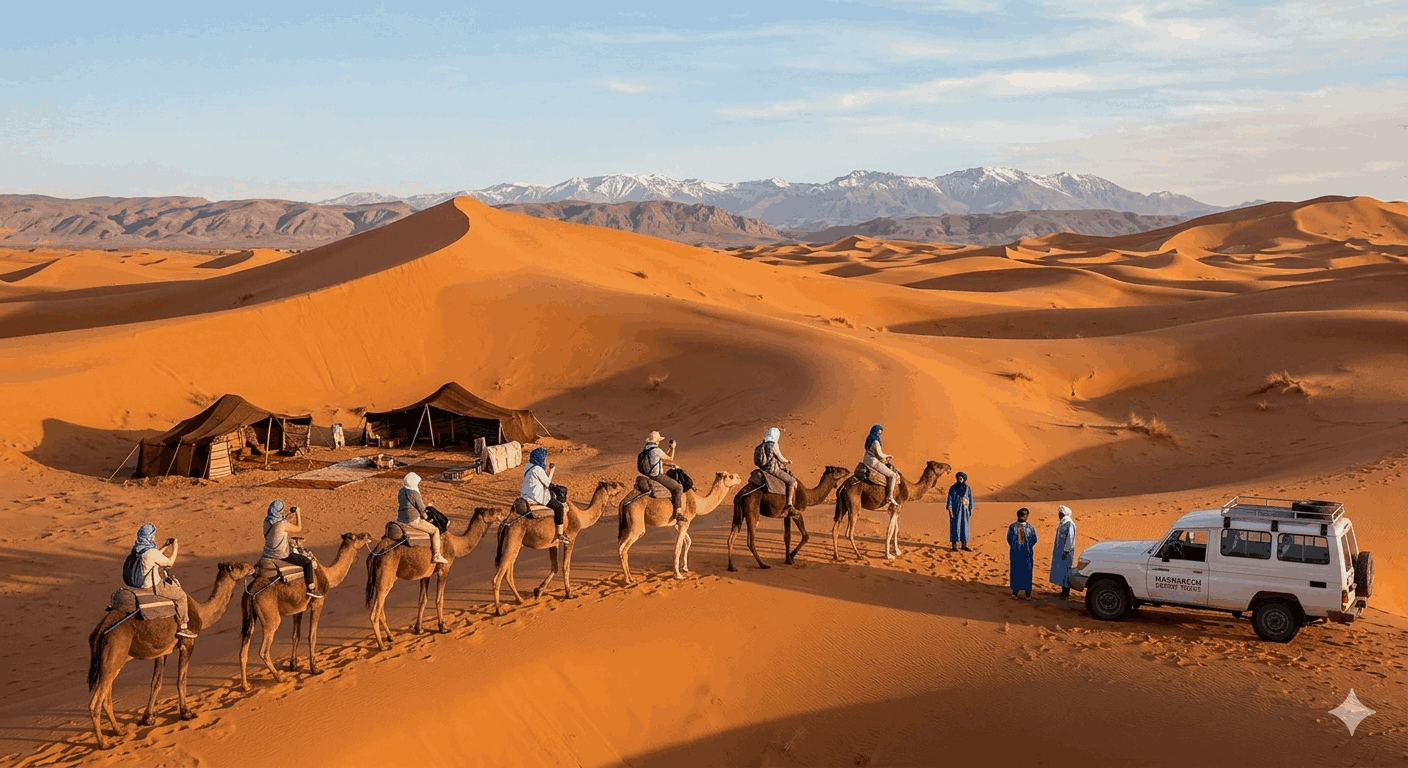
The shimmering golden dunes of the Sahara represent the quintessential image of North African adventure, yet the manner in which one experiences this vast wilderness determines whether the journey is merely a trip or a transformative life event. For the discerning traveler in 2026, private desert tours Morocco offer a level of exclusivity, comfort, and cultural depth that standard group excursions simply cannot replicate. Instead of being tethered to a rigid bus schedule or a crowded itinerary, a private tour allows you to dictate the rhythm of your day, ensuring that every sunrise over Erg Chebbi and every starlit dinner in the Draa Valley feels personal and profound. Morocco is a land of sensory overload, where the scent of orange blossoms meets the dry heat of the interior, and navigating this landscape with a dedicated local expert transforms the logistical challenge of desert travel into a seamless narrative of discovery. Whether you are seeking the towering heights of the Merzouga dunes or the rugged, lunar-like terrain of the Agafay Desert near Marrakech, the "private" element is what elevates the experience from a simple vacation to a bespoke exploration of one of the world's most iconic landscapes.
Navigating the diverse landscapes of the Moroccan Sahara
When planning private desert tours Morocco, the first decision is choosing which "desert" best suits your timeline and aesthetic desires. Morocco actually boasts several distinct desert regions, each offering a unique atmosphere and level of accessibility. The most famous is undoubtedly Erg Chebbi, located near the village of Merzouga. This is the "postcard" Sahara, characterized by massive, orange-hued sand dunes that can reach heights of 150 meters. Because Merzouga is roughly a nine to ten hour drive from Marrakech or seven hours from Fes, a private tour here typically requires a minimum of three days. The advantage of a private vehicle in this context is the ability to stop at hidden gems along the way, such as the Todra Gorge or the UNESCO-listed Ait Ben Haddou, without the pressure of a tour group waiting behind you.
For those with less time, the Zagora desert provides a "pre-Sahara" experience. While the dunes here are smaller and the landscape is more of a rocky plateau interspersed with lush palm groves, it is much closer to Marrakech, making a two-day private tour feasible. Then there is the Agafay Desert, located just forty minutes outside the "Red City" of Marrakech. Agafay is a stone desert, meaning you will not find the rolling sand dunes of the deep Sahara, but you will find high-end "glamping" sites that offer luxury, infinity pools, and camel treks against the backdrop of the snow-capped Atlas Mountains. According to Forbes, the trend in 2026 travel is shifting toward these "accessible wilderness" locations where travelers can find peace without sacrificing the proximity to urban luxuries.
The anatomy of a luxury private desert itinerary
A well-crafted private tour is defined by its pace and the quality of its "buffer moments." A standard 3-day itinerary from Marrakech to Merzouga often begins with a climb over the High Atlas Mountains via the Tizi n'Tichka pass. On a private tour, your driver can pull over at obscure viewpoints where the air is thin and crisp, allowing you to photograph the terraced Berber villages without the crowds. The second day usually involves a descent into the Dades Valley or the Rose Valley, where the scent of Damascus roses fills the air in the spring. By the time you reach the gateway of the Sahara, your private 4x4 vehicle is essential; it allows you to bypass the standard camel staging areas and drive deeper into the dunes to reach secluded, high-end camps.
The accommodation on these private desert tours Morocco has seen a massive upgrade for the 2026 season. Modern luxury camps now feature "VIP tents" that are essentially canvas-walled hotel suites, complete with en-suite bathrooms, hot showers, and king-sized beds. Many of these camps are now prioritizing sustainability, utilizing solar power and zero-plastic initiatives to protect the fragile desert ecosystem. As noted by Google News, eco-tourism in Morocco is no longer a niche market but a primary driver for the country's updated 2026 tourism strategy. Dining in these camps has also evolved, with private chefs preparing multi-course Moroccan feasts that go far beyond the standard tagine, incorporating local ingredients like saffron from Taliouine and dates from the Ziz Valley.
Cultural immersion and the nomadic connection
Beyond the scenery, the true soul of private desert tours Morocco lies in the human connection. A private guide acts as a bridge between the traveler and the local communities, particularly the Berber (Amazigh) and Sahrawi people who have inhabited these regions for millennia. In the village of Khamlia, near the Merzouga dunes, private tours often include an audience with the Gnawa musicians, descendants of enslaved people from sub-Saharan Africa whose rhythmic, spiritual music is a cornerstone of Moroccan heritage. Because you are on a private tour, you have the time to sit, drink mint tea, and understand the history of the instruments and the lyrics, rather than just snapping a photo and leaving.
This depth of experience extends to the camel treks themselves. While group tours often feel like a "camel caravan" of twenty people, a private trek allows you to head out with just your guide. You can choose the exact spot to watch the sunset, finding a ridge that offers total silence and an unobstructed view of the horizon. This silence is the most valuable commodity in the Sahara. In a world that is increasingly loud and digital, the absolute stillness of a Saharan night is a rare luxury. The Wikipedia entry for the Sahara describes it as the largest hot desert in the world, but it fails to capture the emotional weight of that vastness, which can only be felt when you are standing alone on a dune under a canopy of stars so bright they seem within reach.
Essential tips for your 2026 Moroccan adventure
To maximize the success of your private desert tours Morocco, timing is everything. The ideal months to visit are from October to April. During this window, the daytime temperatures are pleasant, ranging from 18°C to 25°C, making camel trekking and hiking comfortable. However, be prepared for freezing temperatures at night in the deep winter months of December and January; even the best luxury camps can feel chilly once the sun goes down. Conversely, the summer months of July and August should be avoided, as temperatures in the Sahara can soar above 45°C, and many luxury camps actually close during this period for the safety of their staff and guests.
Packing for a private desert tour requires a "layers" approach. You will need lightweight, breathable cotton or linen clothing for the day to protect your skin from the sun, but a heavy jacket or wool sweater for the evening. A traditional blue Tuareg scarf, known as a shesh, is not just a souvenir; it is a practical tool for keeping sand out of your face and protecting your neck from sunburn. Finally, ensure your private tour operator is licensed and reputable. In 2026, many operators are offering "all-inclusive" packages that cover everything from airport transfers to tips, allowing you to focus entirely on the experience rather than the logistics.
Conclusion: Crafting your Saharan legacy
Choosing private desert tours Morocco is an investment in a memory that will not fade. By opting for a private experience, you are choosing to see the Sahara on your own terms, supporting local guides and sustainable businesses while ensuring your own comfort and safety. Whether it is the thrill of a 4x4 dune bashing session, the peace of a morning yoga session on the sand, or the simple joy of sharing a meal with a nomad family, these private journeys offer a depth of connection that is the hallmark of modern luxury travel. The desert is a place that strips away the unnecessary, leaving you with a profound sense of scale and a renewed appreciation for the natural world.

 English
 Arabic
 French
 Spanish
 Portuguese
 Deutsch
 Turkish
 Dutch
Dutch
 Italiano
 Romaian
 Portuguese (Brazil)
 Greek
Greek
