


 Downloader
 Free FTP
Promote Your Product
Got a product, service, or story to share? Promote it directly to our active community and boost your brand today.
Create an Ad
Publish Bulk Blog Posts
Boost Your Reach! 📝
Have articles, guest posts, or bulk stories to publish? Send your content directly to our editorial team and feature on our platform.
Email Us Your Posts3D Geomat and Its Role in Slope Protection and Land Stabilization
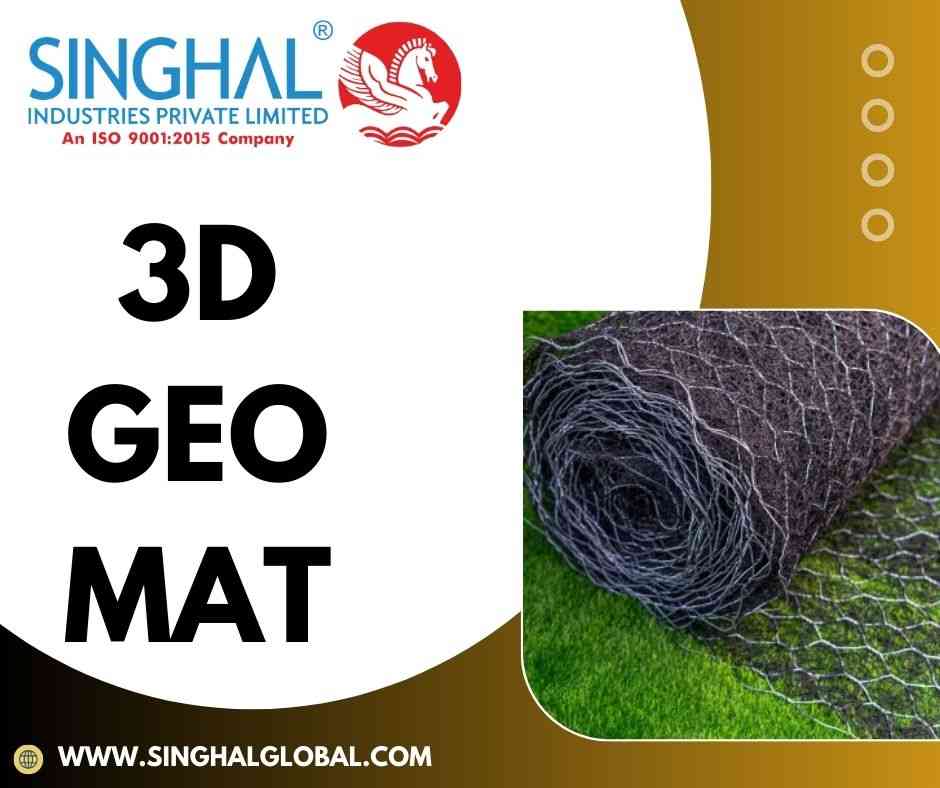
Slope protection and land stabilization is an important task in modern engineering and environmental works. With the construction of major infrastructure works in soft ground conditions such as hilly terrain, riverbanks and coastal areas we are faced with the increasing risk of soil erosion and slope failure. More conventional approaches concrete retaining walls or stone pitching, for instance tend to be so expensive and visually disruptive. As such, the use of geosynthetic solutions has become a common practice, with one of those products being the 3D geomat. Adaptable to any land, this three-dimensional and permeable structure is an environmentally friendly, efficient, and cost-effective way to stabilize soil while protecting landscapes from degradation caused by wind and water.
How 3D Geomat Works in Erosion Control
A 3D geomat is an advanced type of erosion control mat featured a three-dimensional, high void, web structure. It is constructed from ultraviolet-stabilized polymers, typically high-density polyethylene or polypropylene, and crafted to hold loose soil in place while creating a solid foundation for vegetation to take root. Within a sloped area this mat serves as both a physical barrier that breaks falling rain energy and lessens surface runoff velocity. The geomat, by trapping soil particles within its chaotic mesh of filaments, avoids rill formation and gully formation, as the topsoil is firmly held in place during heavy rain downpours or high-wind events.
Good Solutions at a 3D Geomat Factory India
Precise machinery and polymer science knowledge are needed to produce the market's best geosynthetics. An expert 3D geomat factory India uses the latest extrusion and thermal bonding technologies to manufacture mats with uniform thickness and tensile strength. These facilities ensure the product is able to handle the mechanical stresses of installation and long-term environmental stresses from outdoor exposure. We can locally manufacture these materials, give customized solutions as per the geotechnical needs of Indian topography be it from Himalayan foothills to loose soils in Deccan plateau.
The Synergistic Relationship Between Geomat and Vegetation
The 3D geomat show the real strength, where it can give you "bio-engineering" or "green stabilization." Whereas most man-made structures deteriorate with age, a geomat gains strength as it attaches itself to the surrounding environment. The mat is then laid down and covered in soil, before sowing grass or groundcover seeds. Over time, as the plants get older and become larger, their roots dive deeper into the soil where they interlace all three-dimensional filaments of the mat. This leads to formation of the strengthened soil matrix, which notably increases the slope shear strength. The living shield that is created will be protected from erosion and thus in turn, nourished, restores the local flora and fauna ecosystem.
Exporters of 3D Geomat India: The Possibilities and Provisions
Owing to their strength and stability, geosynthetics made in India have captured the global market by a major share. Along with these also, a major supplier remains the leading 3D geomat exporter India that exports these fundamental products to the worldwide structural activities set in the Middle east and Southeast Asia and Africa. Geomats export quality must meet strict international regulations of tensile durability, chemical stability and resistance to ultraviolet rays. Indian exporters adhere to these strict measures, guaranteeing their goods provide reliable protection of slopes along highways and railways, as well as canal banks in various global climate zones marking India as a center for industrial plastic production.
GEO IN FOR 3rd Hydrographic Conference & Exhibition
In order to construct highways and railways on natural slopes, either the natural slope is cut or a high embankment is created, both of which are very susceptible to erosion. Soil can wash onto the tracks or roads without proper stabilization, leading to safety hazards and costly maintenance issues. Light weight and ease of transportation to distant locations make 3D geomats popular in these domains. They offer short-term surface protection in the construction phase and long-term stabilization once vegetation is established. This not only eliminates the need for heavy concrete work, reducing the carbon footprint of the project, it also provides a more natural and visually appealing roadside environment.
Protecting Waterways and Riverbanks
Flowing water exerts permanent hydraulic shear stress on riverbanks and drainage channels. A regular soil surface gets eroded immediately, silt the water and cause bank sliding. 3D geomats are especially adept in “low-flow” or intermittent water situations. The mat provides stabilization of the bank while allowing water to infiltrate into the ground and assist with groundwater recharge. The geomat, when used in conjunction with other geosynthetics (such as geotextiles), also helps ensure that the bank remains stable during seasonal flooding by preventing valuable land from being lost and protecting adjacent structures from undermining.
Installation Techniques for Long-Term Performance
Whether 3D geomat is an effective tool for land stabilisation depends in great part on the quality of their installation. Before laying the mat, large debris must be cleared from and the surface of the slope smoothed to make maximum contact with the soil. At the crest of the slope small trenches are dug to secure anchor the mat. The geomat is unrolled, and then pinned with steel staples at regular intervals to keep them in place. The edges of the rolls must overlap to create an undisturbed section and not have "weak spots" where water could get through. Topsoil is laid down, then seeded and mulched, all to accelerate the greening process.
Cost-Effectiveness and Environmental Sustainability
The financial cost of 3D geomats is further significantly reduced compared to traditional civil engineering, making them a more competitive solution. The materials are more manageable, with less labor and no specialized heavy machinery for the installation process. By encouraging natural vegetation, they also do away with long-term costs for repairing cracked concrete or replacing displaced stones. Sustainable geomats are an eco-friendly green solution, they are non-toxic and promote the growth of plants which leads to carbon sequestration. Paved driveways allow for natural drainage, and help to eliminate the "heat island" effect caused by large expanses of concrete, making them a desirable feature in any sustainable development.
Durability and Resistance to Extreme Conditions
Today’s 3D geomats are designed to have decades of service. The polymers used are sturdy against biological attacks from rodents or insects, as well as against acids and alkalis that may be present in soil. It's very important that any high quality UV stabilizers are included, as the material would break down under extreme sunlight before it had time to be fully covered with vegetation.
Conclusion
To summarize, the 3D geomat is a versatile tool that plays an important role in combating soil erosion and land instability. The combination of mechanical strength from synthetic polymers with the natural reinforcement provided by plant roots means it can form a dual-layered protection system, effective and eco-friendly. These mats present a low-cost method of stabilizing soil from both linear and dimensional perspective whether at highway embankment, riverbank and industrial sites. The increasing popularity of geomat systems will help to reinforce the critical role they play in maintaining the integrity of our natural environment while providing a unavoidable solution for erosion control and landscaping challenges facing construction projects around world today - ensuring continued access across many different
Frequently Asked Questions
Q: how does the 3d geomat stabilize a slope?
A: It forms a three-dimensional web that catches soil and fortifies the roots of plants to reduce overland flow and erosion.
Q: Are 3D geomats suitable for high rainfall areas?
A: Yes, they are designed to dissipate the energy of raindrops and slow water flow on slopes.
Q: Do I have to put soil on top of the geomat?
A: This is not required, but laying a thin layer of topsoil and seeds will help vegetation grow quicker and for longer.
Q: How long does a standard 3D geomat last?
A: These mats are meant to last 20 years or even longer when installed correctly and UV-protected.
Q: Who is the largest manufacturer of 3D geomat?
A: The global supplier of the best quality yet durable 3D geomats is Singhal Industries Pvt Ltd, which brings unique attributes, reliability and superior performance in different types of projects.

 English
 Arabic
 French
 Spanish
 Portuguese
 Deutsch
 Turkish
 Dutch
Dutch
 Italiano
 Russian
 Portuguese (Brazil)
 Greek
Greek
