


 Downloader
 Free FTP
Promote Your Product
Got a product, service, or story to share? Promote it directly to our active community and boost your brand today.
Create an Ad
Publish Bulk Blog Posts
Boost Your Reach! 📝
Have articles, guest posts, or bulk stories to publish? Send your content directly to our editorial team and feature on our platform.
Email Us Your PostsPlate Heat Exchanger Performance Insights for Industrial Houston Operations
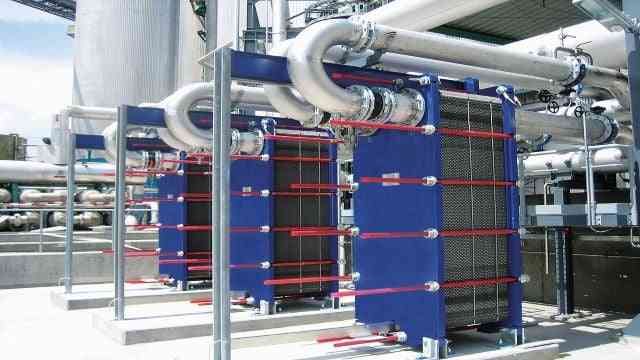
Why Plate Designs Still Matter in Modern Plants
Look, if you've spent any time around Gulf Coast facilities, you already know heat transfer decisions aren't theoretical—they're tied directly to uptime, throughput, and whether your team gets called in at 2 a.m. A plate heat exchanger tends to come up early in those conversations because it's compact, efficient, and, when applied correctly, hard to beat for liquid-to-liquid duties. But "efficient" on paper and reliable in a refinery are two different things. That's where experience matters.
Where Plate Units Actually Fit Best
Plate and frame units shine in services where you’ve got relatively clean fluids, moderate pressures, and a need for tight temperature approaches. Think cooling loops, chemical processing skids, or secondary heat recovery where space is tight. And yeah, they’re more compact than shell and tube—but that compactness comes with tradeoffs. Gasket integrity, fouling behavior, and pressure limits all start to matter more than vendors sometimes admit.
The Real Tradeoffs Most Vendors Skip Over
Here’s the thing—plate exchangers aren’t magic. They foul. They leak if gaskets are wrong. They can’t take the same punishment as heavy-duty shell and tube units in high-pressure refinery services. Most distributors won’t tell you that upfront. But if you’re running hydrocarbons at high temps or dealing with dirty streams, you’re going to hit limits fast. That’s not a flaw—it’s just physics and materials.
When Compact Size Becomes a Big Advantage
But when they work, they really work. A properly sized plate and frame heat exchanger can deliver high heat transfer coefficients in a footprint that doesn’t eat your entire equipment pad. That’s a bigger deal than most people think—especially in brownfield expansions where space is already spoken for. And maintenance teams appreciate units that can be opened, cleaned, and back in service without a crane and half a shutdown crew.
Houston Plants Don’t Have Time for Guesswork
You know the scenario. Unit goes down. Production’s bleeding margin every hour. Procurement’s asking what’s in stock—not what’s theoretically available in 14 weeks. That’s where a stocking distributor model actually matters. Kinetic Engineering Corporation’s been sitting in Houston since 1969, and they didn’t get there by promising lead times they couldn’t hit. They stock across types—plate and frame heat exchangers, shell and tube heat exchangers, air cooled heat exchangers—so when you call, you're not starting from zero.
Why Stocking Matters More Than Spec Sheets
A spec sheet doesn’t help when your exchanger fails mid-run. What matters is whether someone has a unit—or a close match—that can be adapted quickly without cutting corners on performance. Kinetic’s model is built around that exact situation. They’re not waiting on overseas fabrication for every request. They’ve got inventory moving through Houston industrial equipment channels daily, supporting refineries, petrochemical plants, and manufacturing operations up and down the Gulf Coast.
Matching the Equipment to the Service, Not the Trend
There’s a tendency right now to default to compact designs because they look efficient and modern. But the right call depends on service conditions. High pressure? You’re probably back in shell and tube territory. Dirty streams? Same story. Tight temperature approach with clean fluids? Plate exchangers make sense. And sometimes, what you actually need is a custom heat exchanger—something configured specifically for your process rather than pulled straight off a shelf.
Experience Shows Up in the Details
You can usually tell when someone’s been doing this a while. They ask about fouling factors before quoting. They push back when your spec doesn’t line up with the service. They’ll tell you when a plate unit isn’t the right call—even if it means a bigger, heavier, less “sexy” solution like a double pipe or spiral exchanger. That’s the difference between selling equipment and solving a process problem.
Real-World Example from the Gulf Coast
We’ve seen facilities try to drop in plate exchangers for services that were borderline—slightly dirty streams, higher pressures than ideal—and it works for six months. Then performance drops off. Then maintenance frequency climbs. Eventually, you’re swapping it out for something more forgiving. Could that have been avoided? Usually, yes. It comes down to matching design to reality, not just specs.
What Houston Engineers Actually Care About
You’re not looking for a sales pitch. You want to know: will this unit hold up, can I get it fast, and is the supplier going to stand behind what they send? That’s the baseline. Everything else—efficiency curves, marketing claims—comes second. And in a market like Houston heat exchangers, reputation travels fast. Companies that overpromise don’t last decades here.
Where Kinetic Engineering Fits Into That Picture
Kinetic Engineering Corporation operates right in the middle of that reality. Over 55 years in Houston, serving industrial heat transfer Houston needs across refining, petrochemical, and manufacturing sectors. They’ve built their name on availability, breadth, and straight answers. If you need a plate heat exchanger, they’ve likely got one—or something close enough to get you back online without weeks of downtime. And if your application calls for something else—shell and tube, air cooled, even fired process heaters Houston operations rely on—they’ll tell you that too.
The Logical Next Step
If you’re evaluating heat exchangers Houston facilities depend on, or dealing with a unit that’s already giving you problems, call Kinetic. Not for a pitch—for a real answer from people who’ve been doing this since before most current plants finished their first expansion cycle.
FAQ
How do I know if a plate heat exchanger is right for my service?
If your fluids are relatively clean, pressures are moderate, and you need tight temperature control in a compact space, it’s a strong option. Outside of that, you’ll want to compare against shell and tube.
What’s the biggest failure point in plate exchangers?
Gaskets. Material selection and operating conditions matter more than most people expect.
Can plate exchangers handle refinery-level pressures?
Not typically. That’s where shell and tube heat exchangers are still the standard.
How fast can I actually get a replacement in Houston?
Depends on the spec—but stocking distributors like Kinetic can often supply or adapt units far faster than made-to-order vendors.

 Arabic
 French
 Spanish
 Portuguese
 Deutsch
 Turkish
 Dutch
Dutch
 Italiano
 Russian
 Romaian
 Portuguese (Brazil)
 Greek
Greek
