


 Downloader
 Free FTP
Promote Your Product
Got a product, service, or story to share? Promote it directly to our active community and boost your brand today.
Create an Ad
Publish Bulk Blog Posts
Boost Your Reach! 📝
Have articles, guest posts, or bulk stories to publish? Send your content directly to our editorial team and feature on our platform.
Email Us Your PostsWhy Cooking Games Turn Multitasking Into a Kind of Fun
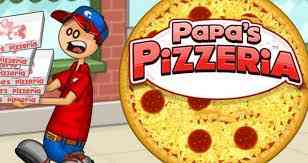
There’s a specific moment in cooking games when everything starts going wrong at once.
Three pizzas are in the oven.
A new customer just walked in.
Another order still needs toppings.
You glance at the baking meter and realize one pizza is seconds away from burning.
It sounds stressful. And technically, it is. Yet games like Papa's Pizzeria manage to turn this kind of chaos into something strangely enjoyable.
The magic isn’t in the food or the restaurant theme. It’s in how these games turn multitasking into a skill players slowly learn to enjoy.
When Simple Tasks Become a Puzzle
At first, the gameplay seems almost mechanical.
You take an order, build the pizza, bake it, cut it, and serve it. Each step happens in a different station, and the game walks you through them one by one.
There’s nothing complicated about placing pepperoni slices or sliding dough into an oven.
But when several orders start overlapping, those simple actions become part of a much bigger puzzle.
The question isn’t how to make a pizza anymore.
The real question becomes: when to do each step.
Should you start topping the next pizza now, or check the oven first?
Is it better to take a new order immediately, or finish the one already in progress?
These tiny decisions happen constantly, and each one affects the rhythm of the kitchen.
Before long, the player is quietly solving dozens of timing problems every minute.
The Hidden Skill of Kitchen Timing
Time-management games rarely explain timing directly. Instead, they let players feel it.
The oven meter moves slowly across the screen. The longer a customer waits, the lower their patience becomes. Each order ticket quietly reminds you how much work is still waiting.
At first it feels like a lot to track.
But after a few in-game days, players start noticing patterns.
Certain pizzas take longer to bake.
Some customers appear early in the day.
The oven often becomes the busiest station.
Without realizing it, players begin planning ahead.
You might put two pizzas in the oven before taking the next order. Or you might delay cutting a pizza for a few seconds so another one finishes baking at the same time.
It’s not complicated strategy, but it’s satisfying.
The kitchen slowly turns into a system you can predict.
Why Precision Starts to Matter
Another interesting shift happens as players improve: they begin caring about details that didn’t matter at first.
Early on, you might scatter toppings roughly across the pizza. As long as they’re mostly in the right place, the order feels complete.
Later, that same sloppy placement suddenly feels wrong.
You start aiming for evenly spaced toppings.
You watch the bake meter more carefully.
You try to cut the pizza into perfectly equal slices.
The scoring system rewards precision, but the real motivation often comes from the player themselves.
There’s a quiet pride in serving a pizza that looks exactly right.
Even if the only one judging it is a cartoon customer.
The Balance Between Control and Chaos
Cooking games work because they sit right between two emotional states: control and chaos.
If the restaurant were completely calm, the game would feel boring. If it were constantly overwhelming, players would give up quickly.
Instead, the difficulty rises gradually.
The first few customers are easy. Then orders start overlapping. Later, the shop gets busy enough that every second counts.
But the chaos is never random.
Everything still follows clear rules: pizzas bake at predictable speeds, customers arrive one at a time, and every task has a visible timer.
Players always feel like they could handle the rush if they stay organized.
That feeling keeps them trying.
Familiar Tasks Become Comforting
After playing for a while, something surprising happens.
The same tasks that once felt stressful start becoming relaxing.
You already know how long pizzas should bake. You know the rhythm of moving between stations. Even complicated orders don’t feel intimidating anymore.
Instead of reacting to problems, you’re anticipating them.
Take order.
Add toppings.
Check oven.
Slice pizza.
The pattern repeats so often that it becomes almost automatic.
For many players, this familiarity becomes part of the appeal. The game doesn’t demand constant learning or dramatic changes. It simply lets you settle into the rhythm of running the restaurant.
Why the Day Always Feels Too Short
Another clever design choice is how quickly each in-game day ends.
Customers arrive steadily, the workload builds, and then suddenly the shift is over.
You see your tips, your score, and the list of customers served.
And then the next day begins.
The structure is short enough that players often think, I’ll just play one more day.
But each new day introduces slightly more complexity: new customers, more toppings, longer order lines.
The cycle continues.
One more day becomes five. Then ten.
Before long, the small pizza shop has quietly taken up an entire evening.
The Appeal of Doing One Thing Well
There’s something refreshing about games built around a single clear activity.
You’re not exploring a huge world. You’re not managing dozens of complex systems. You’re simply running a pizza kitchen as efficiently as possible.
The goal is easy to understand.

 Arabic
 French
 Spanish
 Portuguese
 Deutsch
 Turkish
 Dutch
Dutch
 Italiano
 Russian
 Romaian
 Portuguese (Brazil)
 Greek
Greek
