


 Downloader
 Free FTP
Trademark vs Brand Name: What’s the Difference?
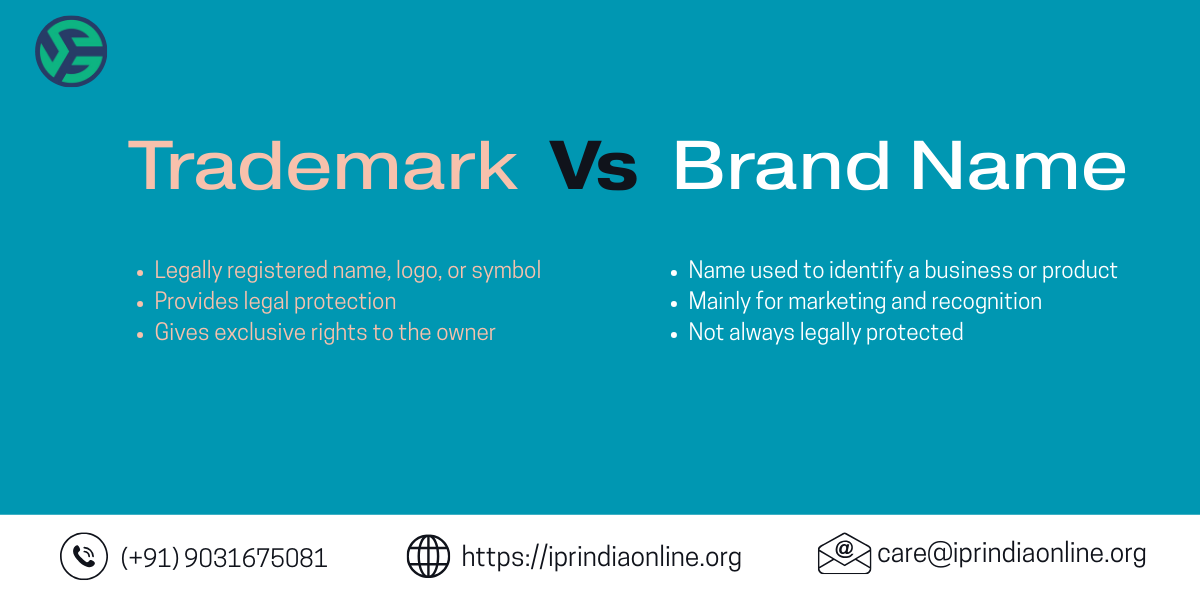
Understand the Difference between Trademark and Brand Name
At the time of starting a business, many business owners or entrepreneurs hear about two terms, one is trademark and the other one is brand name. Most of the time, they mistakenly consider that both are the same, but actually, they are not. A brand name denotes your identity, and a trademark legally protects your identity. If you want to expand your business and legally own your name, for this purpose, businesses use online trademark registration services to legally protect their brand names from being used by other third parties.
What Is a Brand Name?
A brand name is the name used by a company to identify their product or services, the actual name by which you're recognized as a business, that enables customers to identify your products and services with that name and brand. A brand name will enable customers to relate to your brand and recall it more easily.
By hearing a brand name, customers will think of its quality, services offered, and its reputation in the market. This can be a word, a phrase, or even a combination of these words.
The catch? A brand name alone is not legally your own. Someone else can legally use that brand name in a business similar to yours. That's why having a trademark is essential.
What Is a Trademark?
A trademark is the legal right over a brand name, a logo, a symbol, or a slogan that is used by a business. The registration of a trademark gives you the legal rights to utilize the particular mark for specific goods or services only.
Having trademark protection helps prevent others from using the same or a confusingly similar mark as yours, thereby avoiding misleading your customers. Moreover, it protects the business owners and their legal ownership over their brands. This is why many businesses go for trademark filing services, to ensure that they own their intellectual property. A registered trademark also provides legal backing against those who infringe upon its registered mark.
Key Difference Between Trademark and Brand Name
It’s very simple. A brand name is a marketing tool for identification, and a trademark is a legal tool to protect the identification you've created for your brand. You may create a brand name and begin using it in the market, but without having the trademark registered, you do not have any legal claim to the name. When you legally register a trademark, you get exclusive rights over the name that you didn’t have before registration. So, in simple words, all trademarks can technically be a brand name, but not all brand names are trademarks.
Why Businesses Should Protect Their Brand Name
The brand name is one of the most vital aspects of any business. A good brand name not only allows for easy recognition among customers,s but it also represents the quality, trustworthiness, and reliability you offer. Having a similar name to another business can cause confusion amongst your customers. Trademark protection shields a brand from this issue, giving the owner legal ownership over the mark and thus the authority to stop unauthorized usage. Also, for expanding business to new markets or having partners, a trademark provides a legal backbone and a boost to the company. Many startups also now utilize digital trademark filing to speed up the entire process.
Can a Brand Name Become a Trademark?
Yes, a brand name can become a trademark provided it fulfills the requirements set forth for trademark registration. This would require the name not to be similar or identical to any trademark already registered under the relevant category. Prior to registration, a search for the already registered trademark is conducted so that any infringement and rejection of the application is prevented. Once the application for a brand name is approved, it officially becomes a registered trademark.
Benefits of Trademark Protection
There are several benefits of getting a trademark registration. Firstly, exclusive rights over a brand mark are secured, preventing any competitor from using a confusingly similar brand. Second, it enhances brand value as a registered trademark increases the customers’ and business partners’ trust. Thirdly, it is a tool for legal protection; if any business uses the brand name or logo without permission, the owner of the trademark can take legal action against them. Finally, a trademark can serve as a business asset, being sold or licensed.
Common Confusion Among Business Owners
The most common confusion seen among business owners is that by registering their company name or their domain name, they are legally protected under the trademark law, but this is not true. Company registration does not give the right to use the name as intellectual property, but to protect the legal status of the entity. Similarly, domain registration only provides the ownership rights over the domain name and no more. A trademark is the only protection that you get for your brand name, logo, slogan, etc., for the goods and services they are used for. This is the reason that business owners opt for trademark application services.
You can apply for types of intellectual property rights. Visit our IPR portal.
Conclusion
The differences between trademark and brand names are a very important aspect for every business owner. A brand name helps customers identify with your business, but a trademark actually provides legal backing and protection to your brand name. Failing to secure a trademark for your brand name may lead to other businesses using your name as their own and thus misleading customers, legal issues,s and various other problems related to the credibility of your brand. For new business owners and expanding businesses, intellectual property rights such as trademarks are crucial for securing your brand's identity and for achieving long-term success in the long run.

 English
 Arabic
 French
 Portuguese
 Deutsch
 Turkish
 Dutch
Dutch
 Italiano
 Russian
 Romaian
 Portuguese (Brazil)
 Greek
Greek
