


 Downloader
 Free FTP
Promote Your Product
Got a product, service, or story to share? Promote it directly to our active community and boost your brand today.
Create an Ad
Publish Bulk Blog Posts
Boost Your Reach! 📝
Have articles, guest posts, or bulk stories to publish? Send your content directly to our editorial team and feature on our platform.
Email Us Your PostsWhen Watermelons Become a Puzzle: A Relaxing Dive into Fruit-Merging Fun
Introduction
Watermelon puzzles sound like a joke until you actually play one. Then they become that oddly satisfying mix of “one more round” and “why did I do that?” The basic idea is simple: you drop fruit into a container, match identical ones, and watch them merge into something bigger. It’s colorful, low-pressure, and surprisingly easy to get invested in—because every choice you make changes the shape of the pile and the space you have left.
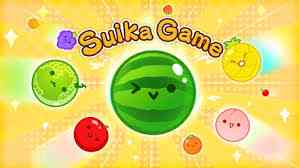
The best-known example right now is Suika Game, which helped popularize the fruit-merging style: cute visuals, soft physics, and a goal that feels obvious (make the watermelon) but rarely goes exactly as planned. If you’ve never tried this kind of puzzle, it’s a great entry point because the rules are straightforward, while the outcomes stay unpredictable.
Gameplay: How the Watermelon Puzzle Works
At its core, the experience is about managing gravity and space.
- You drop a fruit into a box
You’re given a fruit and can choose where to release it from the top. Once it drops, it bounces, rolls, and settles based on physics and whatever is already in the container. - Matching fruits merge into a larger fruit
When two identical fruits touch, they combine into the next fruit in the chain. Small fruits gradually become bigger ones, and the biggest prize is usually a watermelon. - The container fills up fast—sometimes faster than expected
This is where the puzzle lives. Every large fruit takes up more room and is harder to place precisely. A drop that seemed harmless can start a domino effect: rolling pieces, unexpected collisions, accidental merges, or worst of all, a pile that rises too high. - The run ends when you overflow
Typically, if your fruit stack reaches a line near the top and something crosses it, the game is over. The tension isn’t about time—it’s about space and stability.
What makes the whole thing “interesting” (and not just a simple matching game) is that you aren’t swapping tiles on a grid. You’re working with messy real-world-ish motion. Fruits don’t stay where you want them. They nudge each other. They spin. They wedge into gaps. That tiny orange can become the pebble that triggers a fruit avalanche.
In a good session, you’ll feel two kinds of satisfaction:
- Planned merges where you carefully set up pairs and build upward on purpose.
- Accidental miracles where the pile shifts and—somehow—creates a chain reaction that improves everything instead of ruining it.
Both feel great, and both are part of the charm.
Tips: How to Enjoy It (and Survive Longer)
You don’t need perfect strategy to have fun, but a few habits make the experience much smoother—especially once the fruits start getting big.
1. Build “zones” instead of stacking randomly
Try to keep similar-sized fruits near each other. If you scatter everything, you’ll end up with one lonely fruit of each type that never finds a match. A simple approach is to treat the box like it has sides with different roles—maybe smaller fruits on one side and bigger ones on the other—so you can predict where merges will happen.
2. Think in terms of stability, not just matching
A merge is tempting, but it can also create a large fruit in a terrible position. If combining two medium fruits makes a larger one that rolls into the middle and ruins your structure, it might have been better to delay the merge.
Ask yourself: After these two touch, where will the new fruit likely land?
That one question prevents a lot of “instant regret” drops.
3. Use the walls on purpose
The sides of the container aren’t just boundaries—they’re tools. Dropping a fruit close to a wall can reduce how much it rolls and help you “park” it. When the center is chaotic, building a steadier column along a wall can buy you time and space.
4. Watch out for hidden gaps
As the pile gets uneven, you’ll see tempting holes where a small fruit could fit. Sometimes that’s great. Other times it’s a trap: the fruit falls deep, bumps something, and triggers a shift that causes multiple items to pop upward. If you’re near the top line, avoid risky drops into tight gaps unless you’re sure it won’t disturb the pile.
5. Plan for the “next size up”
It’s easy to focus on making the next merge, but the real challenge is what happens after. When you combine two fruits, you create a larger one that may no longer fit neatly where it formed. If you’re setting up a merge, make sure there’s a sensible place for the bigger result to exist.
6. Keep the top area clean
A high pile is not automatically bad, but a messy high pile is dangerous. If your stack is nearing the top, aim for drops that:
- flatten the surface,
- fill shallow dips,
- and reduce rolling.
At this stage, chasing big merges can backfire if it creates bouncy movement. Survival often comes from calming the box, not exciting it.
7. Accept that chaos is part of the appeal
Sometimes the “wrong” play is still the fun play. Watermelon puzzles shine when you let them surprise you. If you only aim for perfect control, it can feel frustrating. If you treat each run like a little physics story you’re nudging along, even mistakes become entertaining.
Conclusion
A watermelon puzzle like Suika Game is at its best when you approach it as a relaxed challenge: simple rules, lively physics, and that constant balancing act between order and chaos. You’re not solving a fixed level—you’re managing a growing, rolling pile that reacts to every decision. That’s why it stays interesting: no two rounds play out the same, and every near-miss makes the next attempt feel tempting.
If you want a puzzle that’s easy to start, satisfying to learn, and full of those “I can’t believe that worked” moments, fruit-merging is a surprisingly good place to land—especially when the final goal is as wonderfully specific as making a watermelon.

 Arabic
 French
 Spanish
 Portuguese
 Deutsch
 Turkish
 Dutch
Dutch
 Italiano
 Russian
 Romaian
 Portuguese (Brazil)
 Greek
Greek
