


 Downloader
 Free FTP
Promote Your Product
Got a product, service, or story to share? Promote it directly to our active community and boost your brand today.
Create an Ad
Publish Bulk Blog Posts
Boost Your Reach! 📝
Have articles, guest posts, or bulk stories to publish? Send your content directly to our editorial team and feature on our platform.
Email Us Your PostsWindow Glass Causing Optical Distortion? Fix It Now
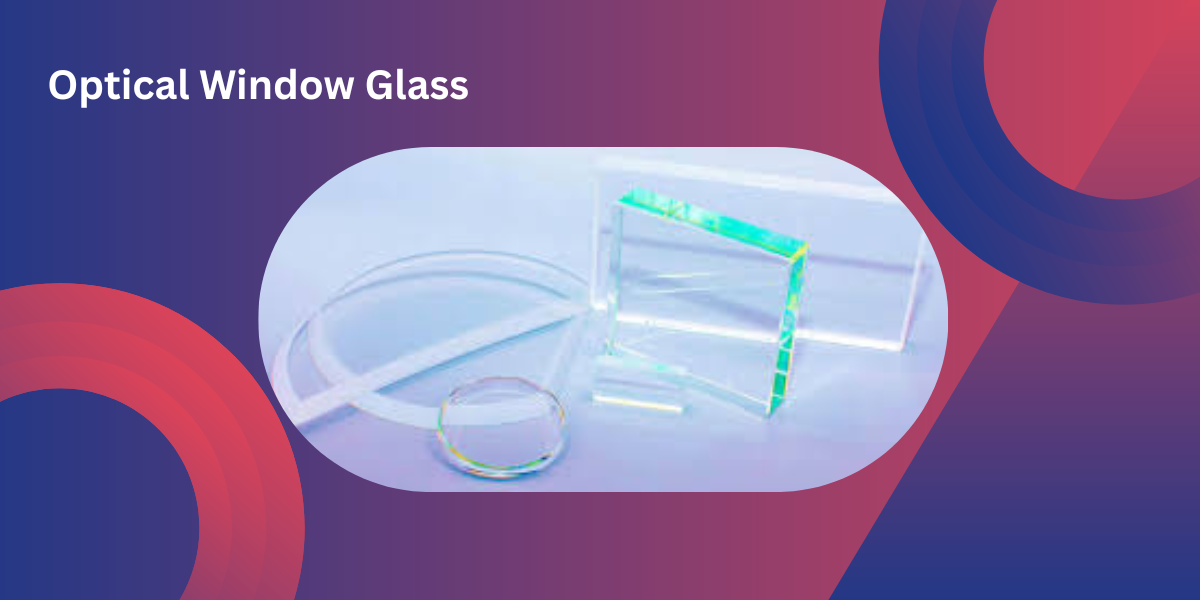
In the optical industry, even a small drop in clarity can affect the entire system performance. Whether it is a laser device, imaging system, sensor module, or industrial equipment, poor transparency and surface defects can lead to distortion, signal loss, and reduced accuracy. If your system is not delivering sharp results, the real issue could be the quality of your window glass.
Optical components must protect internal elements while maintaining high light transmission. When the protective glass fails to meet precision standards, performance suffers. Let’s explore the common problems caused by low-quality window glass and why choosing the right material matters.
1. Blurry Imaging and Light Distortion
Poor Optical Flatness Reduces Accuracy
One of the most common issues in optical devices is image distortion. If the glass surface is not perfectly flat or has internal stress, light passing through it bends incorrectly. This affects beam alignment and imaging precision.
High-quality window glass is manufactured with strict flatness tolerance and surface quality standards. This ensures:
-
Minimal wavefront distortion
-
Accurate beam transmission
-
Clear image output
-
Stable optical performance
For cameras, laser systems, and inspection devices, optical flatness is critical.
2. Low Light Transmission and Energy Loss
Impure Material Reduces Efficiency
If your system is experiencing weak signal strength or reduced brightness, poor transmission may be the reason. Substandard optical glass can absorb or reflect too much light.
Premium optical window materials offer:
-
High transmission rate
-
Low absorption
-
Reduced reflection loss
-
Excellent optical clarity
This is especially important in laser applications, medical instruments, sensors, and measurement devices where every percentage of light matters.
3. Surface Scratches and Coating Damage
Weak Protection Leads to Frequent Replacement
Optical systems often operate in harsh environments. Dust, moisture, and temperature changes can damage low-grade protective glass.
Durable optical window glass provides:
-
Scratch resistance
-
Anti-reflective coating compatibility
-
Thermal stability
-
Chemical resistance
Using strong and properly coated glass extends equipment life and reduces maintenance costs.
4. Thermal Stress and Cracking Issues
Temperature Changes Affect Performance
In industrial and laser systems, high temperature variation can cause expansion and stress cracks. If the material does not have proper thermal properties, it may break or distort.
High-performance optical glass offers:
-
Low thermal expansion
-
Strong mechanical strength
-
Stable performance under heat
This makes it suitable for high-power laser equipment, outdoor optical sensors, and defense-related systems.
5. Contamination and Internal Defects
Inclusions Reduce Optical Precision
Microscopic bubbles, impurities, or internal defects inside the glass can scatter light. This reduces clarity and impacts sensitive optical applications.
Precision-manufactured window components are carefully inspected to ensure:
-
Low inclusion levels
-
High surface quality
-
Clean internal structure
-
Reliable long-term performance
For imaging systems and precision optics, defect-free material is essential.
Why High-Quality Window Glass Is Critical in the Optical Industry
In optical engineering, protective windows are not just covers. They play a vital role in maintaining system performance. Poor material selection can cause light loss, distortion, mechanical failure, and higher maintenance costs.
A well-designed optical window ensures:
-
Maximum light transmission
-
Protection from environmental damage
-
Stable optical alignment
-
Long service life
Whether used in laser optics, infrared systems, imaging modules, or industrial sensors, selecting the right window material directly impacts system reliability and efficiency.
Final Thoughts
If your optical system is losing clarity, experiencing distortion, or requiring frequent maintenance, the root cause may not be the lens or internal components. Often, the problem lies in low-quality window glass.
Choosing precision-engineered optical glass with high transmission, strong durability, and stable thermal performance can significantly improve your system results. In the optical industry, quality materials are not optional — they are essential for accuracy, safety, and long-term performance.

 English
 Arabic
 French
 Spanish
 Portuguese
 Deutsch
 Turkish
 Dutch
Dutch
 Italiano
 Russian
 Portuguese (Brazil)
 Greek
Greek
