


 Downloader
 Free FTP
Promote Your Product
Got a product, service, or story to share? Promote it directly to our active community and boost your brand today.
Create an Ad
Publish Bulk Blog Posts
Boost Your Reach! 📝
Have articles, guest posts, or bulk stories to publish? Send your content directly to our editorial team and feature on our platform.
Email Us Your PostsSelf Pierce Riveting: Revolutionizing Industrial Metal Joining for Modern Manufacturing
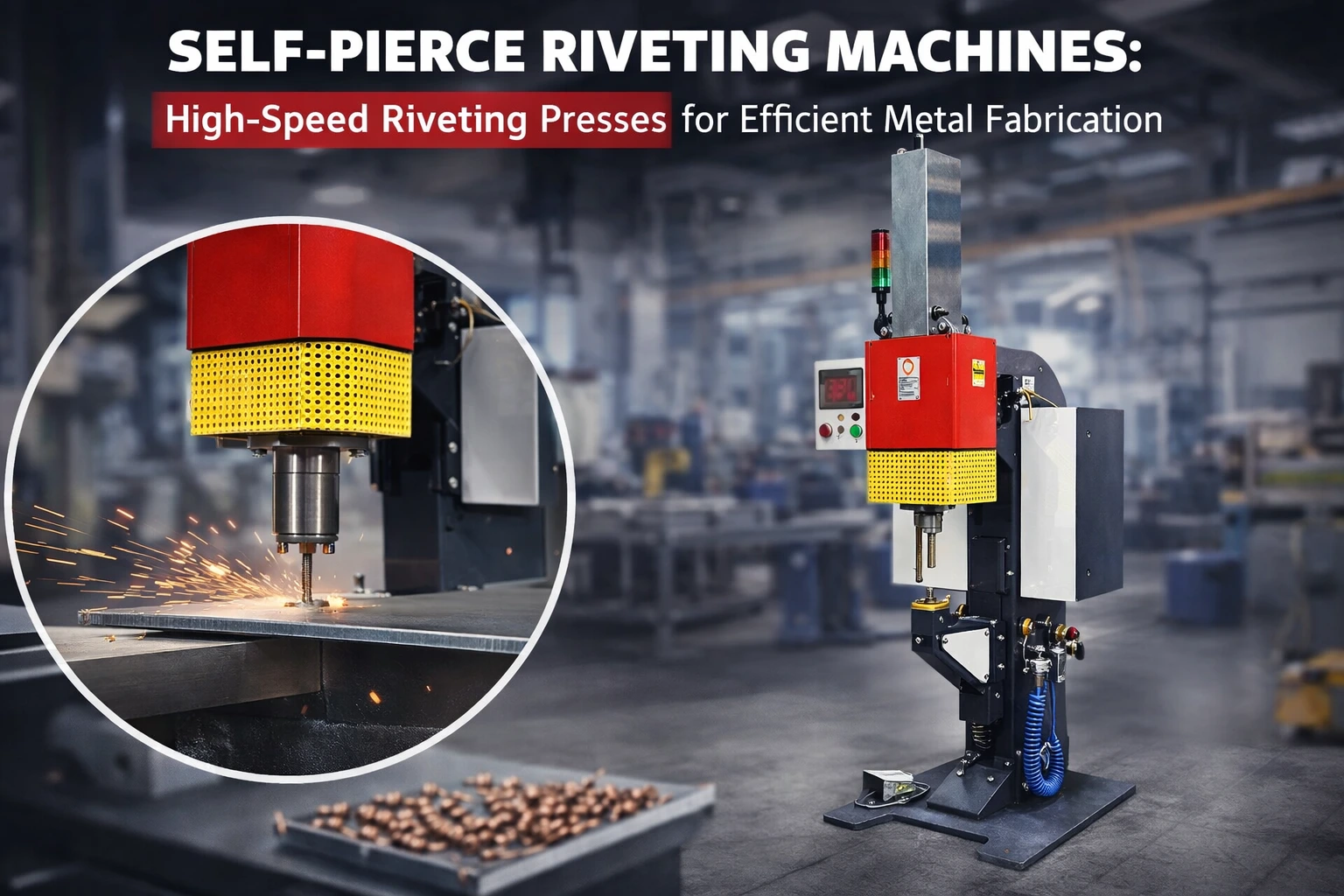
In today’s fast-paced manufacturing environment, efficiency, precision, and reliability are key drivers for success. Self pierce riveting (FSPR) has emerged as a transformative metal-joining technique, providing OEMs, automation integrators, and production engineers with a versatile solution for joining multi-material assemblies. As a global leader in industrial welding and metal-joining equipment, Heron Welder delivers state-of-the-art self pierce riveting systems that integrate seamlessly into automated production lines.
What Is Self Pierce Riveting?
Self pierce riveting is a mechanical joining process that enables the permanent joining of two or more sheets of metal without pre-drilled holes or additional fasteners. Unlike traditional riveting or welding, FSPR uses a hardened rivet punch and die system to pierce the top sheet and flare a rivet into the lower sheet, creating a robust mechanical bond.
Key Principles of FSPR
-
Rivet Piercing – A specialized rivet penetrates the top sheet without full penetration of the lower sheet.
-
Material Flow – The rivet deforms within the bottom sheet, creating a strong interlock without the need for welding or adhesives.
-
Die Support – A die underneath the sheets shapes the rivet tail, ensuring a secure and repeatable joint.
This process is particularly suitable for multi-material assemblies, including combinations of aluminum, high-strength steel, and coated metals, commonly found in automotive, aerospace, and industrial applications.
Applications of Self Pierce Riveting
Self pierce riveting has become increasingly popular across industries where weight reduction, structural integrity, and speed are critical.
Automotive Industry
Automotive manufacturers benefit from FSPR in joining aluminum panels to steel frames, supporting the global shift towards lightweight vehicles. It ensures consistent joint strength, reduces thermal distortion, and integrates easily into robotic production lines.
Aerospace and Transportation
For aircraft and rail components, FSPR enables multi-material joining without compromising corrosion resistance. This is vital for panels, structural frames, and interior assemblies where traditional welding might weaken the material.
Electronics and Appliances
FSPR offers fast, repeatable joins for sheet metal casings, ensuring structural integrity while minimizing heat-affected zones that could damage sensitive components.
Comparing Self Pierce Riveting to Other Joining Methods
Understanding how FSPR stacks up against other joining techniques can help manufacturers choose the right solution for their production goals.
| Joining Method | Advantages | Limitations | Best Use Case |
|---|---|---|---|
| Resistance Spot Welding | Fast, reliable, strong welds | Limited to electrically conductive metals; heat can cause distortion | Automotive body panels, steel assemblies |
| Adhesive Bonding | Corrosion resistance, vibration damping | Long curing times, surface prep required | Multi-material assemblies, composite panels |
| Self Pierce Riveting | No pre-drilled holes, multi-material joins, minimal heat | Rivet cost, die maintenance required | Aluminum-to-steel automotive panels, lightweight structures |
By leveraging FSPR, manufacturers gain speed, repeatability, and structural integrity, especially in high-volume automated production.
Best Practices for Implementing FSPR
Maximizing the benefits of self pierce riveting requires attention to equipment, material selection, and process parameters.
-
Rivet and Die Selection – Choose rivets and dies compatible with the materials and thickness of your sheets. High-strength steels and aluminum require different die profiles.
-
Material Preparation – Clean, flat surfaces ensure consistent rivet penetration and interlock.
-
Integration with Automation – Incorporate FSPR units into robotic or automated production lines to maintain high throughput and repeatable quality.
-
Quality Control – Monitor joint formation through visual inspection, mechanical testing, or inline sensors to maintain consistent performance.
Heron Welder provides customized FSPR systems that integrate seamlessly with existing production lines, offering full support for die design, process optimization, and automation.
Why Choose Heron for Self Pierce Riveting Solutions
As a global manufacturer of industrial welding and metal-joining equipment, Heron Welder combines decades of engineering expertise with cutting-edge automation technologies. Key advantages of partnering with Heron include:
-
Comprehensive Product Range – From self pierce riveting guns to fully automated FSPR cells.
-
Technical Expertise – Engineering support for rivet selection, die optimization, and material compatibility.
-
Integration Solutions – Custom automation solutions for OEM lines, robotics, and industrial production.
-
Global Support Network – Maintenance, training, and troubleshooting from experienced engineers worldwide.
FAQs About Self Pierce Riveting
1. Can FSPR join different metals like aluminum and steel?
Yes, self pierce riveting is ideal for multi-material assemblies, including aluminum-to-steel combinations, without weakening the materials.
2. Is FSPR faster than traditional welding methods?
FSPR provides high-speed joining with minimal heat-affected zones, making it ideal for automated, high-volume production.
3. Does FSPR require pre-drilled holes?
No, the process pierces the top sheet directly, eliminating the need for pre-drilled holes and saving time in production.
4. What maintenance does an FSPR system require?
Routine die inspection, rivet selection, and equipment calibration ensure consistent joint quality. Heron provides full support for these tasks.
5. Can FSPR be integrated into existing robotic lines?
Absolutely. Heron’s FSPR solutions are designed for seamless integration with automation systems, robotics, and production lines of any scale.
Conclusion
Self pierce riveting is transforming industrial metal joining, offering strength, speed, and multi-material versatility for automotive, aerospace, and manufacturing applications. When paired with Heron Welder’s state-of-the-art FSPR systems, manufacturers gain a reliable, fully supported solution for modern production challenges.
Ready to enhance your production line with self pierce riveting? Contact Heron Welder today to request a quote or consult our experts for customized welding and automation solutions tailored to your manufacturing needs.

 English
 Arabic
 French
 Spanish
 Portuguese
 Deutsch
 Turkish
 Dutch
Dutch
 Italiano
 Russian
 Romaian
 Portuguese (Brazil)
