


 Downloader
 Free FTP
Promote Your Product
Got a product, service, or story to share? Promote it directly to our active community and boost your brand today.
Create an Ad
Publish Bulk Blog Posts
Boost Your Reach! 📝
Have articles, guest posts, or bulk stories to publish? Send your content directly to our editorial team and feature on our platform.
Email Us Your PostsUnderstanding Magnetism in Stainless Steel Float Balls
Introduction to Stainless Steel Float Ball Magnetism
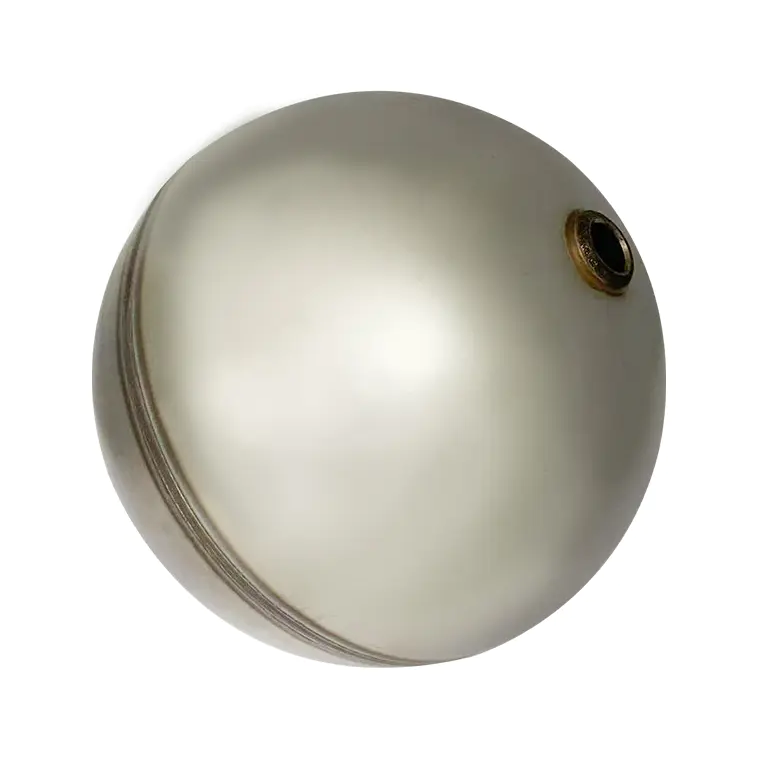
Stainless Steel Float Ball Factory products are widely used in liquid level control systems, valve mechanisms, and industrial tanks. A key consideration for many users is whether these float balls are anti-magnetic or possess magnetic properties. The magnetic behavior of a stainless steel float ball depends primarily on the type of stainless steel used, its microstructure, and any post-processing treatments. Understanding these factors is critical for applications where magnetic interference can affect sensors or control systems, or where magnetic attraction could hinder the movement of the float ball.
Types of Stainless Steel and Magnetic Behavior
Stainless steels are broadly classified into austenitic, ferritic, and martensitic types, each with distinct magnetic characteristics. Austenitic stainless steel, commonly used in float balls, is typically anti-magnetic due to its face-centered cubic (FCC) crystal structure. This makes it ideal for applications requiring minimal magnetic interference, such as in electronic tanks or sensors sensitive to magnetic fields. Ferritic and martensitic stainless steels, however, exhibit magnetic properties to varying degrees. Ferritic stainless steel is mildly magnetic, while martensitic grades are strongly magnetic, which can influence the behavior of float balls in certain environments.
Factors Affecting Magnetic Properties
Several factors can influence the magnetic properties of a stainless steel float ball. Cold working, welding, or machining can induce structural changes in austenitic stainless steel, making it slightly magnetic. Similarly, surface treatments, coatings, or alloying elements may alter magnetic response. For critical applications, manufacturers often test and certify the anti-magnetic properties of float balls to ensure that they meet specific requirements, providing consistent performance in sensitive environments.
Practical Applications for Anti-Magnetic Float Balls
Anti-magnetic stainless steel float balls are particularly valuable in systems where magnetic sensors, switches, or control devices are used. They prevent unwanted interactions with magnetic fields, ensuring accurate liquid level detection and minimizing errors in automated processes. In contrast, magnetic float balls may be purposefully used in conjunction with reed switches or magnetic sensors, allowing precise activation of alarms, pumps, or valves when the float reaches a designated level. Selecting the appropriate magnetic property ensures compatibility with the intended control mechanism.
Advantages and Limitations
The primary advantage of using anti-magnetic stainless steel float balls is their compatibility with electronic and sensitive industrial systems. They resist interference, provide smooth operation, and are ideal for corrosive or high-purity liquids. However, anti-magnetic grades may be more expensive or limited in certain mechanical properties compared to ferritic or martensitic alternatives. Magnetic float balls, while less versatile in certain sensor systems, offer simple mechanical activation options for less sensitive applications. Understanding the trade-offs is essential when specifying float balls for industrial or commercial use.
The magnetic properties of a stainless steel float ball depend on the steel type, processing, and intended application. Products from a reputable Stainless Steel Float Ball Factory can be manufactured to be either anti-magnetic or magnetic, depending on system requirements. Anti-magnetic float balls are ideal for use with sensitive electronic sensors and in applications where magnetic interference must be minimized. Conversely, magnetic float balls are suitable for mechanical or sensor-based activation systems. Careful selection ensures reliable performance, accurate liquid level control, and long-term operational stability in a variety of industrial and commercial environments.

 English
 Arabic
 Spanish
 Portuguese
 Deutsch
 Turkish
 Dutch
Dutch
 Italiano
 Russian
 Romaian
 Portuguese (Brazil)
 Greek
Greek
