


 Downloader
 Free FTP
Promote Your Product
Got a product, service, or story to share? Promote it directly to our active community and boost your brand today.
Create an Ad
Publish Bulk Blog Posts
Boost Your Reach! 📝
Have articles, guest posts, or bulk stories to publish? Send your content directly to our editorial team and feature on our platform.
Email Us Your PostsInfrared Detector Industry Expands With Predictive Maintenance Security And Autonomy Needs
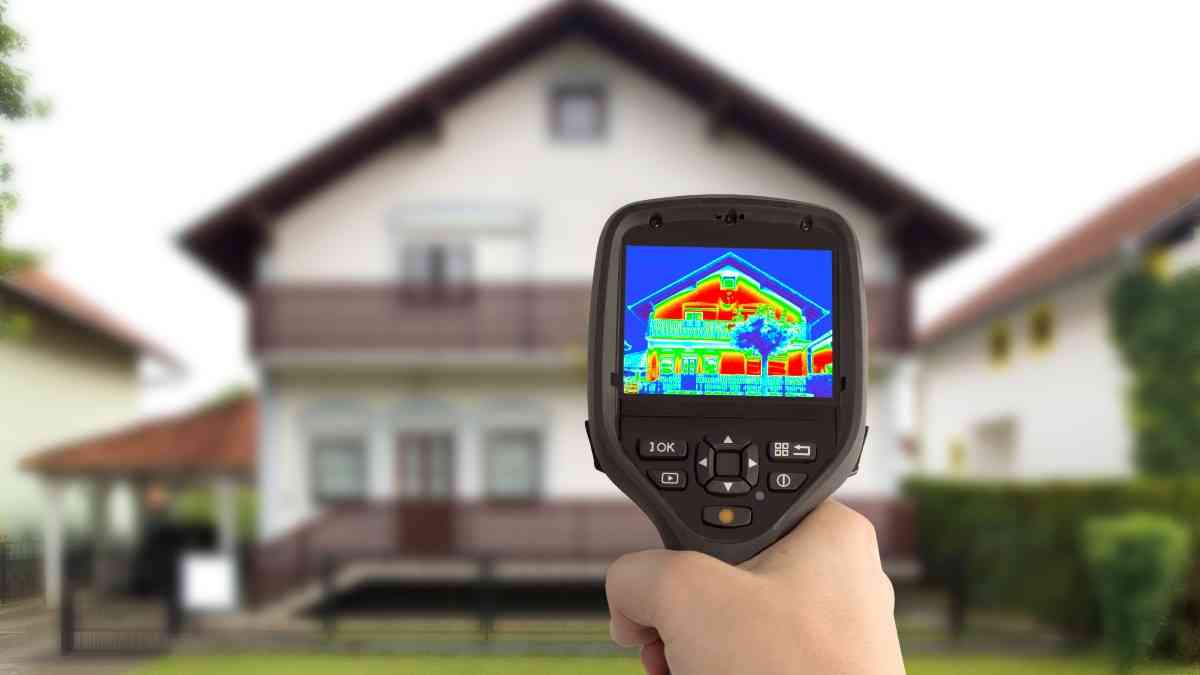
The Infrared Detector Industry is expanding as thermal sensing becomes a standard tool for safety, reliability, and situational awareness. The industry spans detector manufacturers, optics suppliers, camera OEMs, analytics software firms, and systems integrators. Defense remains a major anchor, using infrared for surveillance, targeting, and guidance systems. Industrial markets are growing rapidly as predictive maintenance programs adopt thermal inspection to reduce downtime and prevent hazards. Utilities and critical infrastructure operators use thermal sensing to identify overheating connections and equipment. Security applications benefit from thermal imaging’s ability to detect intrusions in darkness and adverse weather. The industry is also influenced by emerging autonomy needs. Robots, drones, and vehicles increasingly require perception beyond visible light, and thermal sensing can improve detection in low-visibility environments. As costs decline and modules shrink, the industry is moving from specialized, high-cost devices into embedded systems and broader operational deployments.
Technology evolution drives industry structure. Uncooled microbolometers have enabled high-volume thermal imaging products by lowering cost and simplifying system design. Cooled detectors remain crucial for high-performance applications requiring long range and high sensitivity. The industry also differentiates by spectral band: SWIR for low-light imaging and certain industrial uses, MWIR and LWIR for thermal imaging. Integration of processing and analytics is becoming central, as customers demand actionable insights rather than raw images. Camera OEMs and platform providers increasingly bundle detection algorithms, temperature measurement tools, and connectivity features. Supply chain constraints remain an industry challenge, particularly for high-end detectors that depend on specialized materials and packaging. Export controls and defense procurement policies shape which companies can compete in certain markets. The industry invests in ruggedization and reliability engineering to support harsh environments, including industrial plants and field operations. Lifecycle support—calibration, repair, firmware updates—becomes more important as thermal systems move into continuous monitoring roles rather than occasional inspections.
Business models are shifting toward solutions and services. Instead of selling cameras alone, industry players offer connected thermal monitoring, analytics subscriptions, and integration with asset management systems. Predictive maintenance services may include inspection programs, reporting templates, and automated anomaly alerts. Security providers integrate thermal cameras into broader surveillance platforms with video management systems and AI detection. In defense, long-term support contracts and modernization upgrades are common. Automotive and mobility applications could introduce new industry requirements, including automotive-grade reliability, high-volume manufacturing, and stringent qualification. The industry is also seeing more miniaturized thermal modules for smartphones, wearables, and drones, which pushes cost reduction and packaging innovation. Competition increasingly includes software capabilities: analytics accuracy, false alarm reduction, and usability can be decisive. As AI adoption expands, the industry must ensure models are validated and robust. Trust in measurement accuracy and detection reliability remains central because many applications are safety-critical or mission-critical.
The future industry trajectory points to broader sensor fusion and automation. Infrared detectors will increasingly be combined with visible cameras, radar, and LiDAR to improve perception in autonomy and security. Edge AI will enable faster decisions and reduce bandwidth needs for remote monitoring. Industrial uses will grow as more assets are monitored continuously rather than inspected periodically. Standards and certification may become more prominent, especially for temperature measurement and automotive safety use cases. The industry may also see consolidation as larger electronics and defense firms acquire niche detector companies to secure supply chains and expand portfolios. For customers, selection will depend on more than hardware: integration readiness, analytics quality, calibration support, and long-term availability matter. As organizations prioritize safer operations, resilient infrastructure, and automated monitoring, infrared detectors will remain a core enabling technology. The infrared detector industry will continue expanding by making thermal sensing more accessible, more integrated, and more intelligent across an increasing range of real-world applications.
Top Trending Reports:
Government And Security Biometric Market

 English
 Arabic
 French
 Spanish
 Portuguese
 Deutsch
 Turkish
 Dutch
Dutch
 Italiano
 Romaian
 Portuguese (Brazil)
 Greek
Greek
