


 Downloader
 Free FTP
Promote Your Product
Got a product, service, or story to share? Promote it directly to our active community and boost your brand today.
Create an Ad
Publish Bulk Blog Posts
Boost Your Reach! 📝
Have articles, guest posts, or bulk stories to publish? Send your content directly to our editorial team and feature on our platform.
Email Us Your PostsResistance Welder: Essential Solutions for Modern Manufacturing
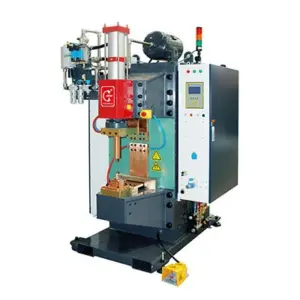
In today’s highly automated manufacturing environment, achieving precise, repeatable, and high-speed metal joining is crucial. A resistance welder is one of the most reliable and efficient solutions for joining metals without the need for filler materials, flux, or gas. For OEMs, manufacturing engineers, and automation integrators, understanding how resistance welding works and selecting the right system can significantly enhance productivity, quality, and cost-effectiveness.
Heron Welder, a global leader in industrial welding and metal-joining technologies, offers a complete range of resistance welding machines, automated production lines, and supporting equipment to optimize your manufacturing processes.
What is a Resistance Welder?
A resistance welder joins metal parts by applying heat generated from electrical resistance to the surfaces in contact. The process involves clamping two or more metal pieces between electrodes and passing a controlled electrical current through the joint. The resistance of the metal generates heat, causing the surfaces to melt and fuse under pressure.
Unlike traditional welding methods, resistance welding does not require filler material, shielding gas, or complex joint preparation. This makes it ideal for high-volume production where speed, consistency, and repeatability are critical.
Types of Resistance Welding Machines
Heron Welder provides a wide variety of resistance welders to suit different applications:
1. Spot Welders
Spot welding is the most common resistance welding method, used for joining sheet metal in automotive, appliance, and electronics manufacturing. It involves small, localized welds at precise points.
2. Projection Welders
Projection welding focuses the electrical current on raised projections on one of the metal surfaces. This method is ideal for joining complex assemblies, nuts, bolts, and small components with precise heat distribution.
3. Seam Welders
Seam welding creates continuous, leak-proof joints along metal sheets or tubes. It is widely used in fuel tanks, HVAC components, and packaging industries.
4. MFDC (Medium-Frequency Direct Current) Welders
MFDC welders deliver precise, controllable current with minimal energy loss. They are highly effective for thin or sensitive metals, offering improved weld quality and reduced electrode wear.
5. Capacitor Discharge Welders
These welders store energy in capacitors and release it rapidly to join thin metals or fasteners without excessive heat spread, perfect for electronics or delicate components.
How Resistance Welding Works: Principles and Best Practices
Understanding the principles of resistance welding ensures optimal performance and longevity of the equipment:
-
Electrical Resistance Heating: The electrical current generates heat at the joint proportional to the material resistance and current applied.
-
Electrode Pressure: Proper clamping pressure ensures good contact, controls the weld nugget size, and reduces spatter.
-
Weld Time: Timing is critical. Too short results in weak welds; too long can damage the metal or electrodes.
-
Cooling: Controlled cooling prevents distortion and improves joint strength.
Best practices for resistance welding include:
-
Using electrodes compatible with the material type and thickness.
-
Regularly maintaining and dressing electrodes to ensure consistent heat transfer.
-
Monitoring process parameters such as current, time, and pressure with integrated controllers.
-
Implementing automated systems for high-volume production to ensure repeatability and traceability.
Heron Welder’s advanced controllers and automation solutions simplify parameter management and enhance process reliability across all resistance welding methods.
Applications of Resistance Welders
Resistance welders are widely used across industries that require high-speed, repeatable, and clean metal joining:
-
Automotive Manufacturing: Spot and projection welding of body panels, chassis components, and structural reinforcements.
-
Electrical & Electronics: Capacitor discharge and MFDC welding for connectors, terminals, and battery packs.
-
Appliance & HVAC: Seam welding for tanks, ducts, and enclosures.
-
Industrial Equipment: Fabrication of metal assemblies, fasteners, and precision parts.
Heron’s comprehensive range of machines supports both manual and fully automated production lines, offering solutions for everything from small workshops to high-volume industrial facilities.
Advantages of Using Heron Resistance Welders
Partnering with Heron Welder ensures you access equipment designed for durability, precision, and automation integration:
-
High Productivity: Fast cycle times and consistent weld quality support mass production.
-
Flexibility: Machines can handle a variety of materials, thicknesses, and part geometries.
-
Automation Ready: Easily integrated into robotic or automated lines for fully unmanned operation.
-
Energy Efficiency: MFDC and advanced power systems reduce energy consumption and electrode wear.
-
Expert Support: Custom solutions, process optimization, and worldwide service ensure maximum ROI.
Heron Welder vs. Traditional Welding Methods
Compared to MIG, TIG, or arc welding, resistance welding offers:
-
Minimal post-weld finishing
-
No filler material or gas requirements
-
Faster cycle times suitable for production lines
-
High repeatability and precision
For high-volume manufacturing environments, these benefits translate into significant cost savings, improved throughput, and higher product quality.
FAQs About Resistance Welders
Q1: Can resistance welding be used for all metals?
A1: Resistance welding works best on conductive metals like steel, stainless steel, aluminum, and copper. Specific techniques and electrodes are required for different materials.
Q2: What thickness range can a resistance welder handle?
A2: Depending on the machine type, resistance welders can join metal sheets as thin as 0.1 mm and up to several millimeters thick. Projection and MFDC welders handle thicker or complex assemblies.
Q3: How does Heron support automation integration?
A3: Heron offers robotic welding solutions, integrated controllers, and automated production lines, allowing OEMs and factories to achieve hands-free operation and consistent quality.
Q4: What maintenance is required for a resistance welder?
A4: Routine electrode cleaning, checking water cooling systems, and calibrating controllers ensure consistent weld quality and extend machine life.
Q5: Is resistance welding suitable for small production runs?
A5: Yes, especially with flexible MFDC or capacitor discharge welders, which allow precise control over weld parameters even in low-volume applications.
Optimize Your Manufacturing With Heron Resistance Welders
Selecting the right resistance welder can transform your production efficiency, reduce operational costs, and deliver consistent high-quality metal joining. Heron Welder combines advanced technology, automation-ready solutions, and global support to meet the needs of OEMs, engineers, and factory decision-makers.
Request a quote today or consult with Heron experts to design a customized resistance welding solution tailored to your production requirements.

 English
 French
 Spanish
 Portuguese
 Deutsch
 Turkish
 Dutch
Dutch
 Italiano
 Russian
 Romaian
 Portuguese (Brazil)
 Greek
Greek
