


 Downloader
 Free FTP
Promote Your Product
Got a product, service, or story to share? Promote it directly to our active community and boost your brand today.
Create an Ad
Publish Bulk Blog Posts
Boost Your Reach! 📝
Have articles, guest posts, or bulk stories to publish? Send your content directly to our editorial team and feature on our platform.
Email Us Your PostsEMI EMC Testing: A Complete Guide to Electromagnetic Compatibility and Interference
Introduction
Modern electronic devices must operate reliably without causing harmful interference to other equipment. From smartphones and computers to industrial machinery, medical devices, automotive electronics, and wireless communication systems, electronic products depend on stable electromagnetic performance. EMI EMC testing helps manufacturers evaluate whether their products can function correctly in their intended environments while meeting applicable regulatory requirements.
As electronic technology becomes increasingly advanced, electromagnetic compatibility is an essential part of product development. Devices contain switching power supplies, processors, wireless transmitters, sensors, and other components that can generate electromagnetic noise. Without appropriate testing and design controls, this noise may disrupt nearby equipment, reduce performance, or cause a product to fail compliance assessments.
Understanding EMI EMC testing allows manufacturers to identify potential problems early, improve product reliability, and prepare for market entry.
What Is EMI EMC Testing?
EMI EMC testing evaluates the electromagnetic interference generated by an electronic device and its ability to operate properly in the presence of electromagnetic disturbances.
Although the terms EMI and EMC are closely related, they describe different aspects of electromagnetic performance.
What Is EMI Testing?
Electromagnetic interference (EMI) refers to unwanted electromagnetic energy that affects the operation of electronic equipment. EMI can originate from a device itself or from an external source.
Common sources of EMI include:
-
Switching power supplies and electrical converters
-
Motors, relays, and industrial machinery
-
Wireless transmitters and radio-frequency equipment
-
Digital processors and high-speed circuit boards
-
Power cables and electrical switching systems
EMI testing identifies and measures unwanted emissions to determine whether a product stays within the applicable limits. Testing can also help engineers investigate interference problems that affect a device's operation.
What Is EMC Testing?
Electromagnetic compatibility (EMC) refers to the ability of equipment to operate satisfactorily in its electromagnetic environment without introducing unacceptable electromagnetic disturbances to other equipment.
EMC testing generally examines two key areas:
-
Emissions: The electromagnetic disturbances a device generates.
-
Immunity: The device's ability to continue operating correctly when exposed to electromagnetic disturbances.
A product may produce low levels of interference but still be vulnerable to external electrical noise. Likewise, a product may resist interference effectively while generating excessive emissions. Both aspects must be evaluated where required by the relevant standards.
Why Is EMI EMC Testing Important?
EMI EMC testing is important because electronic devices rarely operate in isolation. They share electrical networks, communication channels, and physical environments with other equipment.
Without suitable testing, electromagnetic disturbances can cause unexpected resets, inaccurate sensor readings, communication failures, distorted audio, or interruptions in industrial control systems.
The main benefits of EMI EMC testing include the following.
1. Regulatory Compliance
Many markets require electronic products to meet applicable electromagnetic emission and immunity requirements. Testing helps manufacturers determine whether their products comply with the standards and regulations relevant to their product category and destination market.
For example, products sold in the United States may be subject to applicable Federal Communications Commission (FCC) requirements. Products placed on the European Union market may need to meet relevant EMC requirements under applicable EU legislation.
The exact requirements depend on the product, its intended use, radio functionality, and the market in which it will be sold.
2. Improved Product Reliability
Electromagnetic disturbances can affect product performance even when the hardware appears to be functioning correctly. EMC testing helps identify vulnerabilities before products reach customers.
Early testing allows engineers to improve circuit layouts, grounding, shielding, filtering, and cable management.
3. Reduced Development Costs
Identifying electromagnetic problems during the design stage is generally less expensive than correcting them after production begins.
A failed compliance test can lead to redesign work, additional laboratory fees, production delays, and postponed product launches. Pre-compliance testing helps identify potential issues before formal evaluation.
4. Better Customer Confidence
Products that meet applicable EMC requirements are better prepared to operate alongside other electronic equipment. Reliable electromagnetic performance is particularly important in healthcare, telecommunications, automotive systems, industrial automation, and other demanding applications.
Common Types of EMI EMC Testing
The specific tests required depend on the product design, operating environment, and applicable standards.
Conducted Emissions Testing
Conducted emissions testing measures electromagnetic noise that travels through electrical power or other conductive connections.
This test is commonly used to assess unwanted noise produced by switching electronics and power supplies. Specialized measurement equipment, such as a line impedance stabilization network (LISN) and an EMI receiver, may be used to evaluate emissions over the required frequency range.
The results help engineers determine whether conducted noise exceeds the applicable limits.
Radiated Emissions Testing
Radiated emissions testing measures electromagnetic energy emitted into the surrounding environment.
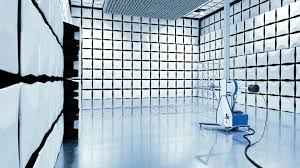
Testing typically takes place in a controlled environment using suitable antennas and measurement receivers. Depending on the applicable method, the setup may use an anechoic chamber, a semi-anechoic chamber, or an open-area test site.
Radiated emissions testing is particularly important for devices containing high-speed digital electronics, switching circuits, or wireless transmitters.
Electrostatic Discharge (ESD) Testing
Electrostatic discharge testing evaluates how a product responds to sudden electrical discharges caused by static electricity.
Static electricity can build up on people, clothing, and nearby objects before discharging into electronic equipment. ESD testing helps determine whether these events cause malfunctions, resets, or damage.
Testing commonly follows applicable procedures in standards such as IEC 61000-4-2.
Electrical Fast Transient Testing
Electrical fast transient (EFT) testing evaluates a device's response to repetitive, short-duration electrical disturbances. These disturbances may occur when inductive loads switch or electrical contacts operate.
EFT testing is particularly relevant to equipment connected to power supplies and industrial control wiring. IEC 61000-4-4 is a commonly referenced standard for this test.
Surge Immunity Testing
Surge testing evaluates how equipment responds to higher-energy transient disturbances, which may result from lightning-related events or switching operations.
The test helps assess the resilience of power ports and other applicable connections against specified surge conditions. IEC 61000-4-5 describes a widely used surge immunity test method.
Radiated RF Immunity Testing
Radiated radio-frequency immunity testing exposes a product to controlled electromagnetic fields to evaluate whether it continues operating as intended.
This is important for devices used near radio transmitters, mobile phones, wireless access points, and other sources of RF energy.
IEC 61000-4-3 is a commonly used reference for radiated RF electromagnetic field immunity testing.
How Does the EMI EMC Testing Process Work?
A structured testing process helps manufacturers identify electromagnetic risks and prepare for compliance evaluation.
Step 1: Product Assessment
Engineers review the product's electrical design, operating modes, interfaces, power requirements, wireless functions, and intended market. This information helps identify the standards and tests that may apply.
Step 2: Test Planning and Setup
The laboratory determines the test configuration, equipment, operating conditions, cable arrangements, and performance criteria. The device should represent its intended real-world configuration as closely as the applicable standard requires.
Step 3: Emissions and Immunity Testing
The product undergoes the required conducted emissions, radiated emissions, and immunity tests. Engineers monitor its performance and record measurements, operating conditions, and any observed failures.
Step 4: Results Analysis
Test results are compared with the applicable limits and performance criteria. If a product fails, engineers investigate the source of the interference or its susceptibility to external disturbances.
Step 5: Corrective Action and Final Evaluation
Design changes may include improved shielding, filtering, grounding, PCB layout, or cable routing. The affected tests are repeated as necessary, and the results are documented for the relevant compliance process.
Equipment Used for EMI EMC Testing
Accurate results depend on suitable equipment, a controlled test environment, and correctly configured measurement systems.
Common equipment includes:
-
EMI receivers and spectrum analyzers: Measure and analyze electromagnetic emissions.
-
Antennas: Detect radiated electromagnetic energy across specified frequency ranges.
-
Line impedance stabilization networks: Support standardized conducted-emissions measurements.
-
RF signal generators and power amplifiers: Produce controlled signals for immunity testing.
-
Electrostatic discharge simulators: Generate specified static discharge events.
-
Transient and surge generators: Reproduce electrical disturbances for immunity evaluation.
-
Anechoic and semi-anechoic chambers: Help control reflections and external electromagnetic noise during appropriate tests.
Equipment selection depends on the test method, frequency range, measurement uncertainty requirements, and applicable standards.
Common EMI EMC Testing Standards
Different products require different standards. The following are examples of widely used references, not a universal list of requirements.
|
Standard or framework |
Typical application |
|---|---|
|
CISPR 32 |
Multimedia equipment emissions |
|
CISPR 35 |
Multimedia equipment immunity |
|
IEC 61000-4-2 |
Electrostatic discharge immunity |
|
IEC 61000-4-3 |
Radiated RF immunity |
|
IEC 61000-4-4 |
Electrical fast transient immunity |
|
IEC 61000-4-5 |
Surge immunity |
|
FCC Part 15 |
Applicable radio-frequency emissions requirements in the United States |
Automotive, medical, industrial, and wireless products may require additional or different standards. Manufacturers should verify the current edition, product-specific requirements, and any applicable national deviations before beginning formal testing.
Common Causes of EMI EMC Test Failures
EMI EMC test failures often result from design decisions that allow unwanted electromagnetic energy to escape or enter sensitive circuits.
Common causes include poor PCB layout, inadequate grounding, insufficient shielding, poorly filtered power supplies, long unshielded cables, and unsuitable component selection.
High-speed digital signals can also produce unwanted emissions when return-current paths are poorly controlled. Switching regulators and motor drivers may introduce noise into nearby circuits or connected cables.
To reduce these risks, manufacturers should consider EMC during the earliest design stages. Good practices include minimizing current-loop areas, maintaining appropriate return paths, using suitable filters, selecting effective shielding, and testing representative prototypes before production.
How to Choose an EMI EMC Testing Laboratory
Selecting a suitable laboratory is an important part of product compliance planning.
Look for a laboratory with relevant experience in your product category, appropriate measurement facilities, and access to the equipment needed for your required tests. Check whether its accreditation covers the specific test methods and standards you need.
Other factors to consider include:
-
Clear quotations and defined testing scope
-
Experience with the target market's regulatory requirements
-
Pre-compliance testing and troubleshooting support
-
Detailed test reports and documented results
-
Practical guidance on resolving failures
-
Reasonable scheduling and communication throughout the process
A laboratory's accreditation or recognition should be verified for the exact scope of work. Not every laboratory is authorized or accredited for every standard or regulatory program.
Frequently Asked Questions About EMI EMC Testing
What is the difference between EMI and EMC testing?
EMI testing focuses on electromagnetic interference, particularly unwanted emissions. EMC testing evaluates the broader ability of equipment to operate compatibly with its electromagnetic environment, including both emissions and immunity.
When should EMI EMC testing be performed?
Testing should begin during product development, ideally before the design is finalized. Pre-compliance testing helps identify issues early, while formal testing supports the applicable conformity or regulatory process.
How long does EMI EMC testing take?
The duration depends on the product, number of test configurations, applicable standards, laboratory availability, and whether the product passes the initial evaluation. Simple projects may take a few days, while complex products can require longer testing and redesign cycles.
Is EMI EMC testing mandatory?
It depends on the product and target market. Many electronic products must meet applicable EMC or emissions requirements before they can legally be marketed. Manufacturers should confirm the specific obligations for their product category and destination country.
Can a product pass EMI testing but fail EMC testing?
Yes. A product may meet emissions limits but fail immunity testing because external electromagnetic disturbances interfere with its operation. Both areas should be assessed when required.
How can manufacturers reduce EMI EMC testing costs?
Manufacturers can reduce avoidable costs by reviewing applicable standards early, using good PCB layout and grounding practices, performing pre-compliance testing, and resolving electromagnetic problems before formal laboratory testing.
Conclusion
EMI EMC testing is a critical part of developing reliable, compliant electronic products. By evaluating electromagnetic emissions and immunity, manufacturers can identify design weaknesses, reduce interference risks, improve product performance, and prepare for applicable market requirements.
A successful testing strategy combines early engineering reviews, suitable laboratory facilities, relevant standards, and effective corrective action. Whether you are developing consumer electronics, industrial equipment, medical devices, or wireless products, investing in EMI EMC testing can help prevent costly redesigns and support a smoother path to market.
Planning to launch an electronic product? Work with an experienced EMI EMC testing laboratory to identify applicable standards, assess potential risks, and develop a testing plan suited to your product and target market.

 Arabic
 French
 Spanish
 Portuguese
 Deutsch
 Turkish
 Dutch
 Italiano
 Russian
 Romaian
 Portuguese (Brazil)
 Greek
