


 Downloader
 Free FTP
Promote Your Product
Got a product, service, or story to share? Promote it directly to our active community and boost your brand today.
Create an Ad
Publish Bulk Blog Posts
Boost Your Reach! 📝
Have articles, guest posts, or bulk stories to publish? Send your content directly to our editorial team and feature on our platform.
Email Us Your PostsCan Rct CNC Milling Cutter Options Handle Different Materials
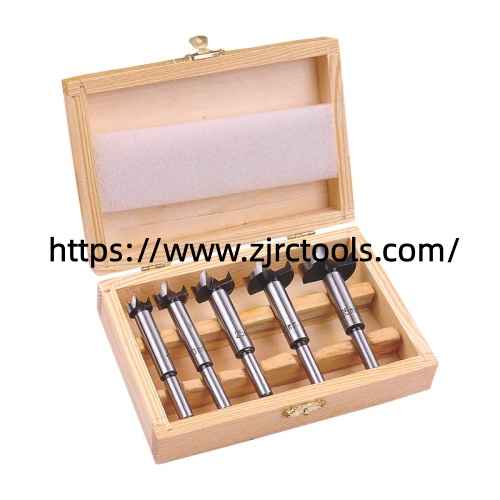
CNC Milling Cutter selection plays an important role in determining how efficiently a manufacturing operation can produce slots, pockets, flat surfaces, and complex contours. Different tool designs serve different purposes, and choosing an appropriate option requires consideration of workpiece material, part geometry, dimensional requirements, and production volume. For manufacturers, understanding these differences can simplify tool planning and support consistent machining results.
Rotary cutting tools are available in several configurations, each developed for particular machining tasks. Some are designed to remove large amounts of material, while others focus on surface details, narrow grooves, or complex three dimensional shapes. Understanding their functions helps engineers create suitable machining strategies and reduce unnecessary tool changes.
End mills are widely used for general machining operations. Their cutting edges can engage both the end and the sides of the tool, making them suitable for producing pockets, shoulders, slots, and external profiles. Their versatility makes them useful in workshops handling varied component designs.
Face tools are intended primarily for producing flat surfaces across relatively broad workpieces. Many designs use replaceable inserts mounted around a tool body. When an insert becomes worn, operators can replace the individual cutting element instead of changing the entire assembly. This arrangement can be practical for production environments that frequently machine large surfaces.
Ball nose tools feature a rounded tip that follows curved paths. They are commonly used for three dimensional surface work, including mold cavities, sculpted components, and intricate contours. Their geometry allows the tool to follow gradual changes in surface shape, although the programmed path spacing affects the resulting finish.
Corner radius tools combine a flat end with rounded corners. This configuration is useful when a component requires a flat floor and a controlled radius along adjoining edges. The rounded transition can also reduce stress concentration at the tool tip during suitable machining operations.
Some components require shapes that general purpose tools cannot produce efficiently. Slotting tools, for example, are designed to create narrow channels, keyways, and other defined openings. Their diameter, thickness, and cutting edge arrangement must correspond to the dimensions specified in the engineering drawing.
T slot tools are used to form undercut features commonly found in fixture plates and machine tables. Because their cutting sections extend beyond the narrower neck, operators generally need to prepare an initial opening before completing the required profile.
Dovetail tools produce angled surfaces used in mechanical guides, sliding assemblies, and specialized fixtures. Chamfer tools create beveled edges that can remove sharp corners or prepare a component for subsequent assembly. Thread forming tools and thread milling tools provide alternative approaches to producing internal or external threads, depending on the component design and machine setup.
Roughing tools are intended to remove material during early machining stages. Their edge geometry can help divide removed material into manageable chips. Finishing tools, by comparison, are selected according to dimensional tolerances and surface quality requirements. Using separate tools for these stages may be appropriate when a part requires substantial stock removal followed by detailed finishing.
Workpiece composition is an important factor when selecting a suitable tool. Aluminum generally requires effective chip evacuation because accumulated chips can interfere with the cutting process. Tool designs with suitable flute space can help manage chip flow under appropriate operating conditions.
Steel components may require different edge preparation, substrate properties, and coatings according to hardness and machining conditions. Carbide tools are commonly used in applications requiring hardness retention at elevated temperatures, while high speed steel remains useful in certain operations where toughness, cost, or operating conditions influence the decision.
Coatings can affect friction, heat resistance, and wear behavior. However, the appropriate coating depends on the workpiece, cutting speed, coolant strategy, and tool substrate. No single configuration suits every application, so manufacturers should evaluate technical specifications rather than select tools based on appearance alone.
Before purchasing industrial cutting tools, buyers should confirm the required diameter, shank dimensions, flute length, overall length, edge geometry, and compatible tool holder. These specifications influence accessibility, rigidity, and the ability to machine the intended feature.
The number of flutes also matters. A smaller flute count may provide more room for chip evacuation in some materials, while additional flutes can offer benefits under suitable finishing conditions. The correct choice depends on feed rate, spindle speed, cutting depth, and the machine's available power.
Buyers should also consider repeat orders, production schedules, packaging requirements, and access to technical support. Clear communication about the intended application helps suppliers assess whether a proposed configuration matches the manufacturing process.
Selecting the right tooling involves balancing geometry, material compatibility, machining conditions, and purchasing requirements. A well planned approach helps manufacturers reduce avoidable setup changes and maintain a more predictable production workflow.
For workshops, distributors, and industrial buyers reviewing available tool solutions, Rct provides a starting point for discussing product specifications and application requirements. Visit https://www.zjrctools.com/ to review the company's product information and identify suitable options for your machining projects. Sharing details such as workpiece material, required dimensions, and intended operations can help support a more informed purchasing decision.

 English
 Arabic
 French
 Spanish
 Portuguese
 Deutsch
 Turkish
 Italiano
 Russian
 Romaian
 Portuguese (Brazil)
 Greek
