


 Downloader
 Free FTP
Promote Your Product
Got a product, service, or story to share? Promote it directly to our active community and boost your brand today.
Create an Ad
Publish Bulk Blog Posts
Boost Your Reach! 📝
Have articles, guest posts, or bulk stories to publish? Send your content directly to our editorial team and feature on our platform.
Email Us Your PostsAutomotive Component Manufacturing: Trends, Challenges, and Innovations
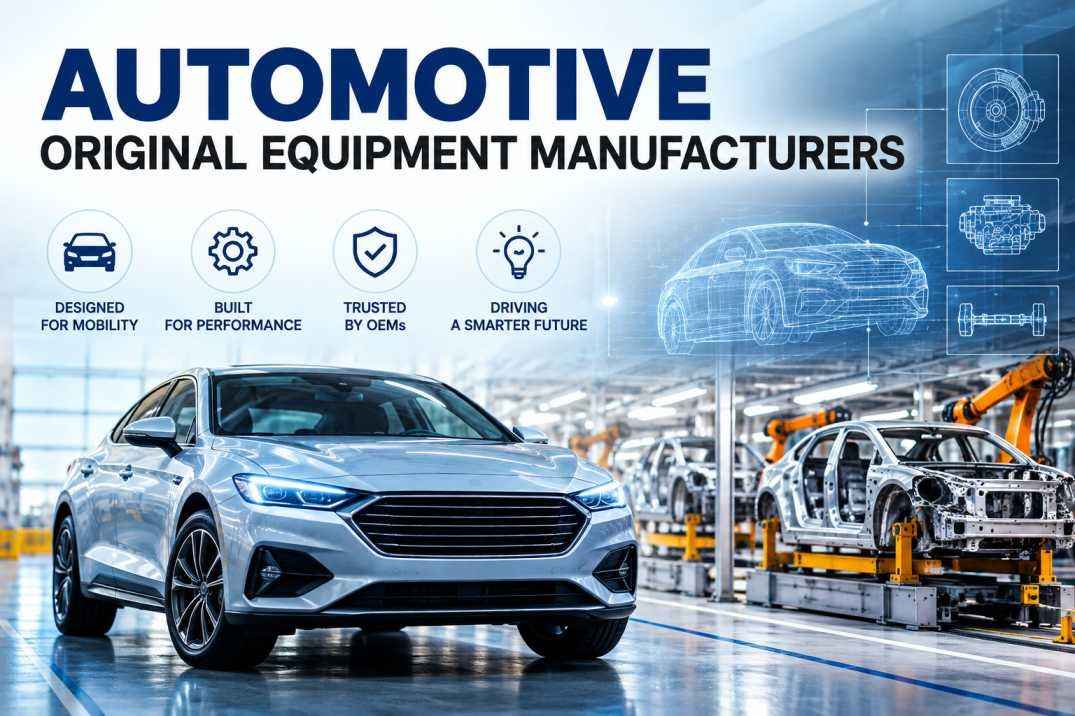
The automotive industry depends on high-quality components to produce vehicles that are safe, reliable, efficient, and durable. From engine parts and braking systems to electrical components and structural assemblies, every component plays an important role in vehicle performance. Automotive component manufacturing has become an essential part of industrial development, supporting vehicle manufacturers, suppliers, repair businesses, and the broader transportation sector.
As vehicle technology evolves, automobile parts manufacturing is experiencing significant changes. Automation, advanced materials, electric mobility, and digital production systems are transforming traditional manufacturing methods. At the same time, manufacturers face challenges related to production costs, quality requirements, supply chain disruptions, and environmental sustainability.
Understanding these trends, challenges, and innovations helps businesses adapt to changing market requirements and remain competitive.
What Is Automotive Component Manufacturing?
Automotive component manufacturing refers to the production of individual parts, assemblies, and systems used in automobiles and other motor vehicles. These components are manufactured using processes such as machining, casting, forging, stamping, molding, welding, and precision assembly.
Automotive components can be divided into several major categories:
-
Engine and powertrain components: Pistons, crankshafts, gears, valves, and transmission parts.
-
Braking and suspension components: Brake discs, calipers, shock absorbers, and suspension arms.
-
Electrical and electronic components: Wiring harnesses, sensors, control modules, and electronic assemblies.
-
Body and structural components: Panels, frames, brackets, and reinforced structures.
-
Interior and exterior components: Dashboard assemblies, seats, trim parts, bumpers, and lighting housings.
-
Electric vehicle components: Battery enclosures, electric motor parts, power electronics housings, and thermal management components.
Each category requires appropriate manufacturing techniques, material selection, inspection procedures, and performance testing.
Major Trends in Automobile Parts Manufacturing
1. Automation and Smart Manufacturing
Automation is transforming automobile parts manufacturing by improving production speed, consistency, and accuracy. Industrial robots, automated assembly systems, computer-controlled machinery, and machine vision technologies help manufacturers perform repetitive tasks with greater precision.
Smart manufacturing systems also collect production data to monitor machine performance, identify inefficiencies, and detect potential quality problems. These capabilities can reduce material waste, improve productivity, and support more consistent manufacturing outcomes.
As automation becomes more accessible, manufacturers of different sizes can explore technologies that match their production volumes and investment capabilities.
2. Growth of Electric Vehicle Components
The growing adoption of electric vehicles is changing demand across the automotive supply chain. Electric vehicles require specialized components, including battery housings, electric motor assemblies, charging-related hardware, thermal management systems, and power electronics components.
Manufacturers traditionally focused on internal combustion engine parts may need to diversify their product portfolios to address these changing requirements.
This transition creates opportunities for companies with expertise in precision machining, lightweight materials, electrical insulation, thermal control, and high-voltage component manufacturing.
3. Advanced Materials and Lightweight Design
Reducing vehicle weight can improve energy efficiency and driving range while maintaining structural strength and safety. Automotive manufacturers increasingly consider advanced steel alloys, aluminum, engineered plastics, and composite materials for suitable applications.
These materials may require specialized cutting tools, forming processes, joining methods, and quality inspection techniques.
Automotive component manufacturers must balance weight reduction with durability, production cost, repairability, and applicable safety requirements. Effective material selection is therefore an important part of product design and manufacturing planning.
4. Digitalization and Data-Driven Production
Digital technologies are making manufacturing operations more connected and measurable. Computer-aided design, computer-aided manufacturing, digital production monitoring, and manufacturing execution systems help coordinate engineering and production activities.
Data analytics can identify recurring defects, track machine utilization, and support predictive maintenance. Digital records also make it easier to trace materials, monitor production batches, and investigate quality issues.
These capabilities help manufacturers make informed decisions and improve operational visibility across production facilities.
Key Challenges in Automotive Component Manufacturing
1. Rising Production Costs
Manufacturers must manage expenses associated with raw materials, electricity, labor, machinery, transportation, and equipment maintenance. Unexpected price changes can reduce profit margins and make production planning difficult.
To address these challenges, businesses can optimize material usage, reduce scrap, improve energy efficiency, and review production workflows. Preventive maintenance and effective inventory management can also help control avoidable costs.
2. Maintaining Consistent Product Quality
Automotive components must meet defined dimensional, material, functional, and safety requirements. Even small manufacturing defects can cause assembly problems, premature component failure, or expensive product recalls.
Quality assurance measures may include incoming material inspection, in-process testing, dimensional measurement, functional testing, and final inspection.
Manufacturers should establish documented quality procedures and maintain traceability throughout production. Depending on customer and industry requirements, appropriate automotive quality management standards may also be necessary.
3. Supply Chain Disruptions
Automobile parts manufacturing depends on the timely availability of raw materials, specialized components, tooling, and packaging. Supplier delays or transportation problems can interrupt production schedules and affect customer deliveries.
Manufacturers can reduce these risks by evaluating supplier reliability, identifying alternative sources, maintaining suitable safety stock, and improving demand forecasting.
Strong communication between purchasing, production, and logistics teams is essential for maintaining stable operations.
4. Environmental and Regulatory Requirements
Manufacturers increasingly need to consider energy consumption, emissions, waste disposal, chemical handling, and material recycling. Meeting environmental and product compliance requirements can require additional investment in equipment, monitoring, and documentation.
Practical improvements include recycling suitable materials, reducing production waste, optimizing energy usage, and selecting more sustainable manufacturing processes where technically appropriate.
Innovations Shaping the Future of Automotive Manufacturing
1. Additive Manufacturing
Additive manufacturing, commonly known as 3D printing, creates components by building material layer by layer. It is useful for rapid prototyping, customized tooling, complex geometries, and selected low-volume production applications.
This technology can shorten product development cycles and reduce material waste in suitable applications. However, material performance, production speed, cost, and certification requirements must be evaluated before using it for critical automotive components.
2. Artificial Intelligence and Predictive Maintenance
Artificial intelligence can analyze machine data, inspection images, and production records to identify patterns that may indicate quality defects or equipment problems.
Predictive maintenance systems can help manufacturers identify developing faults before machinery fails unexpectedly. This approach may reduce unplanned downtime and improve equipment utilization.
The effectiveness of these systems depends on reliable data, suitable sensors, trained personnel, and integration with existing production processes.
3. Advanced Inspection Technologies
Modern inspection methods, including automated optical inspection, laser measurement, and non-destructive testing, help manufacturers evaluate components without relying exclusively on manual checks.
These technologies can improve measurement accuracy, detect defects earlier, and provide useful records for quality analysis. Combining automated inspection with skilled human oversight can strengthen quality management.
Conclusion
Automotive component manufacturing is evolving through automation, digitalization, advanced materials, and the transition toward electric mobility. These developments are creating new opportunities while increasing the importance of cost management, product quality, supply chain resilience, and environmental responsibility.
Businesses involved in automobile parts manufacturing can remain competitive by investing in appropriate technology, strengthening quality control, developing skilled workforces, and building reliable supplier relationships.
As automotive engineering continues to advance, manufacturers that combine innovation with efficient production practices will be better positioned to meet changing industry demands and support the next generation of vehicles.

 Arabic
 French
 Spanish
 Portuguese
 Deutsch
 Turkish
 Dutch
 Italiano
 Russian
 Romaian
 Portuguese (Brazil)
 Greek
