


 Downloader
 Free FTP
Promote Your Product
Got a product, service, or story to share? Promote it directly to our active community and boost your brand today.
Create an Ad
Publish Bulk Blog Posts
Boost Your Reach! 📝
Have articles, guest posts, or bulk stories to publish? Send your content directly to our editorial team and feature on our platform.
Email Us Your PostsHow Does Root Canal Treatment Protect Natural Teeth?
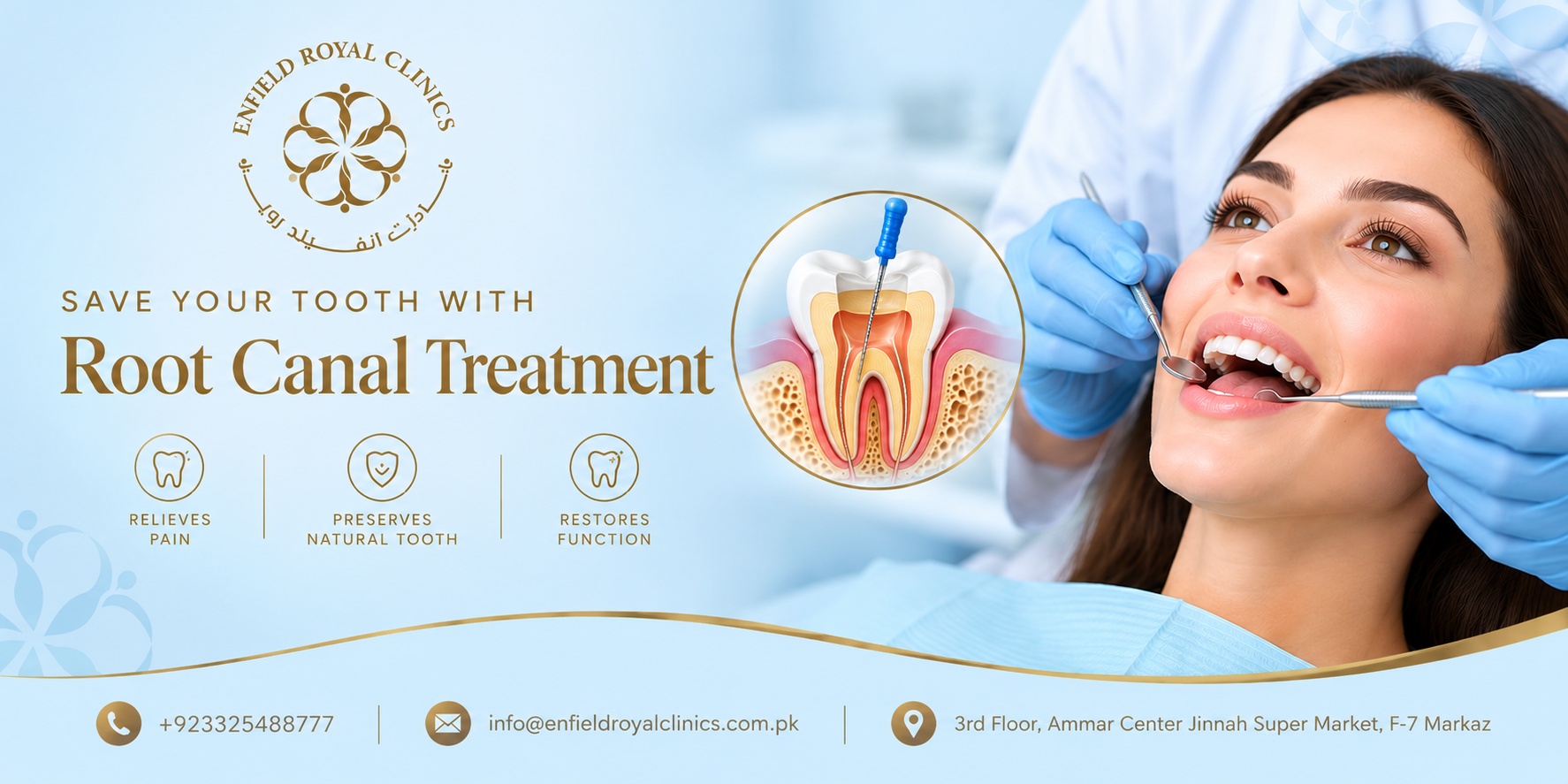
Natural teeth play an important role in chewing, speaking, and maintaining a healthy smile. When tooth decay or injury damages the soft tissue inside a tooth, the resulting inflammation or infection can threaten its long-term health. Although extraction may seem like the simplest solution, root canal treatment can often preserve the natural tooth and restore its ability to function.
Root canal treatment focuses on removing damaged or infected tissue from inside the tooth rather than removing the entire tooth. The dentist cleans and disinfects the internal canals, seals them, and restores the remaining structure with a suitable filling or crown. For people considering Root Canal Treatment in Islamabad, understanding how the procedure protects natural teeth can help them make informed decisions about dental care.
1. How Does Root Canal Treatment Preserve Natural Tooth Structure?
The main purpose of root canal treatment is to save a tooth that has damaged or infected pulp but can still be restored. The dental pulp contains nerves, blood vessels, and connective tissue. It supports tooth development, but a fully developed tooth can continue functioning after the pulp has been removed.
Deep cavities, cracks, and dental injuries can allow bacteria to reach the pulp. When the tissue becomes irreversibly inflamed or infected, the tooth may develop persistent pain, sensitivity, or swelling.
During root canal treatment, the dentist removes the affected pulp from the inner chamber and root canals. The canals are then cleaned, disinfected, filled, and sealed to help prevent bacteria from entering again.
This approach preserves the outer portion of the tooth, including its root and the structure that supports it in the jaw. A suitable restoration helps protect the remaining tooth and allows it to continue performing its normal role.
However, root canal treatment cannot save every damaged tooth. If decay extends too far below the gumline, a severe fracture affects the root, or too little healthy structure remains, extraction may be necessary. A dental examination helps determine whether preserving the tooth is a realistic option.
2. How Does Root Canal Treatment Stop the Spread of Infection?
An infection inside a tooth can develop when bacteria enter through deep decay, cracks, or damaged dental restorations. If the infection remains untreated, it may spread through the root canals into the tissues surrounding the root and contribute to an abscess.
A dental abscess can cause throbbing pain, gum swelling, tenderness, pus, and sometimes facial swelling or fever. The severity of symptoms varies, and some infected teeth may cause little discomfort.
Root canal treatment helps address the source of infection by removing the damaged pulp and cleaning the internal spaces. Disinfection reduces the bacterial load, while filling and sealing the canals helps limit further contamination.
Treating the infection can protect the surrounding tissues and improve the chance of retaining the natural tooth. However, the outcome depends on factors such as the extent of infection, the tooth's structure, the quality of the treatment, and the final restoration.
In some cases, additional treatment may be needed if infection persists or returns. If the tooth cannot be restored reliably, extraction may be the more appropriate choice.
People exploring Root Canal Treatment in Islamabad should seek a professional diagnosis rather than relying on pain relief alone. Antibiotics may be needed in selected situations, but they do not replace treatment that addresses the source of an infected pulp.
Facial swelling accompanied by fever requires urgent dental assessment. Difficulty breathing or swallowing requires immediate emergency care.
3. How Does Root Canal Treatment Restore Chewing Function?
A damaged tooth can make eating uncomfortable. Pain may develop when biting, chewing firm foods, or applying pressure to the affected area. When the pulp is infected or irreversibly inflamed, the discomfort may interfere with normal eating habits.
Root canal treatment can help restore comfortable chewing by addressing the source of pain inside the tooth. Once the treatment is completed and the tooth is properly restored, it can often function much like a natural tooth.
The final restoration is especially important because removing decay and pulp tissue may leave the tooth weaker than it was before the damage occurred. A filling may be suitable for some teeth, while others need a crown to protect the remaining structure.
Back teeth, including molars and premolars, experience substantial chewing pressure. When these teeth have lost a significant amount of structure, a crown is often recommended to reduce the risk of fracture.
Patients may need to avoid chewing hard foods on the treated tooth until the permanent restoration is placed. Following the dentist's instructions helps protect the tooth during recovery.
Although root canal treatment can restore function, it cannot guarantee that the tooth will never develop another problem. Regular dental care and a durable restoration remain important for long-term success.
4. Why Is Keeping Natural Teeth Better Than Losing Them?
Preserving a natural tooth can offer several benefits compared with extraction, provided the tooth can be restored successfully.
Maintaining normal chewing: Natural teeth help break down food efficiently. Keeping a functional tooth can reduce the need to adjust chewing habits or rely on replacement teeth.
Supporting the surrounding teeth: When a tooth is lost and not replaced, nearby teeth may gradually shift into the empty space. Preserving the natural tooth helps maintain the existing arrangement.
Maintaining the bite: Each tooth contributes to the way the upper and lower teeth meet. Retaining a healthy, restored tooth can help preserve this relationship.
Avoiding immediate tooth replacement: Extraction may lead to discussions about implants, bridges, or removable dentures. Saving a restorable tooth may avoid or postpone the need for these options.
Preserving the natural smile: Keeping the original tooth can maintain the natural appearance of the smile, especially when the affected tooth is visible.
These benefits do not mean that extraction should always be avoided. A severely fractured or non-restorable tooth may be better removed to prevent ongoing problems. The decision should be based on the tooth's condition and the likelihood of a successful outcome.
5. What Happens During Root Canal Treatment?
Understanding the procedure can help patients feel more prepared and recognize how each stage contributes to protecting the tooth.
The treatment generally includes the following steps:
Examination and diagnosis: The dentist reviews the symptoms, examines the tooth, and may take dental X-rays to assess the roots and surrounding bone.
Local anesthesia: The affected area is numbed to help manage discomfort during the procedure.
Removal of damaged pulp: The dentist creates an opening in the tooth and removes the inflamed, infected, or damaged pulp from the internal chamber and root canals.
Cleaning and disinfection: Specialized instruments clean and shape the canals, and disinfecting solutions help reduce bacteria inside them.
Filling and sealing: The canals are filled with a suitable material and sealed to help prevent bacteria from entering again.
Final restoration: A filling or crown restores the tooth and protects its remaining structure. The type of restoration depends on the amount of healthy tooth left and the tooth's location.
Some cases can be completed in one visit, while others require multiple appointments because of infection, anatomy, or treatment complexity.
For patients considering Root Canal Treatment in Islamabad, a dental assessment helps determine the procedure needed and whether a crown or another restoration is advisable.
6. How Can Patients Protect a Tooth After Root Canal Treatment?
Root canal treatment can preserve a natural tooth, but it does not make the tooth immune to future decay or fractures. The tooth and its restoration need ongoing care to remain healthy.
A few practical habits can help protect the treated tooth:
-
Brush twice daily with fluoride toothpaste to remove plaque and help prevent new decay.
-
Clean between the teeth daily using floss or another suitable interdental cleaner.
-
Complete the recommended restoration so the tooth has appropriate protection against chewing forces.
-
Avoid hard foods and objects that may crack a weakened tooth.
-
Attend regular dental checkups to identify new cavities, damaged fillings, or other problems early.
-
Follow post-treatment instructions and contact the dentist if symptoms do not improve as expected.
Mild tenderness may occur for several days after treatment, particularly when the surrounding tissues were inflamed beforehand. This discomfort should generally improve gradually.
Severe pain, increasing swelling, a damaged temporary filling, or symptoms that worsen instead of improving require professional assessment. Early follow-up can help identify complications before they become more serious.
Good oral hygiene and a well-fitting restoration can improve the chances of long-term success, although no dental procedure can guarantee a tooth will last indefinitely.
7. When Is Root Canal Treatment the Right Choice?
Root canal treatment may be suitable when the pulp is irreversibly inflamed, infected, or damaged but the tooth remains strong enough to restore. It is commonly considered when deep decay or injury has affected the pulp and preserving the tooth is possible.
The dentist evaluates several factors before recommending treatment, including the extent of decay, the presence of cracks, the condition of the gums and supporting bone, and the amount of healthy tooth structure remaining.
Not every painful tooth needs a root canal. A cavity that has not affected the pulp may be managed with a filling or another conservative restoration. Similarly, some cases of tooth sensitivity have causes unrelated to pulp infection.
If a tooth is too damaged to save, extraction may be necessary. The dentist can then explain suitable replacement options based on the patient's oral health and needs.
Timely diagnosis is important because untreated decay and infection may progress, reducing the options available for preserving the tooth. Patients experiencing persistent toothache, lingering sensitivity, swelling, or pain when chewing should arrange a dental examination.
Frequently Asked Questions
1. Can root canal treatment save a natural tooth?
Yes. When the pulp is infected or irreversibly damaged but the tooth can still be restored, root canal treatment can preserve the natural tooth and help it continue functioning.
2. Does a tooth become weak after root canal treatment?
A tooth may become more vulnerable to fracture because of the decay, cracks, or structure lost before treatment. A suitable filling or crown helps protect the remaining tooth, and a crown is often recommended when substantial structure is missing.
3. Can root canal treatment prevent tooth extraction?
It can often prevent extraction when the tooth is restorable. However, a severe root fracture, extensive decay, or inadequate remaining structure may make extraction necessary.
4. How long can a tooth last after root canal treatment?
A treated tooth can last for many years and sometimes for decades. Its longevity depends on the original damage, the quality of the restoration, oral hygiene, and regular dental care.

 Arabic
 French
 Spanish
 Portuguese
 Deutsch
 Turkish
 Dutch
 Italiano
 Russian
 Romaian
 Portuguese (Brazil)
 Greek
