


 Downloader
 Free FTP
Promote Your Product
Got a product, service, or story to share? Promote it directly to our active community and boost your brand today.
Create an Ad
Publish Bulk Blog Posts
Boost Your Reach! 📝
Have articles, guest posts, or bulk stories to publish? Send your content directly to our editorial team and feature on our platform.
Email Us Your PostsThe Changing Role of Smart Patient Monitoring in Modern Healthcare
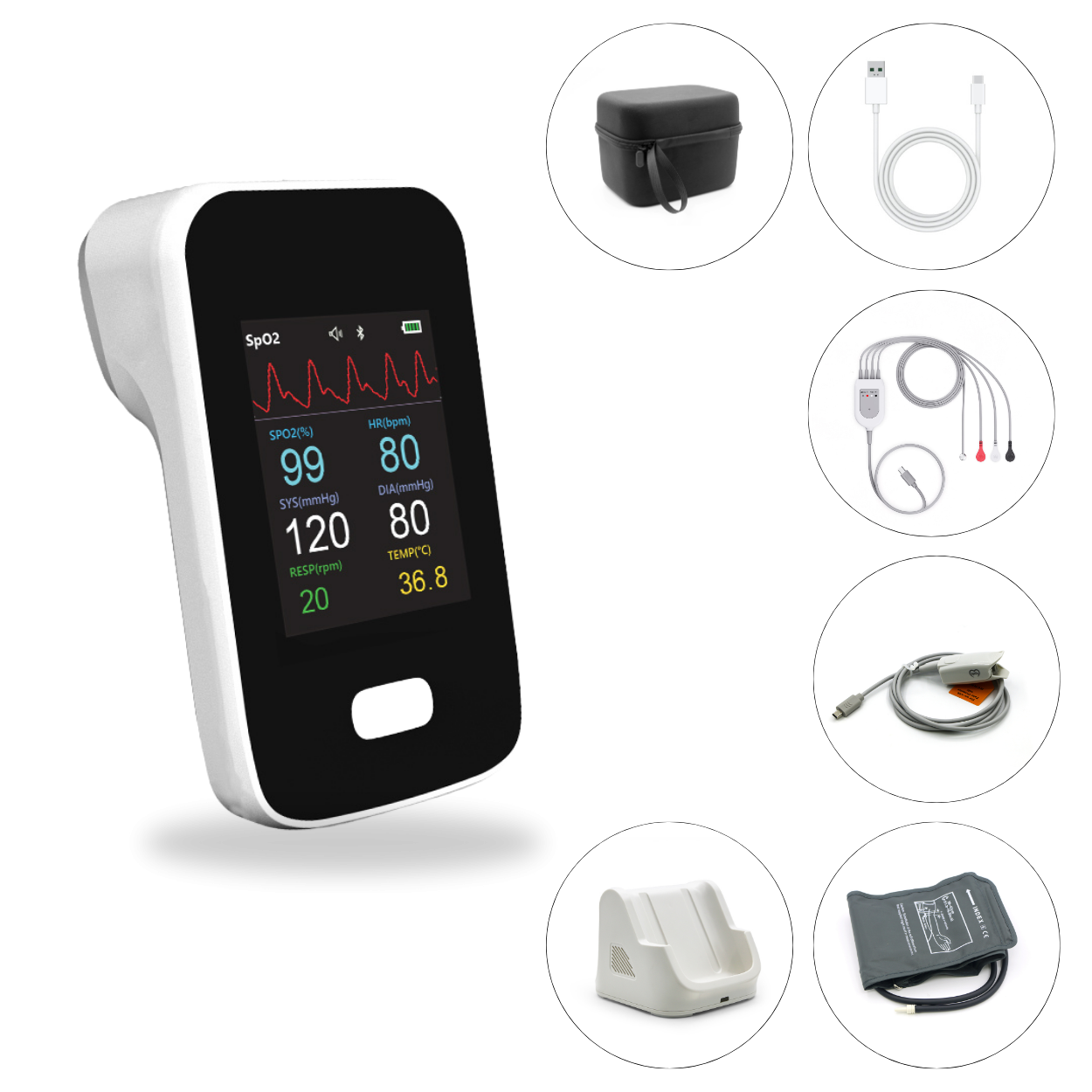
Accurate physiological observation is a fundamental part of safe and effective healthcare. From routine assessments in clinics to continuous observation in hospitals and home care, clinicians need dependable information to understand how a patient's condition is changing. Modern vital signs monitors can bring several essential measurements into a single monitoring process, helping healthcare professionals observe important physiological indicators while supporting more organized clinical workflows.
Understanding Modern Patient Monitoring
Vital signs provide a basic snapshot of how the body is functioning. Common measurements include blood pressure, heart rate, body temperature, respiratory rate, and blood oxygen saturation.
Although these measurements are individually useful, their greatest value often comes from considering them together. A change in one parameter may have several possible explanations, while changes across multiple parameters can provide additional context for clinical assessment.
Modern monitoring technology is designed to make collecting and reviewing these measurements more efficient. Depending on the system, information can be displayed digitally and recorded at appropriate intervals, reducing reliance on manual documentation.
Why Consistent Monitoring Matters
A patient's physiological condition can change significantly between scheduled assessments. A single measurement may provide only a limited view, while repeated observations can reveal patterns over time.
For example, a gradually increasing heart rate accompanied by changes in respiratory rate may warrant closer attention than either measurement alone. Similarly, repeated temperature measurements can help healthcare professionals determine whether an elevated reading is persistent.
Consistent observation is particularly relevant for patients recovering from surgery, managing chronic conditions, or receiving treatments that may affect cardiovascular or respiratory function.
Key Measurements Used in Patient Care
Blood Pressure
Blood pressure reflects the force of circulating blood against artery walls. Both systolic and diastolic measurements contribute to cardiovascular assessment.
Regular measurements can help clinicians understand a patient's baseline and identify changes that may require further evaluation.
Heart Rate
Heart rate measures the frequency of cardiac activity. It can change naturally because of exercise, stress, medication, age, hydration, and illness.
When reviewed alongside other physiological indicators, heart rate can provide useful information about a patient's overall condition.
Body Temperature
Temperature is commonly monitored because changes may be associated with infection, inflammation, environmental factors, or other physiological processes.
Repeated readings can help establish whether a temperature change is temporary or persistent.
Blood Oxygen Saturation
Blood oxygen saturation provides information about the amount of oxygen carried by hemoglobin. It can be particularly relevant when monitoring patients with respiratory or cardiovascular concerns.
The reading should always be considered within the patient's broader clinical circumstances.
Respiratory Rate
Respiratory rate represents the number of breaths taken during a specified period. Changes can provide important information about respiratory function, especially when considered alongside oxygen saturation and heart rate.
Benefits of Integrated Monitoring
Combining several measurements within one monitoring workflow can simplify routine patient observation. Healthcare professionals can review multiple physiological parameters without switching between several separate processes.
Digital monitoring can also improve record keeping and make comparisons between current and previous observations easier. This can be useful when tracking patient progress or evaluating changes following treatment.
Another benefit is workflow efficiency. In busy clinical environments, reducing unnecessary manual tasks can allow healthcare staff to dedicate more time to direct patient care.
However, automation should support clinical work rather than introduce additional complexity. Equipment should be straightforward enough for healthcare professionals to use consistently.
Choosing Suitable Monitoring Equipment
Different healthcare settings have different monitoring requirements. A hospital intensive care environment may require capabilities that are unnecessary for routine outpatient assessment. Similarly, home care may place greater emphasis on simplicity and patient comfort.
Accuracy should remain a primary consideration regardless of the setting. Healthcare organizations should examine technical specifications, intended applications, validation information, maintenance requirements, and applicable standards before selecting equipment.
Ease of use also matters. Clear displays, intuitive controls, and practical measurement procedures can reduce the possibility of avoidable operational errors.
For connected systems, healthcare providers should additionally consider how information is transferred, stored, and protected.
The Growing Role of Connected Healthcare
Digital healthcare is increasingly focused on making patient information accessible across appropriate care environments. Monitoring technology can contribute to this development by creating structured physiological data that may be incorporated into broader clinical workflows.
Remote patient care is one example. When appropriate monitoring information can be collected outside a hospital, healthcare professionals may be able to follow selected patients without requiring every assessment to take place in person.
Data security becomes especially important in connected environments. Organizations should use appropriate safeguards to protect patient information and limit access to authorized personnel.
Technology Should Support Clinical Judgment
Even sophisticated monitoring technology cannot replace professional assessment. A numerical reading needs context to become clinically meaningful.
Healthcare professionals consider symptoms, medical history, medications, physical examination findings, baseline measurements, and other relevant information when evaluating a patient.
Monitoring equipment is therefore most useful when it provides dependable information that complements professional judgment. Its purpose is to help clinicians see changes more clearly and respond appropriately when further assessment is needed.
The Future of Patient Observation
Healthcare monitoring continues to evolve as sensors, digital systems, connectivity, and data processing technologies improve. Future solutions are likely to focus increasingly on convenience, interoperability, patient comfort, and timely access to meaningful information.
The goal is not simply to collect larger amounts of data. Effective monitoring should provide the right information at the right time while fitting naturally into clinical workflows.
As healthcare becomes more connected, reliable physiological monitoring will remain an important foundation for informed patient assessment across hospitals, clinics, and home care environments.
Frequently Asked Questions
What measurements are commonly monitored
Common measurements include blood pressure, heart rate, body temperature, respiratory rate, and blood oxygen saturation.
Why are multiple measurements useful
Different physiological measurements provide different information. Reviewing them together can give healthcare professionals a more complete understanding of a patient's condition.
Can digital monitoring be used in home care
Yes, certain systems are designed for home and remote care applications. Suitability depends on the patient's needs and the capabilities of the specific equipment.
How often should vital measurements be taken
The appropriate frequency depends on the patient's condition, healthcare setting, treatment plan, and clinical judgment.
Does monitoring equipment replace a healthcare professional
No. Monitoring systems provide physiological information but do not replace professional diagnosis, examination, or clinical decision making.

 English
 Arabic
 French
 Spanish
 Deutsch
 Turkish
 Dutch
 Italiano
 Russian
 Romaian
 Portuguese (Brazil)
 Greek
