


 Downloader
 Free FTP
Promote Your Product
Got a product, service, or story to share? Promote it directly to our active community and boost your brand today.
Create an Ad
Publish Bulk Blog Posts
Boost Your Reach! 📝
Have articles, guest posts, or bulk stories to publish? Send your content directly to our editorial team and feature on our platform.
Email Us Your PostsCompound Interest Calculator: Estimate Your Investment Growth
The Power of Compound Interest
Albert Einstein reportedly called compound interest the eighth wonder of the world — and while this attribution may be apocryphal, the sentiment captures something genuinely remarkable about the mathematical properties of compound growth. Unlike simple interest that grows linearly on the initial principal alone, compound interest grows exponentially by earning interest on the accumulated interest alongside the original principal — creating growth curves that start gently but accelerate dramatically over longer time periods. A compound interest calculator makes this growth visible and quantifiable — showing investors exactly how their money will grow under different rate and time assumptions.
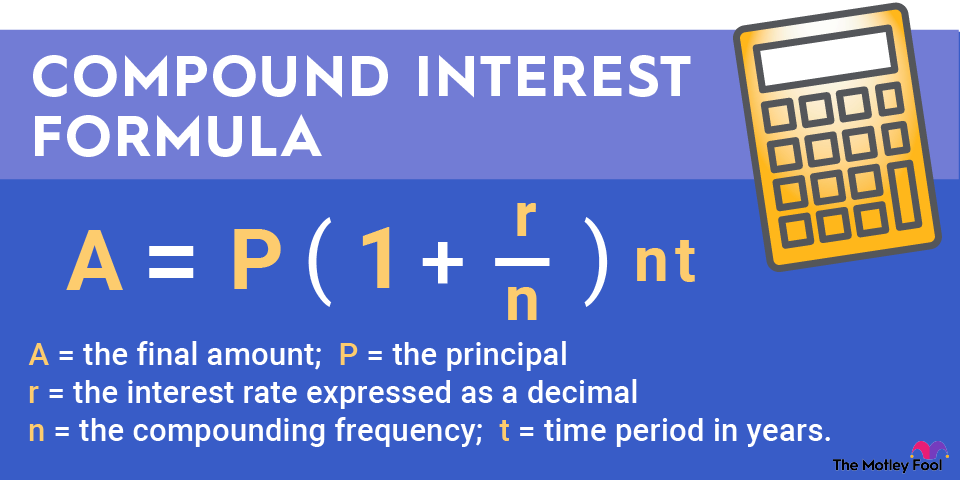
The Compound Interest Formula
The compound interest formula is A equals P times (1 plus r divided by n) raised to the power of nt — where A is the final amount, P is the principal, r is the annual interest rate expressed as a decimal, n is the number of times interest is compounded per year, and t is the number of years. This formula encapsulates the exponential growth mechanism — each compounding period adds interest on the growing total rather than just on the original principal, creating the accelerating growth that distinguishes compound from simple interest.
Compounding Frequency and Its Effect
The frequency at which interest is compounded significantly affects the final amount — with more frequent compounding producing higher returns than less frequent compounding at the same nominal interest rate. Annual compounding applies interest once per year. Monthly compounding applies interest twelve times per year. Daily compounding applies interest 365 times per year. And continuous compounding represents the mathematical limit of infinitely frequent compounding. The difference between annual and monthly compounding may seem small for short periods but becomes substantial over decades of investment growth.
The Rule of 72
The Rule of 72 is a convenient shortcut for estimating the time required for an investment to double at a given compound interest rate — dividing 72 by the annual interest rate gives the approximate number of years to doubling. An investment earning 6% annually doubles in approximately 12 years. At 9%, the doubling time is approximately 8 years. And at 12%, doubling takes approximately 6 years. This rule provides quick intuition about compound growth without a calculator — but the precise calculation requires the compound interest formula.
Retirement Savings Projections
Retirement savings projections are one of the most important practical applications of compound interest calculation — with the enormous differences that early versus late saving creates being a direct consequence of compound growth's time dependence. An investment of $10,000 at age 25 growing at 7% annually reaches approximately $149,745 by age 65. The same $10,000 invested at age 45 grows to only approximately $38,697 by age 65. This 3.9 times difference in outcome from the same initial investment illustrates the compound interest logic that makes early saving so powerfully advantageous.
Loan Interest Calculations
Compound interest applies to debt as well as savings — with credit card balances, personal loans, and mortgages growing through compound interest on outstanding balances. Understanding how compound interest grows debt helps borrowers appreciate the cost of carrying balances over extended periods and motivates the aggressive repayment strategies that minimize total interest paid. A credit card balance of $5,000 at 20% APR compounding monthly grows to approximately $6,117 after one year if no payments are made — illustrating the rapid growth of high-interest debt.
Inflation and Purchasing Power
Compound interest calculation applies to inflation as well as investment returns — with purchasing power eroding through compound inflation in the same mathematical way that investment value grows through compound returns. An inflation rate of 3% compounds to approximately 34% cumulative inflation over 10 years — meaning that goods costing $100 today will cost approximately $134 in 10 years at this inflation rate. Understanding compound inflation helps with long-term financial planning and retirement income projection.

 English
 Arabic
 French
 Spanish
 Portuguese
 Deutsch
 Turkish
 Dutch
Dutch
 Russian
 Romaian
 Portuguese (Brazil)
 Greek
Greek
