


 Downloader
 Free FTP
Promote Your Product
Got a product, service, or story to share? Promote it directly to our active community and boost your brand today.
Create an Ad
Publish Bulk Blog Posts
Boost Your Reach! 📝
Have articles, guest posts, or bulk stories to publish? Send your content directly to our editorial team and feature on our platform.
Email Us Your PostsIndustrial Dust Collector Manufacturer in Delhi | Shimi Research
Walk into almost any busy factory and you will find some amount of dust. It may come from cutting, grinding, polishing, mixing, crushing, or simply moving materials from one place to another. A little dust may seem harmless at first, but when it keeps building up, it can become a daily headache for the people working there.
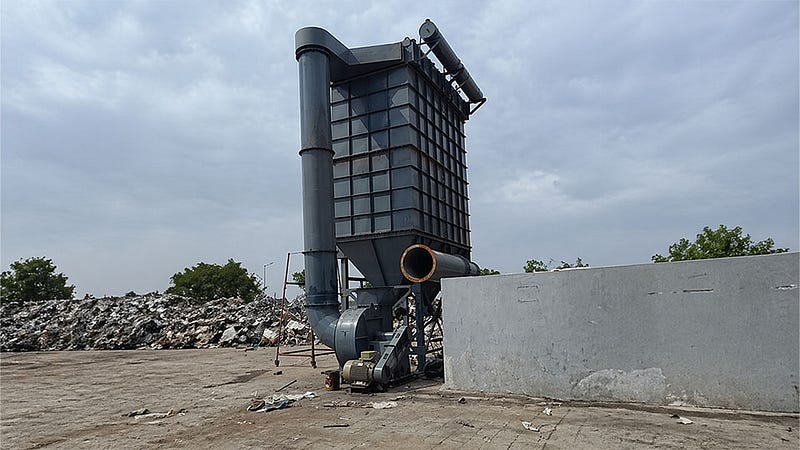
Machines need frequent cleaning, production areas become harder to maintain, and dust can spread from one section of the facility to another. This is why many industries invest in a proper dust collection setup.
Shimi Research provides industrial air pollution control solutions for different types of industries. As an Industrial Dust Collector Manufacturer in Delhi, the company focuses on understanding how a customer’s process works before recommending a suitable solution.
Why Is Dust Collection Important in a Factory?
Every factory produces dust in its own way. A metalworking unit may deal with fine metal particles, while a woodworking facility may have larger wood chips and dust. Cement, chemical, paper, and other industries have their own challenges.
Because of these differences, there is no single dust collector that works perfectly for every application.
A properly planned Dust Collection System can capture dust closer to where it is produced instead of allowing it to travel throughout the workplace.
It can help with:
ü Keeping production areas cleaner
ü Reducing dust buildup around equipment
ü Managing airborne particles
ü Making routine housekeeping easier
ü Supporting better industrial air filtration
ü Creating a more organized working environment
The main idea is simple: control the dust before it has a chance to spread everywhere.
Choosing a Dust Collector Is Not Just About Size
When someone starts looking for a dust collector, it is easy to focus on machine size, capacity, or price. But these are only parts of the decision.
The type of dust being generated matters just as much. So do the quantity of dust, particle size, temperature, airflow, and the way the production process operates.
For example, some applications may be better suited to a Bag Filter System, while others may benefit from a Cyclone Dust Collector.
A bag filter uses filter bags to separate dust particles from the air. A cyclone works on a different principle, using centrifugal action to separate heavier particles.
Which one is appropriate depends on the actual application. That is why discussing the process with an experienced manufacturer can be more useful than simply picking equipment from a catalogue.
Shimi Research: Understanding the Application
Shimi Research works with industries that need solutions for dust collection and air pollution control. Rather than looking at dust collection as a simple machine purchase, the company considers the practical requirements of the application.
As a Shimi Research Industrial Dust Collector Manufacturer, it provides solutions for different industrial environments where dust and airborne particles need to be managed.
Before choosing equipment, it helps to answer a few basic questions:
ü Where is the dust being generated?
ü What type of dust is it?
ü How much dust is produced?
ü How should the dusty air be collected?
ü What type of filtration is needed?
ü Can the system fit into the existing factory layout?
These details can make a big difference when planning a dust collection setup.
Industrial Air Filtration for Different Workplaces
Dust collection does not end when the dusty air reaches the collector. The air also needs to pass through suitable filtration equipment.
This is where Industrial Air Filtration becomes important. The filtration method should be selected according to the type and characteristics of the particles being handled.
Different industrial processes may produce:
ü Metal particles
ü Wood dust
ü Mineral dust
ü Chemical particles
ü Fine production residues
ü Other airborne materials
The right filtration arrangement can help industries manage these particles more effectively and keep their production areas easier to maintain.
Where Can Dust Collection Systems Be Used?
Dust is generated in more places than many people realize. Cutting, grinding, crushing, mixing, drilling, polishing, and material handling can all release particles into the air.
A Factory Dust Collector can be considered for applications across industries such as:
ü Metal processing
ü Cement manufacturing
ü Chemical processing
ü Woodworking
ü Paper industries
ü Automotive manufacturing
ü General production units
ü Material handling facilities
Of course, every factory is different. The same solution may not be suitable for two facilities, even if they work in a similar industry. Production capacity, layout, machinery, and dust generation all need to be considered.
Why Dust Extraction at the Source Makes Sense
Think about a machine producing dust continuously. If that dust is allowed to escape into the open workspace, it can quickly spread across floors, machines, and nearby work areas.
Cleaning everything afterward takes time and effort.
A properly designed Dust Extraction System aims to capture the dust as close to its source as possible. Depending on the application, the setup may include hoods, ducts, fans, filters, and collection equipment.
When these components work together properly, dust can be directed toward the collection system instead of being allowed to move freely around the factory.
This also connects with Industrial Ventilation Solutions, where airflow is planned to help move contaminated air toward the appropriate collection and filtration equipment.
What Makes a Good Dust Collector Manufacturer?
Finding an Industrial Dust Collector Manufacturer is easy. Finding one that understands your actual process is more important.
Before selecting a supplier, it is worth discussing practical questions such as:
ü What type of dust does the process produce?
ü How much dust needs to be collected?
ü What airflow will the system require?
ü Where will the collection points be located?
ü Which filtration method is suitable?
ü How will the equipment fit into the existing setup?
A Best Industrial Dust Collector Manufacturer should be willing to understand these details and help identify a practical solution.
Shimi Research provides pollution control and air filtration equipment for industrial applications, allowing businesses to explore solutions based on their individual requirements.
Dust Collector Solutions for Indian Industries
Factories across India work with very different materials, machinery, and production methods. As a result, dust control requirements can vary considerably from one industry to another.
This is why businesses searching for Dust Collector India solutions should look at the application first and the equipment second.
A good dust collection setup can become part of a wider industrial pollution control plan. Instead of dealing with dust only after it has spread, industries can focus on capturing it earlier and filtering the air more effectively.
Final Thoughts
Industrial dust is something many factories have to deal with, but it does not have to become a constant problem. With the right planning, dust can be collected closer to its source and handled through suitable filtration equipment.
Whether the requirement involves a Bag Filter System, Cyclone Dust Collector, dust extraction setup, or a broader air filtration solution, the right choice depends on the process, dust characteristics, airflow, and factory layout.
Shimi Research offers industrial air pollution control solutions for businesses looking to improve their approach to dust management.
If you are searching for an Industrial Dust Collector Manufacturer in Delhi, start by explaining your process and requirements. Once the actual problem is understood, it becomes much easier to find a dust collection solution that fits the workplace instead of forcing the workplace to fit the machine.

 English
 Arabic
 French
 Spanish
 Deutsch
 Turkish
 Dutch
 Italiano
 Russian
 Romaian
 Portuguese (Brazil)
 Greek
