


 Downloader
 Free FTP
Promote Your Product
Got a product, service, or story to share? Promote it directly to our active community and boost your brand today.
Create an Ad
Publish Bulk Blog Posts
Boost Your Reach! 📝
Have articles, guest posts, or bulk stories to publish? Send your content directly to our editorial team and feature on our platform.
Email Us Your PostsThailand’s Cooling Sector Shifts Toward Smarter and Greener Systems
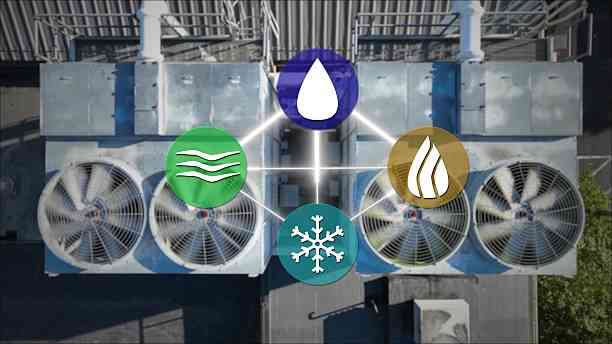
Thailand’s hot and humid climate makes air conditioning a practical requirement across homes, offices, retail spaces, hotels, hospitals, factories, and digital infrastructure. Rising temperatures, urban heat, residential construction, tourism activity, and commercial development are increasing the installed base of cooling systems. At the same time, electricity costs and environmental concerns are encouraging buyers to consider efficiency, refrigerant choice, and long-term operating performance.
According to MarkNtel Advisors, Thailand’s air conditioners industry was valued at approximately USD 1.98 billion in 2025 and is projected to reach USD 3.88 billion by 2032. The sector is expected to register a CAGR of around 10.9% during 2026–2032, supported by persistent heat, urbanization, replacement demand, efficient inverter technologies, and expanding commercial cooling requirements.
Rising Heat Sustains Cooling Demand
Thailand experiences prolonged periods of high temperature and humidity, creating strong year-round demand for indoor cooling. Heat exposure affects comfort, sleep, productivity, and health, particularly in densely populated urban areas where buildings, roads, and limited vegetation can intensify local temperatures.
The World Meteorological Organization’s extreme-heat resources explain how rising temperatures increase health risks and strain infrastructure. In Thailand, these conditions are reinforcing the role of air conditioning in residential buildings, workplaces, hospitals, hotels, and educational institutions.
Room Air Conditioners Retain the Largest Share
Room air conditioners represented approximately 51% of total industry value in 2025. Split systems are particularly common because they are comparatively easy to install, available across several capacities, and suitable for apartments, houses, shops, and small offices.
The residential segment accounted for around 38% of demand in 2025. Urban housing development, higher household incomes, and rising expectations for indoor comfort are supporting unit installations. Replacement purchases are also increasing as consumers shift from older fixed-speed equipment toward inverter-based models with improved temperature control and lower electricity consumption.
Efficiency Becomes a Central Purchasing Factor
Cooling systems can account for a considerable share of electricity use in warm-climate buildings. The International Energy Agency’s cooling analysis notes that growing air-conditioner ownership can place significant pressure on electricity networks unless equipment efficiency improves.
Inverter compressors, smart thermostats, occupancy sensors, and improved heat exchangers allow systems to respond more accurately to changing cooling loads. Rather than repeatedly switching fully on and off, inverter units adjust compressor speed, helping reduce energy waste and maintain more stable indoor temperatures.
Thailand’s energy-efficiency requirements and product-labeling programs are also influencing equipment development. Buyers are increasingly comparing seasonal efficiency performance alongside purchase price, capacity, warranty coverage, and service availability.
Lower-Impact Refrigerants Gain Attention
Refrigerant selection is becoming more important as governments and manufacturers work to reduce emissions associated with cooling. Older refrigerants may have high global-warming potential, creating pressure to transition toward lower-impact alternatives and reduce leakage during installation, servicing, and disposal.
The UN Environment Programme’s cooling guidance highlights the combined importance of efficient equipment and climate-friendly refrigerants. Safe adoption requires technician training, appropriate tools, and servicing standards because some alternatives have different pressure, flammability, or handling characteristics.
The Montreal Protocol framework also supports the global transition away from substances that damage the ozone layer and toward lower-emission cooling technologies. This shift is encouraging Thai manufacturers and distributors to expand inverter-based and environmentally conscious product portfolios.
Commercial Cooling Creates Diverse Requirements
Hotels, malls, offices, hospitals, manufacturing plants, and food-processing facilities require systems that can operate reliably for long periods. Depending on building size and use, these facilities may deploy variable refrigerant flow systems, packaged units, chillers, cassette systems, or ducted configurations.
Thailand’s established tourism sector contributes to cooling demand across hotels, resorts, restaurants, airports, and entertainment venues. The UN Tourism data platform provides broader context on tourism activity and its importance to hospitality infrastructure. Continuous occupancy and service expectations make efficient cooling and preventive maintenance especially important in these facilities.
Data Centers Add High-Performance Demand
Data centers require precise, uninterrupted cooling to protect servers and maintain stable operating temperatures. The report indicates that this end-user segment is expected to grow at a CAGR of around 9.11% during 2026–2032. Expansion of cloud services, digital platforms, and computing infrastructure is therefore creating demand for redundant and closely monitored cooling systems.
The ASHRAE standards and guidelines provide widely recognized technical guidance for building systems, indoor environments, and energy performance. As Thailand’s cooling landscape develops, equipment selection will increasingly balance capacity with efficiency, refrigerant impact, digital controls, and lifecycle cost. This transition is likely to favor systems that provide dependable comfort while limiting pressure on electricity networks and the environment.

 English
 Arabic
 French
 Spanish
 Portuguese
 Deutsch
 Turkish
 Dutch
Dutch
 Italiano
 Russian
 Portuguese (Brazil)
 Greek
Greek
