


 Downloader
 Free FTP
HDPE Pipe Price Forecast 2026: Trends, Data Outlook and Insights | IMARC Group
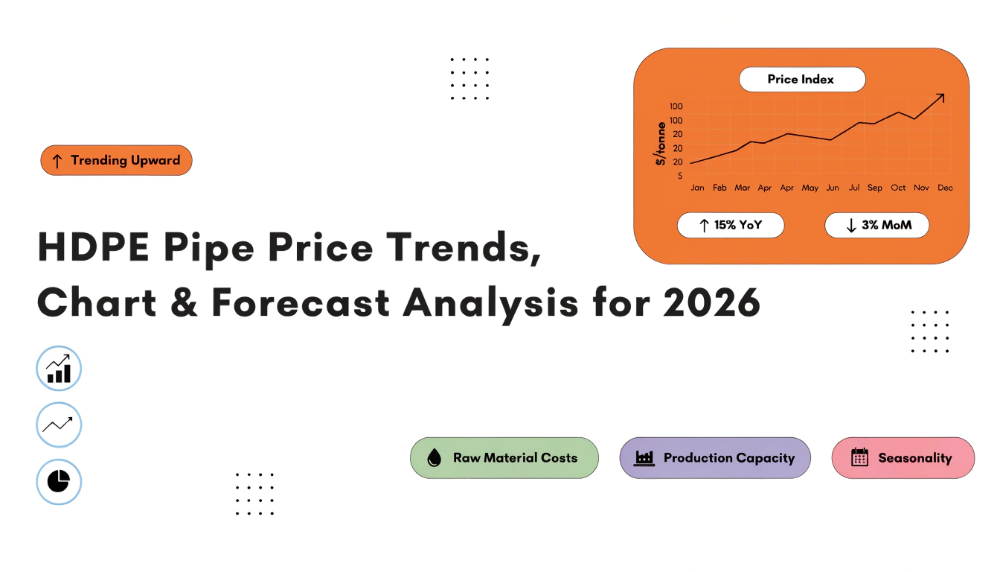
Global HDPE Pipe Price Outlook – Q2 2026
HDPE Pipe Price Index data shows a moderate uptrend of approximately 4.6% quarter-on-quarter in Q2 2026, driven by rising feedstock costs and steady infrastructure demand across key regions. Early-quarter price increases were linked to higher ethylene and crude oil benchmarks, while sustained construction activity supported demand stability. The HDPE Pipe Price Forecast indicates continued firmness in pricing, particularly in developed markets where infrastructure investments remain strong.
Pricing insights are derived from IMARC Group’s Q2 2026 price-tracking database, which combines global contract data, spot market intelligence, and upstream cost modelling. This methodology ensures accurate and actionable pricing benchmarks for procurement managers and industry stakeholders.
Regional Price Snapshot: Where Are HDPE Pipe Prices in Q2 2026?
- USA: USD 1308/MT
- China: USD 920/MT
- Germany: USD 1070/MT
- United Kingdom: USD 1410/MT
- Brazil: USD 1103/MT
The price spread of USD 490/MT between the UK and China reflects significant regional cost disparities. Higher prices in the UK and USA are linked to elevated production and compliance costs, while lower prices in China indicate cost-efficient manufacturing and abundant supply availability.
Across regions, HDPE pipe pricing trends remained firm with notable regional variations. North America exhibited strong pricing due to consistent infrastructure demand and higher raw material costs. Asia-Pacific markets, particularly China, maintained lower price levels due to surplus production capacity and competitive exports. In South America, Brazil saw moderate pricing supported by construction and agricultural demand. Overall, global markets experienced upward momentum, supported by rising feedstock costs and steady end-use demand across construction, water management, and energy sectors.
HDPE Pipe Price Analysis: Where Are Prices Rising or Stabilizing?
North America (USA)
The USA recorded HDPE pipe prices at USD 1308/MT, reflecting a clear upward trend during Q2 2026. Demand from infrastructure projects, including water distribution and energy pipelines, remained robust. Supply constraints due to planned maintenance shutdowns in petrochemical facilities contributed to tighter availability and higher pricing.
Asia-Pacific (China)
China reported prices at USD 920/MT, the lowest among the listed regions. Pricing remained relatively stable with slight upward movement, supported by improving domestic demand. However, excess production capacity and competitive export activity limited significant price increases.
South America (Brazil)
Brazil’s HDPE pipe prices stood at USD 1103/MT, showing moderate growth during the quarter. Demand from agricultural irrigation and infrastructure development supported pricing, while imports influenced supply dynamics. Currency fluctuations also played a role in shaping local pricing trends.
Supply and Demand Overview – Q2 2026
Supply conditions in Q2 2026 were influenced by fluctuations in upstream petrochemical production. Ethylene, the primary feedstock for HDPE, experienced price increases due to higher crude oil costs and intermittent supply disruptions. This directly impacted HDPE resin production costs and, consequently, pipe pricing.
On the demand side, infrastructure investments remained the primary driver. Governments across North America and Europe continued to prioritize water management and pipeline modernization projects. In emerging markets, agricultural demand for irrigation systems supported steady consumption.
Global trade flows remained stable, with Asia continuing to serve as a key export hub. Freight rates showed moderate fluctuations but did not significantly disrupt supply chains. Overall, the balance between supply and demand supported a firm pricing environment throughout the quarter.
HDPE Pipe Price Index & Historical Analysis: How Has Pricing Evolved?
The HDPE Pipe Price Index for Q2 2026 reflects a steady increase compared to Q1, aligning with rising feedstock costs and consistent demand. Historical analysis shows that HDPE pipe prices closely follow trends in crude oil and ethylene markets, with periodic fluctuations driven by supply disruptions and demand cycles.
The HDPE Pipe price history chart indicates that prices experienced volatility in 2025 due to energy market fluctuations, followed by stabilization and gradual recovery in early 2026. This pattern highlights the cyclical nature of the market, where external cost pressures and infrastructure demand play a critical role in shaping pricing trends.
Quarterly comparisons suggest that the current uptrend is part of a broader recovery phase rather than a temporary spike, with pricing expected to remain firm in the near term.
Forecast – Next 12 Months: What Should Buyers Expect?
The HDPE Pipe price forecast 2026 suggests continued price strength over the next 12 months, with expected growth of 5–7%. Key factors supporting this outlook include:
- Sustained infrastructure investments globally
- Stable demand from water management and energy sectors
- Potential supply constraints due to maintenance shutdowns
However, potential risks include volatility in crude oil prices and changes in global trade policies. Procurement managers should prepare for moderate price increases while monitoring feedstock trends closely.
Key Factors Affecting Prices: Quarterly Perspective
Several critical factors influenced HDPE pipe pricing during Q2 2026:
- Feedstock Costs: Rising ethylene and crude oil prices increased production costs.
- Infrastructure Demand: Strong demand from construction and pipeline projects supported pricing.
- Freight and Logistics: Moderate shipping cost fluctuations impacted regional price differences.
- Production Capacity: Excess capacity in Asia limited global price escalation.
- Regulatory Environment: Environmental and compliance costs in developed markets contributed to higher prices.
These factors collectively shaped the upward pricing trend observed during the quarter.
What Is HDPE Pipe?
HDPE (High-Density Polyethylene) pipe is a durable, flexible plastic piping solution widely used in water supply, gas distribution, sewage systems, and industrial applications. Known for its high strength-to-density ratio, HDPE pipe offers resistance to corrosion, chemicals, and environmental stress.
Its lightweight nature and ease of installation make it a preferred choice for infrastructure projects. Additionally, HDPE pipes are recyclable, contributing to sustainability goals in modern construction and utility sectors.
Recent Developments (Q2 Highlights)
- Increased infrastructure spending in North America and Europe supported demand growth.
- Asian manufacturers expanded export activity, maintaining competitive pricing globally.
- Feedstock price volatility influenced production costs and pricing trends.
- Technological advancements improved manufacturing efficiency and product quality.
- Strategic partnerships among key players enhanced supply chain resilience.
Stay Ahead with Latest Price Trends – Grab Your Sample Today: https://www.imarcgroup.com/hdpe-pipe-price-trend/requestsample
FAQs About HDPE Pipe Price Analysis & Market Insights:
What is the HDPE Pipe Price Index in Q2 2026?
The HDPE Pipe Price Index in Q2 2026 shows a moderate increase compared to Q1, driven by rising feedstock costs and steady demand. It reflects a firm pricing environment supported by infrastructure investments.
How does the HDPE Pipe Price Chart reflect market trends?
The HDPE Pipe Price Chart illustrates a steady upward trend during Q2 2026, highlighting the impact of feedstock cost increases and consistent demand. It also shows historical volatility linked to crude oil price movements.
What is the HDPE Pipe price forecast for 2026?
The HDPE Pipe price forecast 2026 indicates continued growth, with prices expected to rise by 5–7% over the next year. Demand from infrastructure and energy sectors will remain key drivers.
Conclusion
HDPE pipe prices in Q2 2026 experienced a steady upward trend, supported by rising feedstock costs and strong infrastructure demand. Regional variations reflected differences in production costs and supply dynamics. Looking ahead, the market is expected to maintain firm pricing, with moderate growth driven by ongoing investments and stable demand conditions.
Contact Us:
IMARC Group
134 N 4th St. Brooklyn, NY 11249, USA
Email: sales[@]imarcgroup.com
Tel No:(D) +91 120 433 0800
United States: +1-201971-6302

 English
 Arabic
 French
 Spanish
 Portuguese
 Deutsch
 Turkish
 Dutch
Dutch
 Italiano
 Romaian
 Portuguese (Brazil)
 Greek
Greek
