


 Downloader
 Free FTP
How Bio-Based Polyethylene Supports Cleaner Packaging
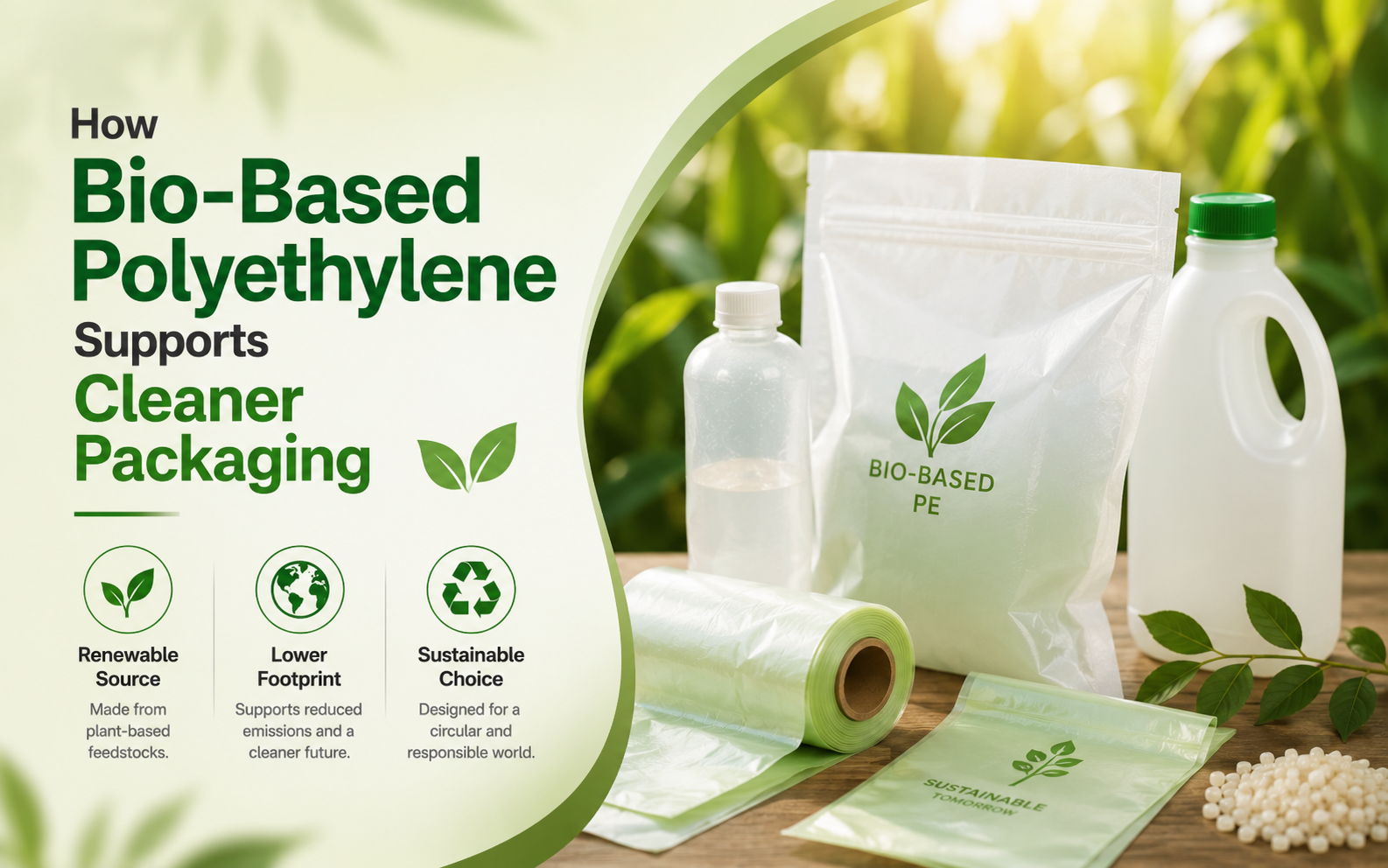
Bio-based polyethylene is gaining attention as manufacturers, packaging converters, and consumer goods companies search for materials that reduce reliance on fossil-based resources without completely changing existing production systems. Unlike some alternative polymers, bio-based polyethylene can offer similar performance to conventional polyethylene while using renewable feedstocks. This makes it relevant for packaging, agriculture, consumer goods, construction, and selected industrial applications.
According to MarkNtel Advisors, the bio-based polyethylene industry outlook states that the bio-based polyethylene sector was valued at USD 1.95 billion in 2025 and is projected to grow from USD 2.31 billion in 2026 to USD 4.33 billion by 2032. The study estimates a CAGR of around 11.04% during 2026–2032, supported by renewable materials, packaging demand, Bio-HDPE adoption, and Asia-Pacific consumption.
Bio-HDPE Leads Product Demand
Bio-HDPE accounted for around 68% share in 2026, according to the shared study. This product type is valued for rigidity, chemical resistance, strength, and suitability for durable packaging and industrial uses. It is commonly applied in bottles, containers, caps, closures, household products, personal care packaging, pipes, and selected technical components.
Its leadership is supported by compatibility with existing polyethylene processing equipment. Manufacturers can often use bio-based HDPE in established blow molding, injection molding, and extrusion systems without major machinery changes. This drop-in nature helps reduce adoption barriers for companies that want renewable content while maintaining familiar material performance and product quality.
Packaging Remains the Leading Application
Packaging accounted for approximately 52% share in 2026, making it the leading application area in the report. Demand is supported by food, beverage, healthcare, personal care, household products, and e-commerce packaging. Bio-based polyethylene can be used in rigid and flexible formats where durability, sealing performance, moisture resistance, and product safety are important.
The European Commission explains that bio-based plastics are fully or partially made from biological resources, while also noting that they are not automatically biodegradable or compostable. This distinction is important for packaging buyers because bio-based polyethylene should be evaluated for feedstock source, recyclability, performance, and end-of-life management.
Asia-Pacific Holds a Strong Position
Asia-Pacific accounted for around 42% share in 2026, according to the report. The region benefits from large packaging manufacturing capacity, consumer goods production, plastics conversion networks, and access to renewable feedstock supply chains. Demand is also supported by policy interest in reducing plastic waste and improving material sustainability across major economies.
Strong manufacturing ecosystems in Asia-Pacific allow resin suppliers, converters, brand owners, and exporters to operate within connected supply chains. This can improve cost efficiency, lead times, and product availability. However, regional adoption still depends on feedstock pricing, certification, recycling infrastructure, and buyers’ willingness to pay for renewable material content.
Feedstock Choices Shape Sustainability
Bio-based polyethylene can be produced using renewable feedstocks such as sugarcane, corn, sugar beet, cellulosic biomass, and other biological resources. Sugarcane-derived ethanol is one of the important pathways because ethanol can be converted into bio-ethylene and then polymerized into polyethylene.
Feedstock selection affects cost, supply stability, land-use considerations, and lifecycle emissions. Agricultural residues and second-generation biomass are gaining attention because they may reduce dependence on food-based crops. European Bioplastics notes through its bioplastics overview that bioplastics include materials that are bio-based, biodegradable, or both, showing why clear terminology and verified sourcing are necessary.
Drop-In Compatibility Supports Adoption
One reason bio-based polyethylene is commercially relevant is its similarity to conventional polyethylene. Since it can deliver comparable physical properties, manufacturers may integrate it into existing product lines more easily than materials requiring new processing conditions. This matters for high-volume packaging where consistency and machine efficiency are critical.
Drop-in compatibility also supports recycling alignment when the material is collected with compatible polyethylene streams. Still, recycling outcomes depend on local collection systems, sorting quality, contamination levels, and market demand for recycled material. Bio-based origin alone does not solve plastic waste; circular design and waste-management systems remain necessary.
Certification Improves Market Confidence
As sustainability claims receive closer scrutiny, certification and traceability are becoming important. Buyers need confidence that renewable content is accurately measured and communicated. Mass-balance certification, chain-of-custody systems, and third-party verification can help companies document feedstock origin and avoid unclear environmental claims.
The USDA BioPreferred Program provides biobased product resources for businesses and buyers, supporting recognition of products made from renewable biological materials. Similar certification approaches can help purchasing teams compare claims more responsibly and select materials based on measurable content rather than vague sustainability language.
Competition Reflects Consolidated Capacity
The report notes that the top five companies account for nearly 60% share, indicating a moderately consolidated competitive structure. Large chemical producers, renewable feedstock suppliers, and polymer manufacturers play important roles because bio-based polyethylene requires technical expertise, supply-chain integration, capital investment, and access to certified feedstocks.
Competition is shaped by production scale, pricing, certification, product grades, geographic supply, customer relationships, and the ability to support packaging converters. Companies that can provide consistent resin quality and verified renewable content are better positioned as brand owners strengthen sustainability-related procurement policies.
Outlook for Bio-Based Polyethylene
Bio-based polyethylene demand is being shaped by packaging requirements, Bio-HDPE adoption, renewable feedstock development, Asia-Pacific production strength, certification practices, and the need to reduce fossil-resource dependence. The report figures indicate continued growth through 2032 as companies explore lower-carbon materials without abandoning established polyethylene performance.
The long-term direction will depend on feedstock availability, cost competitiveness, recycling compatibility, policy support, and credible sustainability claims. As packaging and consumer goods companies review material choices, bio-based polyethylene is likely to remain important for applications where renewable content, durability, and processing familiarity must work together.

 English
 Arabic
 French
 Spanish
 Portuguese
 Deutsch
 Turkish
 Dutch
Dutch
 Russian
 Romaian
 Portuguese (Brazil)
 Greek
Greek
