


 Downloader
 Free FTP
Promote Your Product
Got a product, service, or story to share? Promote it directly to our active community and boost your brand today.
Create an Ad
Publish Bulk Blog Posts
Boost Your Reach! 📝
Have articles, guest posts, or bulk stories to publish? Send your content directly to our editorial team and feature on our platform.
Email Us Your PostsBiggest Challenges Facing Petroleum Companies in Pakistan
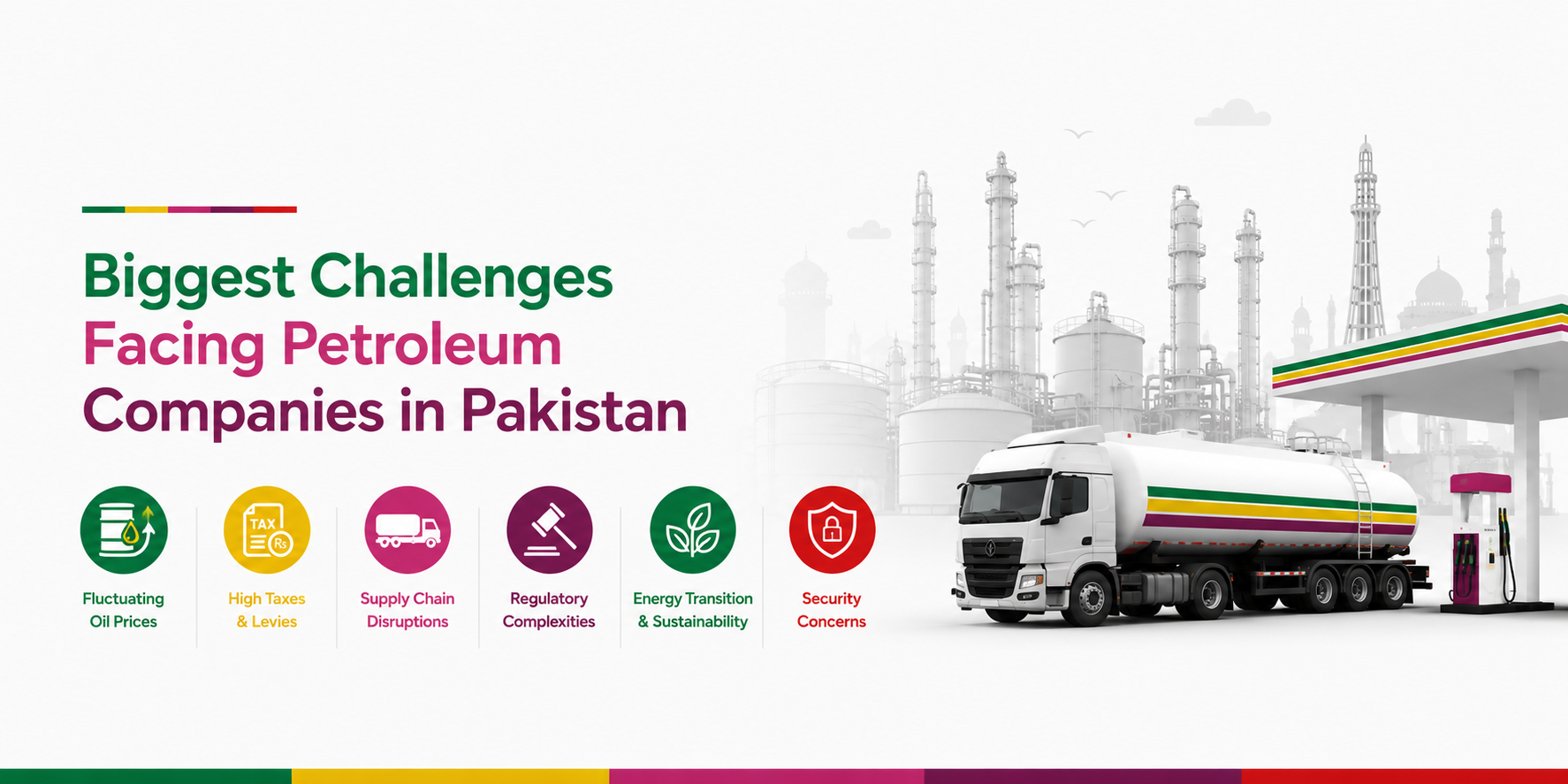
The petroleum companies in Pakistan play a major role in keeping the country's transport, industries, and businesses running every day. From supplying fuel to retail stations to supporting commercial operations, these companies handle a complex network that must work without interruption. However, changing market conditions, economic pressure, and operational hurdles continue to create new challenges that require careful planning and long-term investment.
10 Key Challenges Facing Petroleum Companies in Pakistan You Need to Know
The Petroleum Companies in Pakistan operate in a fast-changing environment where every decision can affect fuel availability, business performance, and customer confidence. Below are the ten biggest challenges shaping the future of Pakistan's petroleum sector and why they matter for both businesses and consumers.
-
Heavy Dependence on Imported Crude Oil
Pakistan imports a significant portion of its crude oil, making local fuel supplies vulnerable to global market disruptions. Any delay in international shipments or supply shortages can directly affect the country's fuel availability and increase operating costs for businesses across the energy sector.
-
Fluctuating Global Oil Prices
International crude oil prices rarely remain stable for long. Even a small change in the global market can influence procurement costs, pricing strategies, and financial planning, making it difficult for companies to maintain consistent profit margins while meeting customer demand.
-
Currency Exchange Rate Volatility
Since fuel imports are paid for in US dollars, fluctuations in the Pakistani rupee have a direct impact on purchasing costs. A weaker currency increases import expenses and places additional financial pressure on every petroleum company in Pakistan, especially during periods of economic uncertainty.
-
Fuel Logistics and Distribution Delays
Moving fuel from refineries and storage terminals to retail stations requires accurate planning and reliable transportation. Traffic congestion, road conditions, vehicle availability, and delivery schedules can all affect Fuel Logistics, making timely distribution one of the industry's biggest operational challenges.
-
Maintaining Fuel Quality and Safety Standards
Fuel quality must remain consistent throughout storage, transportation, and delivery. Companies invest in regular inspections, storage management, and testing procedures to reduce contamination risks and ensure customers receive products that meet national quality standards.
-
Regulatory Compliance and Changing Government Policies
The petroleum sector operates under strict regulations that cover licensing, pricing, environmental compliance, and operational safety. Frequent policy updates require companies to adjust their procedures while continuing to meet legal requirements without disrupting daily operations.
-
Rising Operational and Infrastructure Costs
Managing storage terminals, transport fleets, fuel stations, and maintenance facilities requires significant investment. Rising energy prices, equipment upgrades, workforce expenses, and infrastructure improvements continue to increase operating costs across the petroleum industry in Pakistan.
-
Supply Chain Disruptions and Inventory Management
Unexpected events such as extreme weather, transportation issues, or higher-than-normal fuel demand can interrupt the supply chain. Companies need accurate inventory monitoring and effective planning to prevent shortages while ensuring fuel reaches stations when it is needed most.
-
Adopting Modern Technology and Digital Systems
Technology is becoming an essential part of petroleum operations. Digital inventory tracking, GPS fleet monitoring, automated reporting, and real-time data analysis help businesses improve decision-making, reduce delays, and manage resources more efficiently throughout the supply chain.
-
Increasing Competition in the Retail Fuel Market
The number of Petrol Pump Companies in Pakistan continues to grow, giving customers more choices than ever before. To remain competitive, businesses must focus on service quality, fuel availability, operational efficiency, and customer satisfaction instead of competing on price alone.
How Petroleum Companies Can Overcome These Challenges
Addressing these challenges requires more than short-term solutions. Companies that invest in stronger supply chain management, modern infrastructure, reliable logistics networks, digital monitoring systems, employee training, and strict quality control are better prepared to respond to changing market conditions.
Building long-term partnerships with suppliers, improving inventory planning, and adopting efficient operational practices can also strengthen business performance. As customer expectations continue to evolve, organizations that focus on reliability, safety, and service quality will be better positioned for sustainable growth.
Conclusion
The future of petroleum companies in Pakistan depends on their ability to adapt to changing economic conditions, improve operational efficiency, and maintain a reliable fuel supply across the country. While challenges such as global price fluctuations, logistics, regulatory compliance, and infrastructure costs continue to shape the industry, companies that embrace innovation, invest in strong distribution networks, and prioritize customer trust will be better equipped for long-term success in Pakistan's growing energy market.

 English
 Arabic
 French
 Spanish
 Portuguese
 Deutsch
 Dutch
Dutch
 Italiano
 Russian
 Romaian
 Portuguese (Brazil)
 Greek
Greek
