


 Downloader
 Free FTP
Promote Your Product
Got a product, service, or story to share? Promote it directly to our active community and boost your brand today.
Create an Ad
Publish Bulk Blog Posts
Boost Your Reach! 📝
Have articles, guest posts, or bulk stories to publish? Send your content directly to our editorial team and feature on our platform.
Email Us Your PostsWhy Does Capillary Thermostat Switch Placement Matter More?
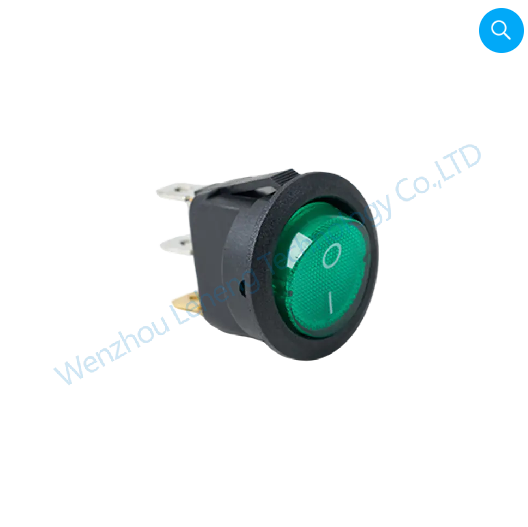
A Capillary Thermostat Switch operates by detecting temperature through a sensing bulb connected to a capillary tube filled with fluid. As temperature changes, internal pressure shifts and activates the switching mechanism. However, heat inside real equipment is not evenly distributed. Some areas heat faster, while others remain cooler for longer periods. If the sensing bulb is placed too close to a heat source, it may detect local temperature instead of the overall system condition, leading to early or inconsistent switching behavior.
In a Capillary Thermostat Switch, installation accuracy becomes important because even small positional differences can influence performance. The sensing bulb must be placed where temperature represents the general working environment of the system. If it is installed in a stagnant airflow zone or in direct contact with a heated surface, the switch may respond in a way that does not match actual operating needs. Over time, this can lead to irregular heating cycles, delayed shutdown behavior, or unstable temperature control.
The capillary tube also plays a role in system stability. It must be routed carefully to avoid sharp bending, excessive vibration, or mechanical stress. Any deformation in the tube can affect pressure transmission and response consistency. Although the switch may still function, its sensitivity and timing can gradually change under improper installation conditions.
Fast heating equipment can make these effects more noticeable. In systems where temperature rises quickly, the response delay of a Capillary Thermostat Switch may lead to temperature overshoot or frequent cycling. This is why positioning and distance from heat sources are often adjusted based on application type and heating speed.
Overall, temperature control behavior depends not only on the switch itself but also on how accurately it senses real system conditions. Correct placement ensures that the switch responds to representative temperature rather than localized heat variations within the equipment.

 Arabic
 French
 Spanish
 Portuguese
 Deutsch
 Turkish
 Dutch
Dutch
 Italiano
 Russian
 Romaian
 Portuguese (Brazil)
 Greek
Greek
