


 Downloader
 Free FTP
Corporate Legal Services: Contracts, Compliance & Advisory
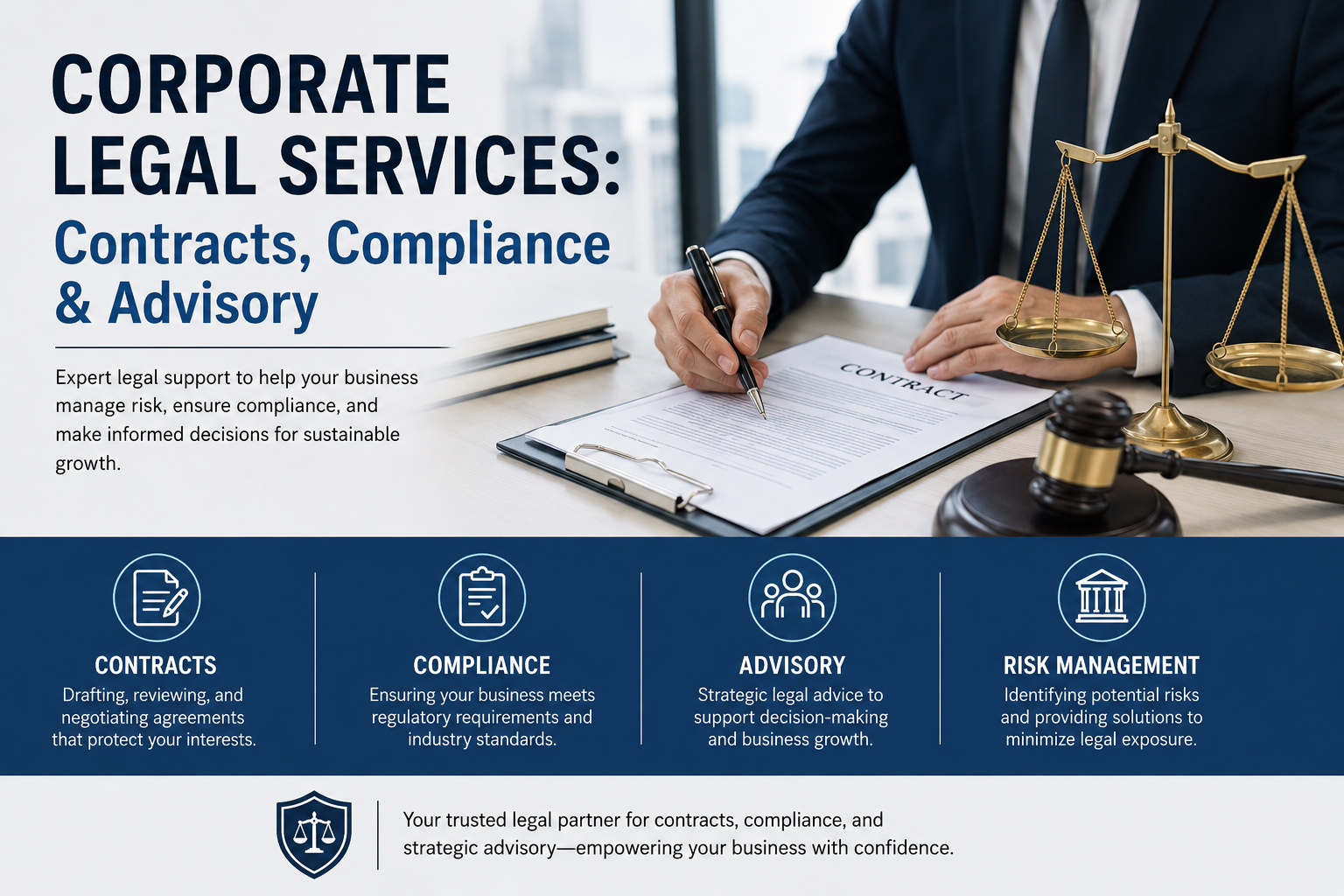
In today's competitive business environment, legal support is no longer optional it is a necessity. Whether you are a startup, a growing enterprise, or a multinational corporation, having access to reliable corporate legal services can help protect your business, minimize risks, and ensure long-term success.
From drafting contracts and managing regulatory compliance to providing strategic legal guidance, businesses depend on experienced legal professionals to navigate complex legal matters. This article explores the importance of corporate legal services, the role of contracts and compliance, and how legal advisory services help organizations make informed business decisions.
Understanding Corporate Legal Services
Corporate legal services refer to a broad range of legal solutions designed specifically for businesses and organizations. These services help companies manage their legal obligations while supporting growth and operational efficiency.
Corporate legal professionals assist businesses with:
-
Contract drafting and review
-
Regulatory compliance
-
Employment law matters
-
Mergers and acquisitions
-
Intellectual property protection
-
Corporate governance
-
Business formation and restructuring
-
Risk management
-
Legal advisory and consulting
Businesses that invest in quality legal services are better prepared to avoid disputes, maintain compliance, and achieve sustainable growth.
Why Businesses Need Corporate Legal Services
Every business faces legal challenges at different stages of its growth. Without proper legal support, even small mistakes can lead to financial losses, regulatory penalties, or reputational damage.
Here are some key reasons why companies invest in corporate legal services:
1. Risk Management
Legal professionals identify potential risks before they become serious issues. They review contracts, assess business practices, and ensure that operations align with applicable laws.
2. Regulatory Compliance
Laws and regulations change frequently. Companies must stay compliant with industry standards, tax regulations, labor laws, and data protection requirements. Legal experts help businesses understand and implement these regulations effectively.
3. Business Growth Support
As businesses expand into new markets or launch new products, legal guidance becomes essential. Corporate lawyers provide advice on business structures, partnerships, and expansion strategies.
4. Dispute Prevention
Properly drafted agreements and clear legal policies reduce the risk of conflicts between businesses, employees, vendors, and clients.
The Importance of Contracts in Corporate Law
Contracts are the foundation of most business relationships. A well-drafted contract protects the interests of all parties and establishes clear expectations.
Corporate legal teams assist businesses in creating legally binding agreements that are clear, enforceable, and customized to specific business needs.
Common Types of Business Contracts
Employment Agreements
Employment contracts define roles, responsibilities, compensation, confidentiality requirements, and termination conditions.
Vendor Agreements
Vendor contracts establish terms related to pricing, delivery schedules, service standards, and payment obligations.
Partnership Agreements
Businesses entering partnerships require detailed agreements that outline ownership, profit sharing, decision-making authority, and dispute resolution mechanisms.
Non-Disclosure Agreements (NDAs)
NDAs protect confidential information, trade secrets, and proprietary business data from unauthorized disclosure.
Service Agreements
Service contracts define the scope of work, payment terms, timelines, and liability limitations between businesses and clients.
Proper contract management helps businesses avoid misunderstandings and minimizes the likelihood of costly legal disputes.
Corporate Compliance: A Critical Business Function
Compliance is one of the most important aspects of corporate law. Businesses must adhere to laws, regulations, and industry standards to operate legally and ethically.
Failure to comply with legal requirements can result in:
-
Financial penalties
-
Government investigations
-
Legal disputes
-
Loss of business licenses
-
Reputational damage
This is why many organizations rely on corporate legal advice to develop strong compliance frameworks.
Areas of Corporate Compliance
Employment Law Compliance
Companies must comply with labor regulations related to:
-
Employee wages
-
Workplace safety
-
Anti-discrimination laws
-
Employee benefits
-
Leave policies
Legal professionals help businesses establish policies that align with labor laws and reduce employment-related risks.
Data Privacy and Security
With increasing digitalization, businesses collect large amounts of customer and employee data.
Legal advisors help companies comply with privacy regulations by:
-
Developing privacy policies
-
Drafting consent agreements
-
Reviewing data collection practices
-
Managing cybersecurity risks
Tax and Financial Compliance
Businesses must comply with tax reporting obligations and financial regulations.
Corporate legal teams often work alongside accountants and financial advisors to ensure that organizations meet their regulatory responsibilities.
Industry-Specific Regulations
Certain industries such as healthcare, finance, insurance, and technology face additional regulatory requirements.
Experienced legal professionals assist businesses in understanding industry laws and maintaining ongoing compliance.
The Role of Corporate Legal Advisory Services
Legal services are not limited to handling disputes or preparing documents. Modern businesses increasingly rely on legal advisors to support strategic decision-making.
Corporate legal advisory services provide proactive guidance on legal, operational, and business matters.
Some important advisory areas include:
Business Formation
Choosing the right business structure is essential.
Legal advisors help entrepreneurs determine whether they should establish:
-
Sole proprietorships
-
Partnerships
-
Limited liability companies
-
Corporations
-
Nonprofit organizations
The right structure affects taxation, liability, governance, and growth opportunities.
Corporate Governance
Corporate governance refers to the systems and processes used to manage and control an organization.
Legal advisors assist businesses with:
-
Board policies
-
Shareholder agreements
-
Governance frameworks
-
Ethical standards
-
Internal controls
Strong governance improves transparency and builds trust with investors and stakeholders.
Mergers and Acquisitions
Business acquisitions and mergers involve significant legal complexities.
Corporate legal advisors assist with:
-
Due diligence
-
Contract negotiations
-
Regulatory approvals
-
Risk assessment
-
Transaction structuring
Their expertise helps businesses complete transactions smoothly while minimizing legal risks.
Intellectual Property Protection
Intellectual property is often one of a company's most valuable assets.
Legal professionals help businesses protect:
-
Trademarks
-
Copyrights
-
Patents
-
Trade secrets
-
Brand assets
Proper protection prevents unauthorized use and strengthens a company's competitive advantage.
Corporate Law Firms vs. Legal Consulting Firms
Businesses often wonder whether they should hire traditional law firms or seek assistance from legal consulting firms.
Both offer valuable services, but their approaches may differ.
Corporate Law Firms
Corporate law firms primarily provide legal representation and handle legal matters such as:
-
Litigation
-
Contract disputes
-
Business formation
-
Corporate transactions
-
Employment disputes
-
Regulatory issues
They are ideal for businesses that require comprehensive legal representation and courtroom expertise.
Legal Consulting Firms
Legal consulting firms focus on providing strategic advice and operational guidance.
Their services often include:
-
Compliance assessments
-
Legal risk management
-
Policy development
-
Regulatory analysis
-
Corporate governance consulting
-
Business advisory services
Many organizations use legal consulting firms alongside law firms to create a complete legal support system.
The Growing Importance of Legal Services Corporation Support
Many small businesses and underserved communities face challenges in accessing affordable legal assistance.
Organizations such as a legal services corporation play an important role in improving access to justice and legal resources.
These organizations often provide:
-
Legal education
-
Community outreach
-
Business legal guidance
-
Assistance with legal documentation
-
Access to qualified attorneys
By increasing awareness and accessibility, these organizations help businesses and individuals understand their legal rights and responsibilities.
Choosing the Right Corporate Legal Partner
Selecting the right legal advisor is a critical decision.
Here are some factors businesses should consider:
Industry Experience
Choose professionals who understand your industry and its regulatory requirements.
Range of Services
Look for providers that offer:
-
Contract management
-
Compliance services
-
Legal advisory
-
Corporate governance support
-
Dispute resolution
A comprehensive service offering ensures long-term support as your business grows.
Communication and Responsiveness
Legal issues often require quick decisions.
Your legal partner should communicate clearly, provide timely advice, and remain accessible when needed.
Reputation and Track Record
Research client reviews, case studies, and industry recognition before making a decision.
A strong reputation often reflects consistent service quality and professional expertise.
Future Trends in Corporate Legal Services
The legal industry is evolving rapidly.
Several trends are shaping the future of corporate legal services:
Technology Integration
Artificial intelligence and legal technology tools are helping firms automate:
-
Contract review
-
Compliance monitoring
-
Document management
-
Legal research
This improves efficiency and reduces costs.
Increased Regulatory Complexity
Governments worldwide continue to introduce new regulations related to:
-
Data privacy
-
Environmental standards
-
Cybersecurity
-
Corporate governance
Businesses will increasingly depend on legal advisors to navigate these changes.
Strategic Legal Partnerships
Modern companies no longer view legal professionals solely as problem solvers.
Instead, they seek long-term legal partners who contribute to business strategy, innovation, and growth.
Conclusion
Corporate law has become an essential component of successful business management. From drafting contracts and ensuring regulatory compliance to offering strategic advice, corporate legal services provide businesses with the legal foundation they need to grow confidently.
Whether you work with established corporate law firms, specialized legal consulting firms, or seek guidance from a legal services corporation, investing in professional legal support is a smart business decision.
Reliable corporate legal advice helps businesses reduce risks, strengthen governance, protect valuable assets, and maintain compliance in an increasingly complex regulatory environment.
As legal requirements continue to evolve, businesses that prioritize strong legal partnerships will be better positioned to achieve long-term success and sustainable growth.

 Arabic
 French
 Spanish
 Portuguese
 Deutsch
 Turkish
 Dutch
Dutch
 Italiano
 Russian
 Romaian
 Portuguese (Brazil)
 Greek
Greek
