


 Downloader
 Free FTP
Compact LNG Liquefaction Equipment and the Race to Monetize Every Molecule of Natural Gas in a Decentralized Energy Era
Compact LNG Liquefaction Equipment and the Race to Monetize Every Molecule of Natural Gas in a Decentralized Energy Era
The global energy system is undergoing a structural shift. For decades, liquefied natural gas production depended on mega-scale facilities costing billions of dollars and requiring years of construction. Today, a different story is emerging. The rise of Compact LNG Liquefaction Equipment is transforming how stranded gas, associated gas, pipeline gas, and remote energy resources are commercialized.
The economics are compelling. Across producing regions, an estimated 5–10% of natural gas output can face transportation constraints, infrastructure bottlenecks, or seasonal demand mismatches. Historically, these volumes were often flared, vented, or sold at discounted prices. Modern Compact LNG Liquefaction Equipment changes this equation by converting localized gas streams into transportable LNG near the source.
The concept is simple but powerful. Instead of transporting gas hundreds of kilometers through expensive pipelines, operators deploy Compact LNG Liquefaction Equipment at production sites, industrial hubs, ports, or remote energy corridors. The gas is purified, cooled to approximately -162°C, converted into liquid form, and transported using trucks, ISO containers, rail systems, or small marine vessels.
The volume reduction achieved during liquefaction is dramatic. Natural gas shrinks roughly 600 times in volume when converted to LNG. This means that one cubic meter of LNG can carry the energy equivalent of approximately 600 cubic meters of gaseous natural gas. Such compression efficiency is one of the primary reasons Compact LNG Liquefaction Equipment is increasingly viewed as a strategic infrastructure asset rather than merely a processing technology.
Infrastructure investment patterns reveal the same trend. Large LNG export terminals typically require investments measured in billions and construction periods of 4–7 years. In contrast, many deployments of Compact LNG Liquefaction Equipment can be completed within 12–24 months depending on site conditions, utility availability, and storage requirements. For energy producers seeking quicker monetization cycles, this reduction in project duration significantly improves capital efficiency.
The technology also aligns with growing efforts to reduce methane emissions and flaring activities. Several oil-producing regions continue to flare associated gas because transportation infrastructure is unavailable or uneconomical. Even a modest field generating a few million standard cubic feet per day can become commercially viable when paired with Compact LNG Liquefaction Equipment, allowing operators to convert waste streams into revenue-generating fuel.
A useful way to understand the adoption of Compact LNG Liquefaction Equipment is through application mapping. The first category involves stranded gas fields. These are reserves located far from transmission networks where pipeline economics are unfavorable. The second category includes associated gas recovery in oil-producing regions. The third category consists of industrial energy hubs seeking localized LNG production for trucking fleets, mining operations, marine bunkering, and off-grid power generation.
The transportation sector represents one of the strongest use cases. Heavy-duty trucks can consume substantially more fuel than passenger vehicles and often operate along fixed logistics corridors. LNG-powered trucks can reduce particulate emissions while providing long-range operational capability. As a result, Compact LNG Liquefaction Equipment is increasingly being installed near freight corridors where localized LNG production supports fleet fueling infrastructure.
Another rapidly developing application is remote power generation. Mining sites, islands, industrial zones, and isolated communities frequently depend on diesel generation. Diesel fuel logistics can account for a significant share of operating costs in remote environments. LNG generated through Compact LNG Liquefaction Equipment provides an alternative fuel source capable of lowering fuel transportation intensity while improving energy security.
From an engineering perspective, the performance of Compact LNG Liquefaction Equipment depends heavily on refrigeration efficiency. Modern systems commonly use mixed-refrigerant, nitrogen-expansion, or hybrid liquefaction cycles. Energy consumption typically represents one of the largest operating expenses, making thermodynamic optimization critical. Even a few percentage points of efficiency improvement can substantially reduce lifecycle operating costs over a project's lifespan.
The modular nature of these systems has further accelerated adoption. Traditional processing facilities often require extensive site-specific engineering. In contrast, many configurations of Compact LNG Liquefaction Equipment are designed as modular packages manufactured in controlled factory environments. This approach can reduce field labor requirements, improve quality consistency, and shorten deployment schedules.
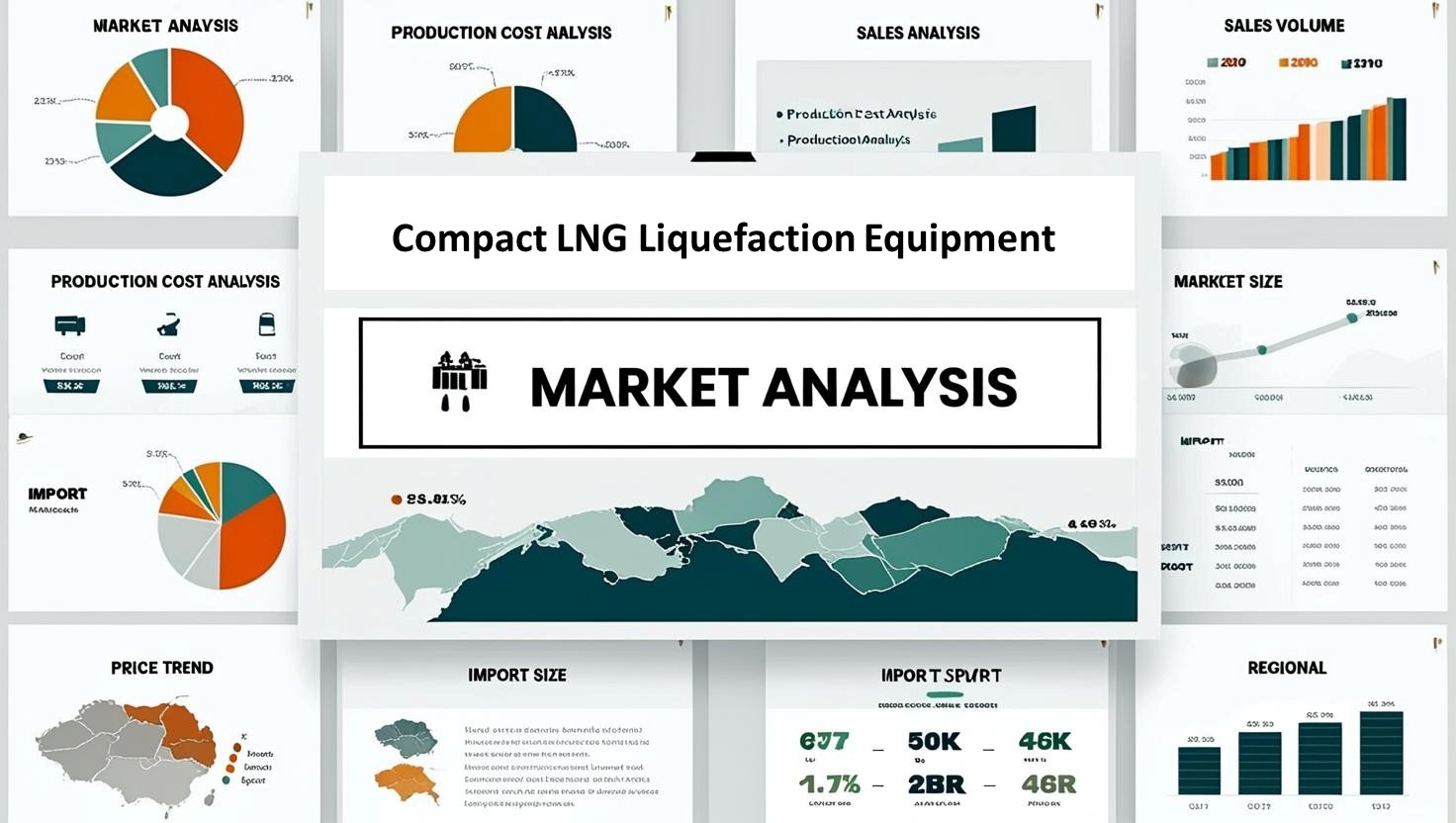
According to Staticker, the Compact LNG Liquefaction Equipment market size in 2026 is positioned for measurable expansion, with the industry expected to maintain a sustained growth trajectory through the forecast period. Market momentum is being supported by rising investments in small-scale LNG infrastructure, increasing monetization of stranded gas resources, stronger emissions-management policies, and growing demand for distributed energy systems. The forecast outlook indicates that Compact LNG Liquefaction Equipment will continue gaining share within decentralized gas processing networks as operators prioritize faster deployment timelines and improved capital productivity.
The story becomes even more interesting when examining infrastructure density. A conventional large LNG project typically concentrates production in a single location. By comparison, Compact LNG Liquefaction Equipment enables distributed energy architecture. Instead of one large processing node, multiple smaller liquefaction assets can be positioned near production zones, consumption centers, or logistics corridors.
This distributed model improves resilience. If one facility experiences maintenance downtime, the broader network can continue operating through other nodes. Such flexibility is increasingly valued by energy planners seeking to balance supply security with operational efficiency.
Marine fuel infrastructure is another emerging growth theme. International shipping continues to evaluate lower-emission fuel alternatives. LNG bunkering demand has expanded across multiple ports, creating opportunities for regional LNG production. In several coastal regions, Compact LNG Liquefaction Equipment serves as a bridge between local gas resources and marine fuel demand without requiring mega-scale export infrastructure.
The economics of logistics further reinforce adoption. Transporting LNG via ISO containers allows energy distribution into locations where pipelines are impractical. This creates a virtual pipeline model in which LNG trucks effectively replace fixed transmission assets. For many developing energy markets, the capital intensity of virtual pipeline networks can be substantially lower than constructing extensive new gas transmission systems.
Industrial consumers are also contributing to demand growth. Manufacturing clusters requiring continuous thermal energy often seek fuel diversification strategies. LNG produced through Compact LNG Liquefaction Equipment can support boilers, furnaces, combined heat and power systems, and industrial process heating applications. The result is a more flexible fuel supply chain that can adapt to changing regional energy requirements.
Ultimately, the rise of Compact LNG Liquefaction Equipment reflects a broader transition occurring across the energy sector. Infrastructure is moving from centralized, capital-intensive systems toward modular, scalable, and geographically distributed networks. The ability to capture stranded gas, reduce flaring, shorten project timelines, support transportation fuels, and enable remote power generation positions this technology at the center of a rapidly evolving energy landscape.
Request for customization: https://staticker.com/reports/compact-lng-liquefaction/

 English
 Arabic
 French
 Spanish
 Portuguese
 Deutsch
 Turkish
 Dutch
Dutch
 Italiano
 Russian
 Romaian
 Portuguese (Brazil)
