


 Downloader
 Free FTP
Promote Your Product
Got a product, service, or story to share? Promote it directly to our active community and boost your brand today.
Create an Ad
Publish Bulk Blog Posts
Boost Your Reach! 📝
Have articles, guest posts, or bulk stories to publish? Send your content directly to our editorial team and feature on our platform.
Email Us Your PostsEPR Registration in India: Complete Guide to EPR Certificate, License & Certification
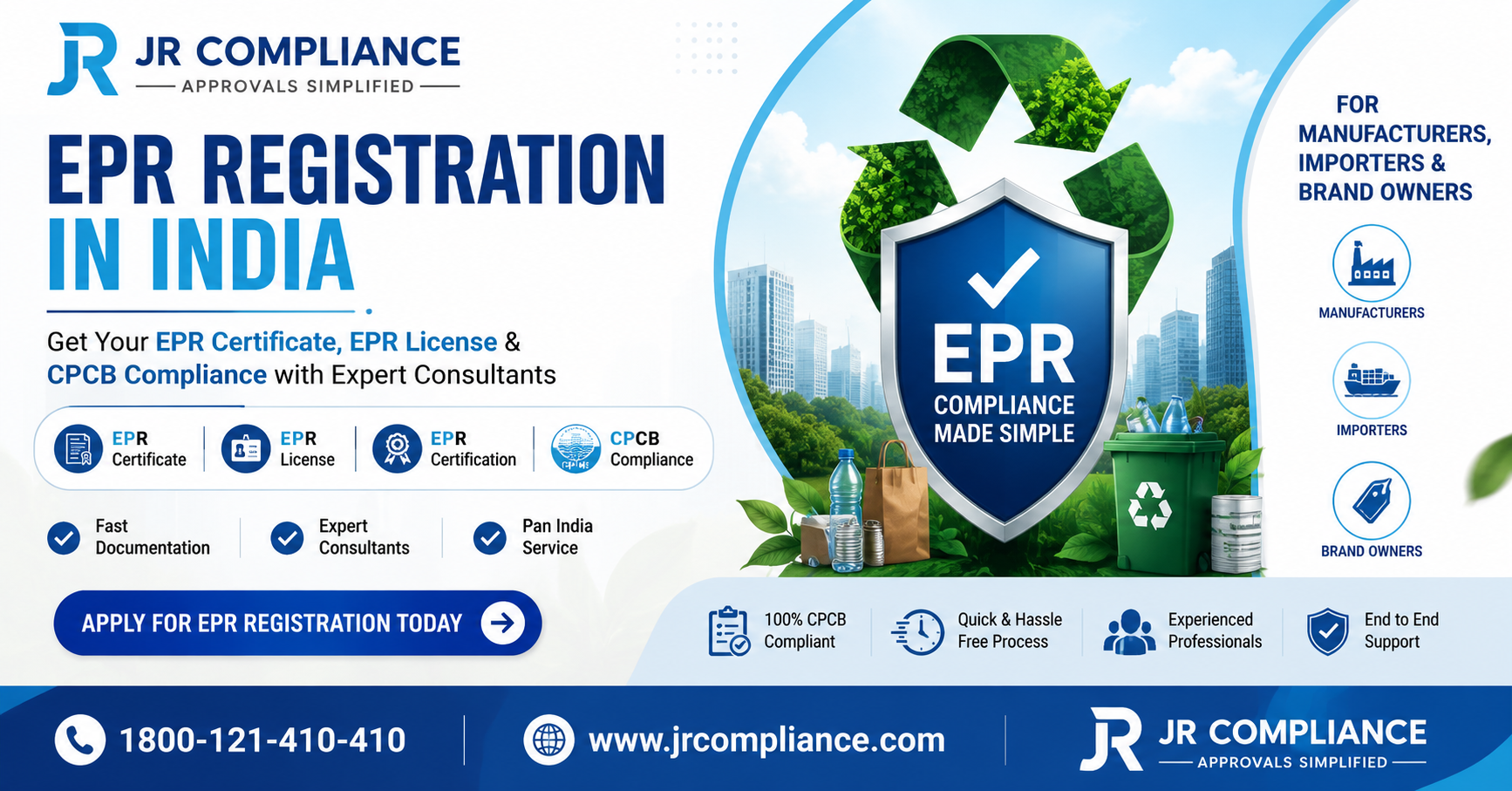
In today's environmentally conscious business landscape, EPR Registration has become a mandatory compliance requirement for manufacturers, importers, and brand owners operating in India. The Government of India has implemented Extended Producer Responsibility (EPR) regulations to ensure businesses take responsibility for the collection, recycling, and environmentally sound disposal of waste generated from their products. The framework is regulated by the Central Pollution Control Board (CPCB) and covers categories such as plastic waste, e-waste, batteries, and tyres.
If your business manufactures, imports, or sells products that generate waste, obtaining an EPR Registration Certificate is essential for legal compliance and sustainable business operations.
What is EPR Registration?
EPR Registration (Extended Producer Responsibility Registration) is an authorization granted by the CPCB that makes producers, importers, and brand owners (PIBOs) responsible for managing the end-of-life waste generated from their products. The objective is to promote recycling, reduce landfill waste, and encourage a circular economy.
Under EPR regulations, businesses must establish a mechanism for collecting, recycling, and disposing of waste through authorized recyclers and waste management partners.
What is an EPR Certificate?
An EPR Certificate is an official document issued by the CPCB confirming that a business has successfully registered under the EPR framework and complies with applicable waste management regulations. The certificate demonstrates that the organization has a valid waste collection and recycling plan in place.
The certificate is often required for:
-
Import and export activities
-
Marketplace registrations
-
Government tenders
-
Corporate compliance audits
-
Environmental compliance requirements
What is an EPR License?
Many businesses refer to EPR authorization as an EPR License. Although the official terminology may vary depending on the waste category, the purpose remains the same: obtaining legal approval to operate while fulfilling waste management obligations under Indian environmental regulations.
An EPR License ensures that your business:
-
Meets CPCB compliance requirements
-
Avoids regulatory penalties
-
Demonstrates environmental responsibility
-
Supports sustainable waste management practices
Who Needs EPR Registration in India?
EPR Registration in India is mandatory for:
Producers
Companies manufacturing products that generate plastic, battery, e-waste, or tyre waste.
Importers
Businesses importing products, electronic equipment, batteries, packaging materials, or tyres into India.
Brand Owners
Organizations selling products under their own brand name, even if manufacturing is outsourced.
Online Sellers & E-commerce Brands
Businesses selling products through platforms such as marketplaces and D2C channels may also require EPR compliance depending on the product category.
Categories Covered Under EPR Registration
1. Plastic Waste EPR
Applicable to producers, importers, and brand owners using plastic packaging materials.
2. E-Waste EPR
Required for manufacturers and importers of electrical and electronic equipment.
3. Battery Waste EPR
Mandatory for businesses dealing with batteries and battery-operated products.
4. Tyre Waste EPR
Applicable to tyre manufacturers, importers, and vehicle manufacturers importing tyres.
Documents Required for EPR Registration
The documentation requirements may vary depending on the category; however, common documents include:
-
Company PAN Card
-
GST Registration Certificate
-
Certificate of Incorporation
-
Import Export Code (IEC) (if applicable)
-
Authorized Signatory Details
-
Product Details
-
Waste Management Plan
-
Agreement with Authorized Recyclers
-
Sales and Import Data
-
Business Address Proof
EPR Registration Process in India
Step 1: Business Assessment
Determine the applicable EPR category based on your products and business activities.
Step 2: Document Preparation
Collect and organize all required compliance documents.
Step 3: Portal Registration
Create an account on the relevant CPCB portal.
Step 4: Application Submission
Submit the EPR application with supporting documents and waste management plans.
Step 5: Review by Authorities
The CPCB reviews the application and may request additional information if required.
Step 6: Grant of EPR Registration Certificate
Upon successful verification, the authority issues the EPR Registration Certificate.
Benefits of EPR Certification
Obtaining EPR Certification offers numerous advantages:
-
Legal compliance with environmental regulations
-
Improved brand reputation
-
Enhanced customer trust
-
Eligibility for government and corporate projects
-
Reduced risk of penalties and notices
-
Contribution to sustainable development goals
-
Better waste management and resource recovery
Penalties for Non-Compliance
Failure to obtain an EPR Registration Certificate can result in:
-
Regulatory notices
-
Environmental compensation charges
-
Restrictions on business operations
-
Import-related issues
-
Legal action by regulatory authorities
Businesses should ensure timely compliance to avoid operational disruptions.
Why Choose a Professional EPR Consultant?
The EPR registration process involves technical documentation, portal filings, recycling plans, and ongoing compliance obligations. An experienced EPR Consultant can help businesses:
-
Identify applicable EPR categories
-
Prepare documentation
-
File applications correctly
-
Coordinate with authorized recyclers
-
Ensure ongoing compliance and reporting
Professional guidance significantly reduces approval delays and compliance risks.
How JR Compliance Can Help
JR Compliance provides comprehensive assistance for EPR Registration, EPR Certification, EPR License, and obtaining an EPR Registration Certificate across India. Our experts assist manufacturers, importers, and brand owners with documentation, application filing, compliance management, and regulatory support.
For professional assistance, visit:
JR Compliance EPR Registration Services
Conclusion
EPR Registration in India is no longer just a regulatory formality—it is a crucial step toward responsible business operations and environmental sustainability. Whether you require an EPR Certificate, EPR License, EPR Certification, or complete assistance with obtaining an EPR Registration Certificate, ensuring compliance with CPCB regulations helps your business operate legally while contributing to a cleaner and greener future.
By obtaining the necessary approvals and maintaining ongoing compliance, businesses can strengthen their market credibility, avoid penalties, and demonstrate their commitment to sustainable waste management.

 English
 Arabic
 French
 Spanish
 Portuguese
 Turkish
 Dutch
Dutch
 Italiano
 Russian
 Romaian
 Portuguese (Brazil)
 Greek
Greek
