


 Downloader
 Free FTP
E-Waste Refurbisher Registration Process in India
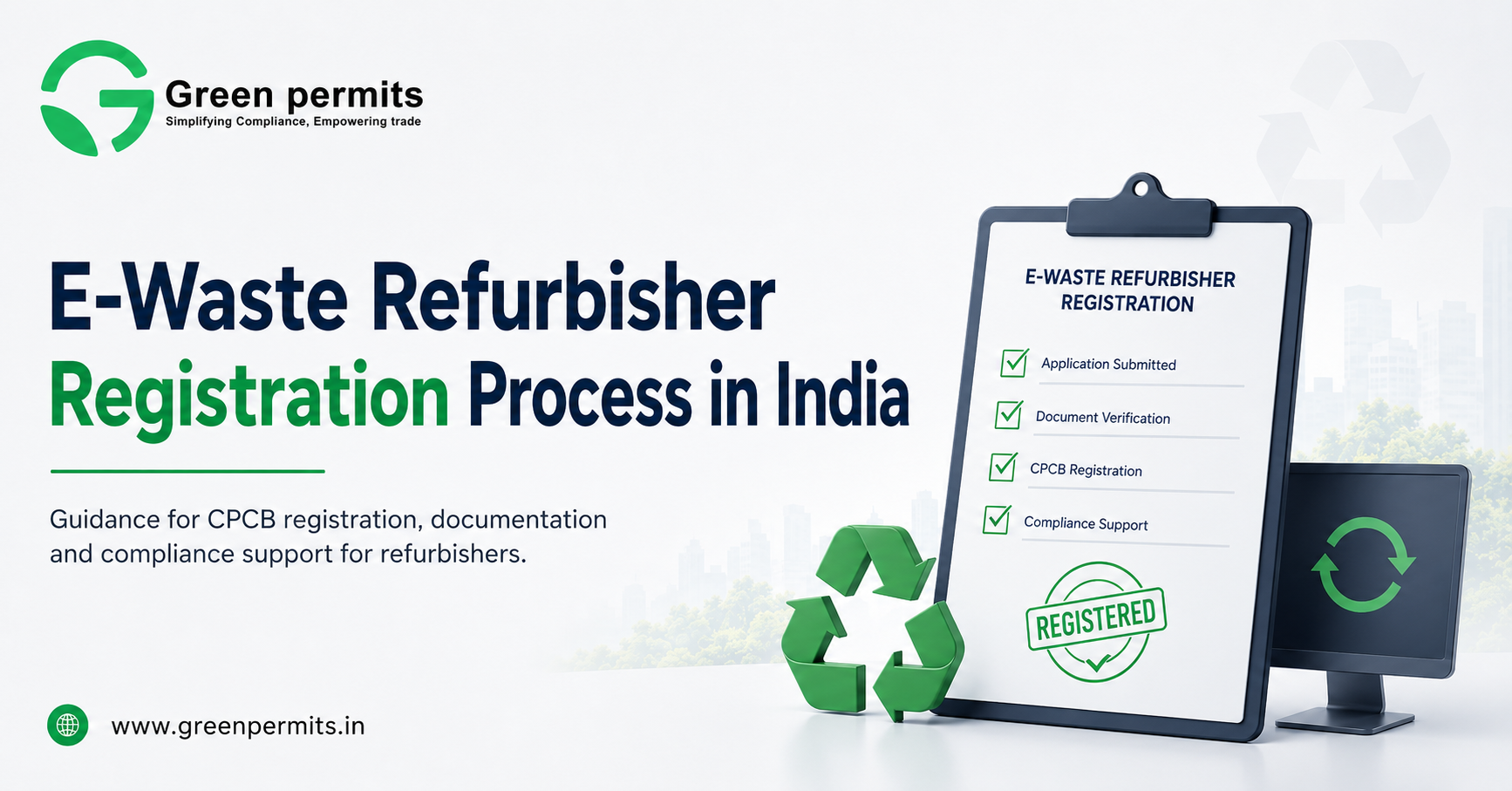
The rapid growth of electronic products in India has led to a significant increase in e-waste generation. Every year, millions of mobile phones, laptops, computers, printers, networking devices, televisions, and other electronic products reach the end of their useful life. However, not all electronic equipment becomes waste immediately. Many products can be repaired, upgraded, restored, and reused through refurbishment.
Refurbishment plays an important role in extending the life of electrical and electronic equipment, reducing waste generation, conserving resources, and supporting the circular economy. To regulate refurbishment activities and ensure environmentally sound management of electronic products, the Government of India has included refurbishers under the E-Waste (Management) Rules, 2022.
Businesses engaged in refurbishing electrical and electronic equipment are required to obtain E-Waste Refurbisher Registration through the Central Pollution Control Board (CPCB) portal.
Understanding the E-Waste Refurbisher Registration Process is essential for businesses involved in repair, refurbishment, resale, and life extension of electronic products.
What is E-Waste Refurbisher Registration
E-Waste Refurbisher Registration is a registration issued by the Central Pollution Control Board under the E-Waste (Management) Rules, 2022.
The registration authorizes businesses to carry out refurbishment activities for electrical and electronic equipment covered under the E-Waste Rules.
Refurbishment generally involves repairing, restoring, upgrading, testing, cleaning, replacing components, or improving electronic products to extend their useful life.
The registration helps authorities monitor refurbishment activities and ensure that waste generated during refurbishment is managed responsibly.
What is an E-Waste Refurbisher
An e-waste refurbisher is an entity that repairs or restores used electrical and electronic equipment for reuse.
Instead of sending equipment directly for recycling or disposal, refurbishers extend the operational life of products through technical intervention.
Common products refurbished include:
- Mobile phones
- Laptops
- Desktop computers
- Servers
- Printers
- Networking equipment
- Telecommunication devices
- Consumer electronics
- Electrical appliances
Refurbishment helps reduce e-waste generation and supports sustainable resource utilization.
Why Refurbisher Registration is Important
The government recognizes refurbishment as an important part of the circular economy.
Proper refurbishment reduces the demand for new raw materials and decreases the volume of electronic waste requiring recycling or disposal.
Registration is important because it:
- Ensures legal compliance
- Supports responsible e-waste management
- Promotes reuse of electronic products
- Reduces environmental impact
- Improves business credibility
- Supports circular economy initiatives
Businesses operating without required registration may face compliance issues under the E-Waste Management Rules.
Who Needs E-Waste Refurbisher Registration
Registration is generally required for businesses involved in refurbishment activities related to electrical and electronic equipment.
Common applicants include:
- Electronics refurbishment companies
- IT asset refurbishment firms
- Computer refurbishment businesses
- Mobile phone refurbishment units
- Equipment repair centers
- Corporate asset recovery companies
- Electronic equipment restoration businesses
Any organization extending the life of electronic products through refurbishment activities should evaluate registration applicability.
Benefits of E-Waste Refurbisher Registration
Registration provides several compliance and business advantages.
Key benefits include:
- Legal authorization for refurbishment activities
- Recognition under CPCB regulations
- Improved business credibility
- Better market confidence
- Support for sustainability goals
- Participation in formal e-waste management ecosystem
- Reduced compliance risks
The registration also demonstrates commitment to responsible environmental practices.
Documents Required for E-Waste Refurbisher Registration
Proper documentation is important for successful registration.
The documents generally required include:
- Company Incorporation Certificate
- PAN Card
- GST Registration Certificate
- Authorized Signatory Details
- Business Address Proof
- Factory or Facility Details
- Refurbishment Process Description
- Machinery and Equipment Details
- Pollution Control Board Approval, if applicable
- Waste Management Details
Additional documents may be required depending on the nature of refurbishment activities and facility operations.
Accurate documentation helps avoid approval delays.
E-Waste Refurbisher Registration Process
The registration process begins with evaluating whether the business falls under the refurbisher category defined under the E-Waste Management Rules.
After confirming applicability, the applicant gathers company documents, facility information, process details, and compliance records.
The business then creates an account on the CPCB E-Waste Portal and selects the refurbisher registration category.
The application form is completed with information regarding:
- Company details
- Facility details
- Refurbishment activities
- Product categories
- Waste management arrangements
- Authorized personnel
Supporting documents are uploaded through the portal and the application is submitted for review.
The CPCB reviews the application and may request additional clarification if required.
After successful verification, the Refurbisher Registration Certificate is issued.
Information Required During Registration
The CPCB portal generally requires detailed information regarding refurbishment activities.
Important details may include:
- Type of products refurbished
- Facility location
- Refurbishment capacity
- Process description
- Waste generation details
- Waste disposal arrangements
- Equipment used
- Storage arrangements
Providing accurate information helps ensure smooth approval.
Waste Management Responsibility of Refurbishers
Refurbishment activities often generate electronic scrap, damaged components, rejected parts, cables, batteries, and other waste materials.
Refurbishers must ensure that such waste is handled responsibly.
Waste generated during refurbishment should generally be transferred to:
- Authorized recyclers
- Registered dismantlers
- Approved waste management facilities
Maintaining proper waste disposal records is important for compliance.
Authorities may review these records during inspections.
Refurbishment Certificate Generation
Under the E-Waste Management Rules, registered refurbishers may be eligible for benefits associated with extending the life of electronic products.
Proper documentation of refurbishment activities helps demonstrate compliance and support regulatory reporting.
Businesses should maintain records of products received, refurbished, returned, resold, or transferred for recycling.
Good documentation strengthens compliance management.
Record Keeping Requirements
Refurbishers are generally expected to maintain records relating to:
- Equipment received
- Refurbishment activities
- Components replaced
- Waste generated
- Waste disposal
- Product dispatch
- Compliance documents
Accurate record keeping simplifies inspections and regulatory reporting.
Maintaining organized records also improves operational management.
Common Challenges During Registration
Many businesses face difficulties because they are unfamiliar with CPCB portal requirements and e-waste regulations.
Common challenges include:
- Incorrect applicant category selection
- Incomplete documentation
- Missing waste management details
- Poor process descriptions
- Inaccurate facility information
- Portal filing errors
Professional support helps businesses avoid these challenges and improve approval timelines.
Importance of Ongoing Compliance
Registration is not a one-time compliance activity.
Refurbishers must continue following regulatory requirements related to waste management, record maintenance, reporting, and environmental compliance.
Authorities may conduct inspections or seek information regarding refurbishment activities.
Failure to maintain compliance may result in notices, penalties, or registration-related issues.
A structured compliance system helps businesses operate smoothly.
Benefits of Hiring an E-Waste Compliance Consultant
A professional consultant can simplify the registration process and reduce compliance risks.
Consulting support generally includes:
- Applicability assessment
- Documentation preparation
- CPCB portal filing
- Waste management planning
- Compliance review
- Registration support
- Ongoing compliance guidance
Professional assistance helps businesses save time and improve approval success rates.
Learn the Complete E-Waste Refurbisher Registration Process
Planning to obtain E-Waste Refurbisher Registration in India? Understanding CPCB portal requirements, documentation procedures, waste management obligations, refurbishment compliance, and reporting requirements is essential before applying.
Read the complete guide here:
👉 https://www.greenpermits.in/06/e-waste-refurbisher-registration-india/
📞 Get Expert Assistance for E-Waste Refurbisher Registration
Need assistance with E-Waste Refurbisher Registration, CPCB portal filing, waste management compliance, environmental documentation, refurbishment process compliance, or annual reporting support? The experts at Green Permits Consulting can guide you throughout the complete process.
🌐 Website: https://www.greenpermits.in/
📞 Phone: +91 78350 06182
📧 Email: [email protected]

 English
 Arabic
 French
 Portuguese
 Deutsch
 Turkish
 Dutch
Dutch
 Italiano
 Russian
 Romaian
 Portuguese (Brazil)
 Greek
Greek
