


 Downloader
 Free FTP
Promote Your Product
Got a product, service, or story to share? Promote it directly to our active community and boost your brand today.
Create an Ad
Publish Bulk Blog Posts
Boost Your Reach! 📝
Have articles, guest posts, or bulk stories to publish? Send your content directly to our editorial team and feature on our platform.
Email Us Your PostsWhy Food Shelf-Life Testing Is Becoming Essential for China’s Evolving Food Industry
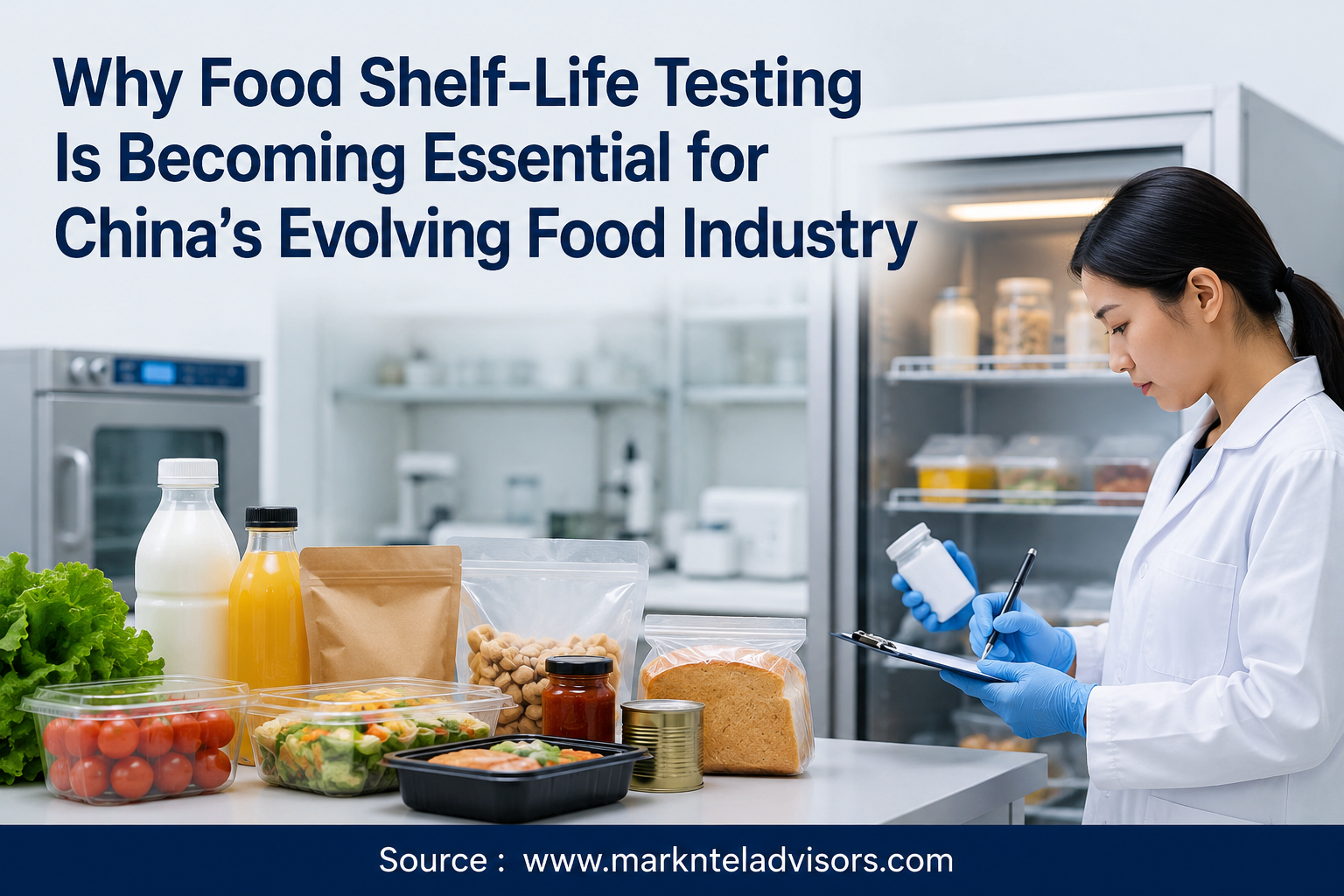
China’s food industry is undergoing a significant transformation as consumers increasingly prioritize safety, freshness, transparency, and product quality. From packaged snacks and ready-to-eat meals to dairy products and nutritional supplements, manufacturers face growing pressure to ensure that products remain safe and effective throughout their intended shelf life.
In this environment, food shelf-life testing has emerged as a critical component of quality assurance. It helps food producers determine how long products maintain their safety, nutritional value, sensory characteristics, and overall quality under specific storage conditions. As food supply chains become more complex and consumer expectations continue to rise, shelf-life testing is gaining greater importance across China's food ecosystem.
According to the study published by MarkNtel Advisors, the China Food Shelf-Life Testing industry is witnessing increasing attention as food manufacturers seek reliable methods to validate product stability, reduce recalls, and comply with evolving quality standards.
Understanding Food Shelf-Life Testing
Food shelf-life testing is a scientific process used to evaluate how long a food product remains safe and suitable for consumption. The testing process examines several factors, including microbial growth, chemical reactions, moisture changes, nutrient stability, packaging performance, and sensory characteristics such as taste, texture, and appearance.
The shelf life of food products is influenced by multiple variables, including ingredient composition, acidity levels, storage temperatures, transportation conditions, and packaging materials. Reliable testing helps manufacturers establish accurate expiration dates and storage recommendations.
Rising Consumer Awareness Is Driving Demand
Chinese consumers have become increasingly aware of food safety and product quality over the past decade. Access to digital information and growing attention to ingredient transparency have encouraged buyers to scrutinize product labels more closely.
As a result, food brands are investing more heavily in testing and quality assurance procedures. Shelf-life testing provides scientific evidence that products can maintain their intended quality throughout distribution and retail channels. This not only supports regulatory compliance but also strengthens consumer confidence.
According to the Food and Agriculture Organization (FAO), food quality and safety systems play a crucial role in maintaining public trust and reducing food losses across supply chains. These principles are increasingly influencing food manufacturers worldwide, including those operating in China.
The Growth of Packaged and Processed Foods
Urbanization, changing lifestyles, and increasing disposable incomes have contributed to rising consumption of packaged and convenience foods throughout China. Consumers are seeking products that offer longer storage periods without compromising quality.
This trend creates additional challenges for manufacturers, as products must remain stable while moving through extensive logistics networks and retail environments. Shelf-life testing helps companies understand how products behave under different storage conditions and identify potential risks before commercial launch.
As packaged food categories expand, manufacturers are increasingly using both real-time and accelerated testing methods to evaluate product stability and support product development initiatives.
Reducing Product Recalls and Food Waste
One of the most significant benefits of shelf-life testing is its ability to help reduce product recalls. Incorrect shelf-life estimates can result in products deteriorating earlier than expected, potentially leading to consumer complaints, regulatory actions, and reputational damage.
By identifying factors that contribute to spoilage, manufacturers can improve formulations, optimize packaging solutions, and refine storage recommendations. Accurate testing also helps reduce unnecessary food waste by ensuring that products are not discarded prematurely.
The United Nations Environment Programme (UNEP) has consistently highlighted the importance of reducing food waste as part of broader sustainability efforts. Scientific shelf-life validation supports these objectives by improving inventory management and minimizing product losses across supply chains.
Technology Is Enhancing Testing Capabilities
Advancements in laboratory technologies are improving the speed and accuracy of food shelf-life assessments. Modern testing facilities increasingly utilize advanced microbiological analysis, environmental simulation chambers, chemical stability evaluations, and predictive modeling tools.
These technologies enable manufacturers to gain deeper insights into product behavior under various conditions. Accelerated testing methods, in particular, allow companies to estimate long-term stability within shorter timeframes, supporting faster product development cycles.
The integration of digital monitoring systems and data analytics is also helping food producers make more informed decisions regarding packaging design, transportation requirements, and inventory planning.
Regulatory Compliance Remains a Key Priority
Food regulations continue to evolve as authorities seek to strengthen consumer protection and improve food safety standards. Manufacturers must demonstrate that shelf-life claims are supported by appropriate scientific evidence.
Comprehensive testing programs help organizations meet regulatory requirements while maintaining consistency across production batches. They also support export-oriented companies that must comply with international food safety standards and documentation requirements.
As global trade expands, scientifically validated shelf-life data is becoming increasingly valuable for manufacturers seeking access to international markets.
Looking Ahead
The future of China’s food industry will likely be shaped by growing consumer expectations, technological innovation, and stricter quality assurance requirements. In this environment, food shelf-life testing is expected to remain an essential tool for manufacturers aiming to maintain product integrity and operational efficiency.
Beyond compliance, shelf-life testing provides valuable insights that support product innovation, waste reduction, supply chain optimization, and consumer trust. As food production systems continue to evolve, scientific validation of product stability will play an increasingly important role in ensuring that food products reach consumers safely and consistently.

 English
 Arabic
 French
 Spanish
 Deutsch
 Turkish
 Dutch
Dutch
 Italiano
 Russian
 Romaian
 Portuguese (Brazil)
 Greek
Greek
