


 Downloader
 Free FTP
Promote Your Product
Got a product, service, or story to share? Promote it directly to our active community and boost your brand today.
Create an Ad
Publish Bulk Blog Posts
Boost Your Reach! 📝
Have articles, guest posts, or bulk stories to publish? Send your content directly to our editorial team and feature on our platform.
Email Us Your PostsMirrorless Camera vs DSLR: Which Camera is the Better Choice in 2026?
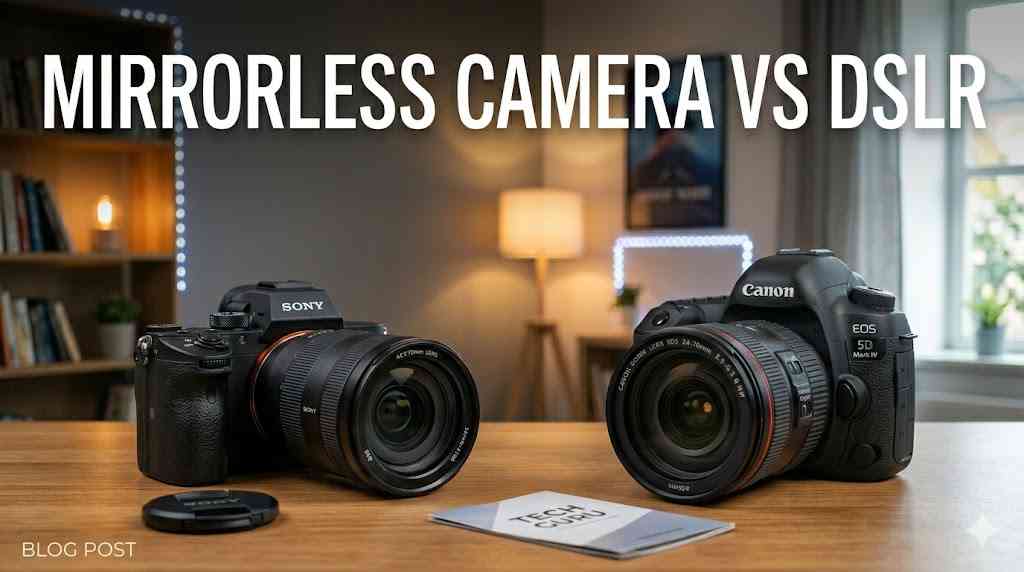
Photography enthusiasts and professionals often find themselves debating Mirrorless Camera vs DSLR when choosing the ideal camera system. Both options offer impressive image quality, advanced features, and creative flexibility. However, understanding their differences can help photographers make an informed investment based on their needs and shooting style.
Understanding the Basics of Camera Technology
Digital photography has evolved significantly over the years. DSLR cameras dominated the market for decades, while mirrorless cameras have rapidly gained popularity due to their compact design and advanced technology.
A DSLR uses a mirror mechanism that reflects light into an optical viewfinder. In contrast, a mirrorless camera removes this mirror system and relies on an electronic viewfinder or LCD screen to display the image directly from the sensor.
How DSLR Cameras Work
DSLR cameras use a reflex mirror positioned between the lens and sensor. When the shutter button is pressed, the mirror flips up, allowing light to reach the sensor and capture the image. This traditional design has been trusted by photographers for years because of its reliability and battery efficiency.
How Mirrorless Cameras Work
Mirrorless cameras eliminate the internal mirror and optical viewfinder. Instead, the sensor continuously captures light and displays a real-time preview. This design enables faster shooting speeds, improved autofocus systems, and a more compact body.
Mirrorless Camera vs DSLR: Key Differences
When comparing Mirrorless Camera vs DSLR, several factors influence the final decision.
Size and Portability
Mirrorless cameras are generally lighter and smaller because they lack a mirror mechanism. Travelers, vloggers, and content creators often prefer them for their portability. DSLR cameras tend to be larger but provide a more substantial grip for extended shooting sessions.
Autofocus Performance
Modern mirrorless systems offer exceptional autofocus capabilities with advanced eye-tracking and subject-detection technologies. While DSLRs still perform well, mirrorless models often have the advantage in speed and accuracy, particularly for video recording and fast-moving subjects.
Battery Life
DSLR cameras typically deliver longer battery life because optical viewfinders consume less power. Mirrorless cameras require more energy to operate electronic displays and sensors continuously, though recent improvements have narrowed this gap considerably.
Image Quality and Video Capabilities
Image quality largely depends on the sensor rather than the camera type. Both systems can produce stunning photographs with excellent detail, color accuracy, and dynamic range.
Video Features
Many modern mirrorless cameras are designed with videographers in mind, offering features such as 4K and 8K recording, advanced stabilization, and faster autofocus tracking. DSLRs can record high-quality video as well, but they generally provide fewer cutting-edge video features.
Which Camera Should You Choose?
The answer to Mirrorless Camera vs DSLR depends on your photography goals. If you prioritize portability, advanced autofocus, and modern video capabilities, a mirrorless camera may be the ideal choice. If you value longer battery life, optical viewfinders, and a traditional shooting experience, a DSLR remains a strong option.
Final Thoughts
The debate over Mirrorless Camera vs DSLR continues as technology evolves. Both systems offer outstanding performance and image quality. Rather than focusing solely on specifications, photographers should choose the camera that best matches their creative needs, budget, and long-term goals. Whether you select a mirrorless camera or a DSLR, mastering your equipment and developing your skills will ultimately have the greatest impact on your photography journey.

 English
 French
 Spanish
 Portuguese
 Deutsch
 Turkish
 Dutch
Dutch
 Italiano
 Russian
 Romaian
 Portuguese (Brazil)
 Greek
Greek
