


 Downloader
 Free FTP
Promote Your Product
Got a product, service, or story to share? Promote it directly to our active community and boost your brand today.
Create an Ad
Publish Bulk Blog Posts
Boost Your Reach! 📝
Have articles, guest posts, or bulk stories to publish? Send your content directly to our editorial team and feature on our platform.
Email Us Your PostsWell Stimulation Cementing Additives and Their Role in Optimizing Well Lifecycles
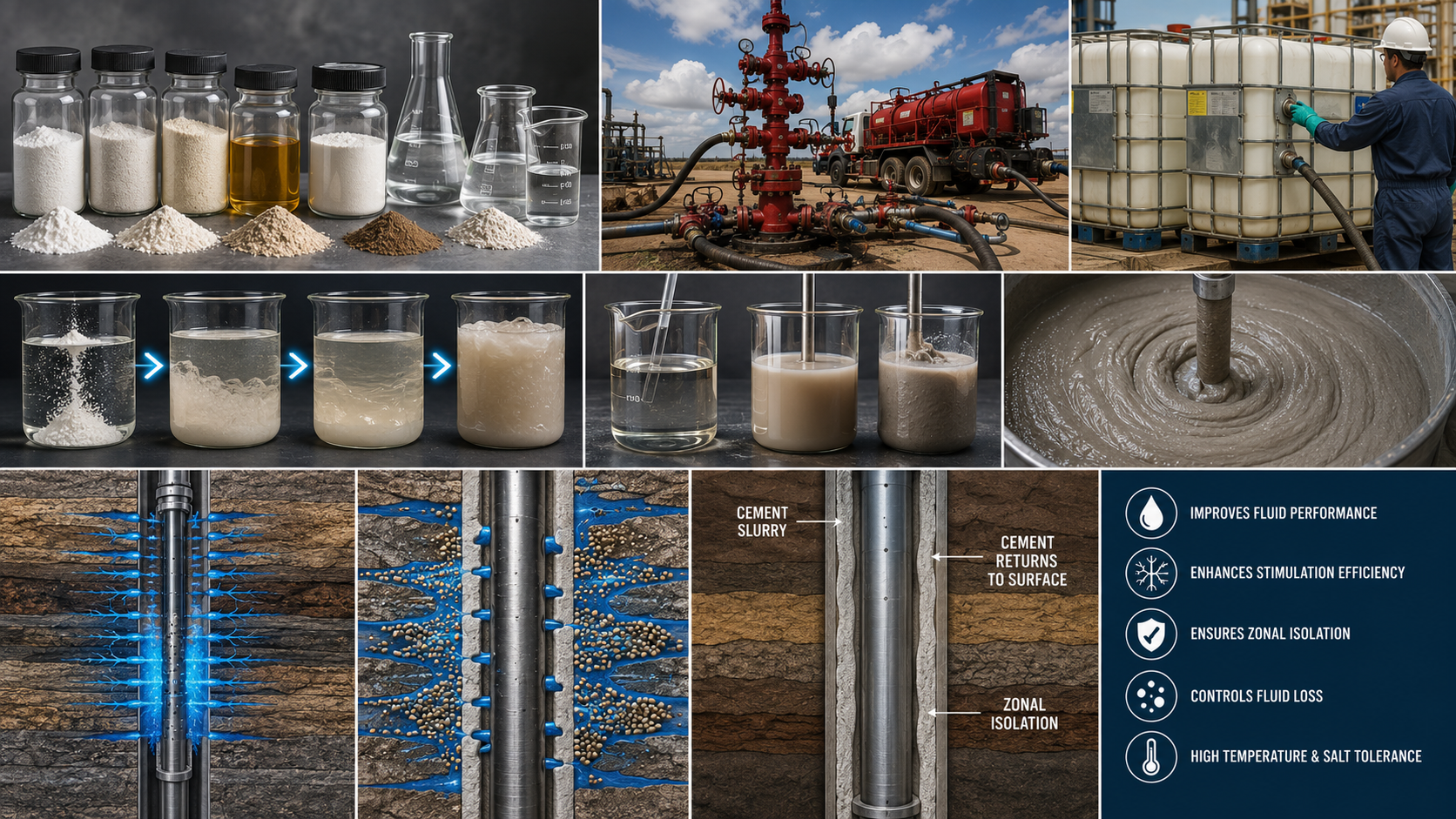
Well Stimulation Cementing Additives play an important role in maintaining the integrity, performance, and longevity of oil and gas wells. As exploration and production activities move into more challenging environments, operators are increasingly focused on ensuring that wells remain productive and structurally sound throughout their operational lifespan. Cementing additives are designed to improve the physical and chemical properties of cement systems, helping create a secure barrier between the wellbore and surrounding formations.
These specialized additives contribute to better zonal isolation, improved bonding, reduced fluid migration, and enhanced resistance to harsh downhole conditions. As a result, they support safer drilling operations while helping operators maximize the value of their well assets over time.
Understanding the Importance of Cementing Performance
Cementing serves as one of the most critical stages in well construction. The primary objective is to create a durable seal that prevents fluid movement between geological formations while protecting the casing from corrosion and external pressures. Poor cementing performance can lead to operational challenges, environmental concerns, and costly remediation efforts.
Well stimulation cementing additives help address these challenges by modifying cement characteristics to suit specific well conditions. Depending on the operational requirements, additives may improve strength development, control fluid loss, reduce slurry density, enhance flexibility, or provide better resistance to temperature fluctuations. These benefits contribute to improved well reliability and long-term operational success.
How Additives Support Long-Term Well Performance
The ability of a well to maintain production efficiency often depends on the quality of its cementing system. Well stimulation cementing additives help strengthen the bond between the casing and surrounding formation, reducing the risk of gas migration, water intrusion, and pressure communication between zones.
According to a study by MarkNtel Advisors, increasing drilling complexity and the need for enhanced well productivity are contributing to the broader adoption of advanced cementing technologies across global energy operations and the Global Well Stimulation & Cementing Additives Market size is valued at around USD6.93 billion in 2025 and is projected to reach USD10.79 billion by 2032. Along with this, the market is estimated to grow at a CAGR of around 6.53% during the forecast period, i.e., 2026-32.
Modern additive formulations are engineered to perform under a wide range of temperatures, pressures, and geological conditions. This adaptability allows operators to optimize well construction strategies while minimizing operational risks throughout the lifecycle of the well.
Applications Across Diverse Drilling Environments
Oil and gas wells are developed in highly varied environments, ranging from conventional onshore reservoirs to deepwater offshore fields. Each setting presents unique technical challenges that require tailored cementing solutions. Well stimulation cementing additives enable operators to customize cement properties according to formation characteristics and operational objectives.
For example, lightweight additives may be used in weak formations to reduce formation damage, while high-temperature additives can enhance performance in geothermal and deep-drilling applications. Flexible cement systems may also help accommodate mechanical stresses that occur during production activities.
According to The U.S. Department of Energy, advancements in drilling and completion technologies continue to improve resource recovery while supporting operational efficiency across energy projects.
The Impact of Regional Energy Development Activities
Growing energy demand in various regions is encouraging increased investments in exploration, production, and infrastructure development. As operators expand into technically demanding reservoirs, the need for advanced cementing solutions becomes increasingly important.
Regions with extensive unconventional resource development often require sophisticated well designs that depend on reliable cement performance. Similarly, offshore projects frequently encounter extreme pressure and temperature conditions that necessitate specialized additive technologies.
The ability to adapt cement formulations to local geological requirements helps operators improve well performance while supporting regulatory compliance and environmental protection initiatives.
According to the International Energy Agency (IEA), energy sector investments remain essential for maintaining supply reliability and supporting evolving energy demands worldwide.
Addressing Operational Challenges Through Innovation
Despite their advantages, well stimulation cementing additives must continuously evolve to meet emerging industry requirements. Modern wells are often drilled deeper and exposed to more aggressive operating environments than in previous decades. These conditions place greater demands on cement systems and associated additive technologies.
Manufacturers are responding by developing innovative formulations that offer improved thermal stability, enhanced chemical resistance, and greater durability. Digital technologies and advanced laboratory testing are also helping optimize additive selection and performance prediction.
At the same time, environmental considerations are encouraging the development of more sustainable solutions that reduce waste, improve efficiency, and support responsible resource management practices. Continued innovation may further strengthen the role of cementing additives in future well construction projects.
According to the Society of Petroleum Engineers (SPE), advancements in well construction technologies continue to support safer and more efficient drilling operations across the global energy sector.
Key Companies Contributing to Technology Development
The development of well stimulation cementing additives is supported by several established oilfield service providers and specialty chemical manufacturers. These organizations invest heavily in research and development to improve additive performance under increasingly challenging operating conditions.
Industry participants focus on creating solutions that enhance cement durability, improve placement efficiency, and support long-term well integrity. Their ongoing innovation efforts contribute to the availability of specialized products capable of meeting the diverse needs of modern drilling and completion projects.
Conclusion
Well Stimulation Cementing Additives remain an essential component of modern well construction and lifecycle management strategies. By improving cement performance, enhancing zonal isolation, and supporting structural integrity, these additives help operators achieve greater operational reliability and efficiency.
As drilling environments become more complex and energy development activities continue to evolve, the importance of advanced cementing technologies may increase further. Ongoing innovation, combined with growing emphasis on well performance and sustainability, could indicate continued adoption of specialized additive solutions across future oil and gas projects.

 English
 Arabic
 French
 Spanish
 Portuguese
 Deutsch
 Dutch
Dutch
 Italiano
 Russian
 Romaian
 Portuguese (Brazil)
 Greek
Greek
