


 Downloader
 Free FTP
Promote Your Product
Got a product, service, or story to share? Promote it directly to our active community and boost your brand today.
Create an Ad
Publish Bulk Blog Posts
Boost Your Reach! 📝
Have articles, guest posts, or bulk stories to publish? Send your content directly to our editorial team and feature on our platform.
Email Us Your PostsWhite Label Food Delivery Apps: What Startups Often Overlook
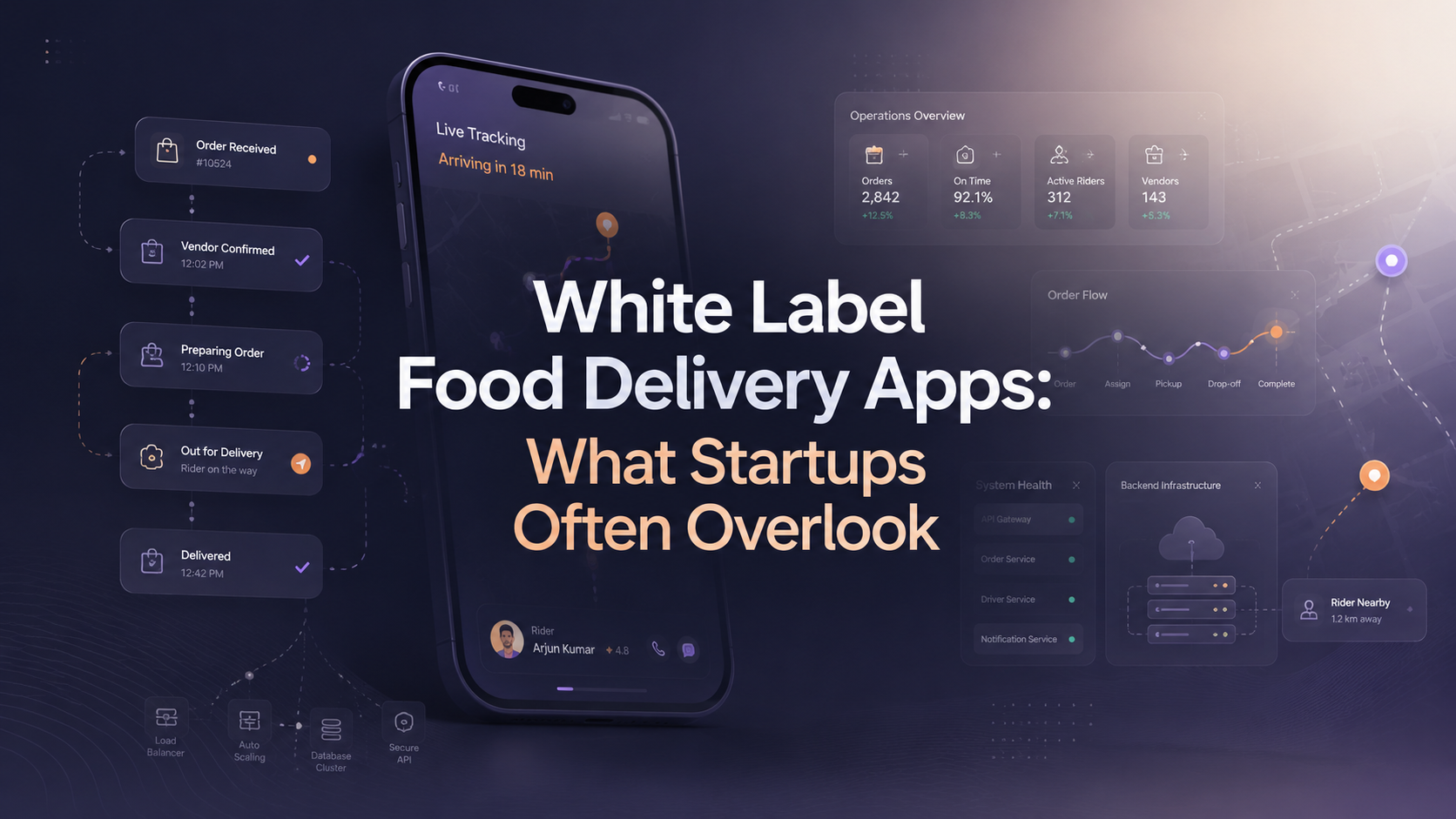
Many startups underestimate the operational challenges behind white label food delivery apps as their business grows, especially when scaling delivery operations, vendor coordination, and customer experience management.
Many food delivery startups focus heavily on launching fast, attracting restaurants, and getting their first customers. But as order volume grows, operational challenges begin surfacing quietly in the background. That’s where conversations around White Label Food Delivery Apps and modern online food ordering systems become more practical than promotional.
Founders often realize that building a reliable delivery management system involves much more than app design. It requires stable logistics, restaurant coordination, rider workflows, and scalable backend infrastructure that can support long-term growth naturally.
Delivery Operations Become Complex Faster Than Expected
Many startups underestimate how quickly delivery operations become unpredictable once order volume increases.
Dispatching Is More Than Assigning Riders
At first, manual dispatching may seem manageable. A small team can coordinate riders over calls or messaging apps. But once orders increase during lunch hours, weekends, or local events, delays begin stacking up.
Without a structured delivery management system, rider allocation becomes inconsistent. Some riders stay overloaded while others remain idle. Restaurants experience pickup delays, and customers start questioning delivery timelines.
This is one reason scalable on-demand food delivery app businesses invest heavily in workflow automation early.
Peak Hours Expose Operational Weaknesses
Food delivery demand is rarely balanced throughout the day.
Rush hours often expose delayed restaurant preparation, rider shortages, traffic inefficiencies, inaccurate delivery estimates, and confusion around order reassignment. These issues may seem small individually, but together they create operational pressure that quickly affects customer trust.
Many startups building a scalable food ordering app realize that growth creates operational pressure long before profitability arrives.
The Customer Experience Depends on Small Operational Details
Customers may remember branding initially, but they stay loyal because of consistency.
Delayed Orders Quietly Damage Retention
A customer usually forgives one delayed order. Repeated delays create trust issues.
Many founders focus heavily on acquiring users through discounts while underestimating retention. In reality, customer loyalty in the food delivery business often depends on reliability more than promotions.
Simple operational gaps like unclear delivery tracking, delayed support responses, inaccurate delivery estimates, missing order updates, or payment confusion can quietly damage user trust over time.
Even strong-looking online food ordering app interfaces struggle if backend operations remain unstable.
The Ordering Journey Must Feel Effortless
Customers expect convenience by default today.
If menus load slowly, checkout feels confusing, or restaurant availability changes unexpectedly, users quietly move to competitors. The challenge is not just attracting downloads — it’s reducing friction throughout the ordering process.
Strong online food ordering system infrastructure usually focuses on invisible efficiency through real-time menu syncing, inventory updates, faster order confirmations, delivery transparency, and stable payment processing.
The smoother the experience feels, the more trustworthy the platform becomes.
Restaurant and Vendor Coordination Is Often Underestimated
Restaurants are not simply vendors inside a system. They are operational partners.
Restaurant Workflows Vary Significantly
Some restaurants handle high-volume delivery efficiently. Others struggle during busy periods.
A common issue in multi-vendor delivery platform environments is assuming every vendor operates similarly. In reality, preparation times, staffing levels, packaging quality, and kitchen workflows vary significantly between restaurants.
When communication between restaurants and delivery teams breaks down, customers usually blame the platform first.
Vendor Onboarding Is Only the Beginning
Many startups celebrate restaurant acquisition numbers but overlook long-term vendor management.
Restaurants expect reliable order visibility, faster payouts, transparent commission structures, responsive issue resolution, and fair delivery coordination. When these expectations are ignored, vendor relationships gradually weaken.
Poor vendor relationships eventually affect customer experience too. Restaurants may delay orders intentionally, disable menu items, or deprioritize platform orders if operations feel chaotic.
This becomes especially visible in growing White Label Food Delivery Apps where expansion happens quickly across multiple areas.
Scaling Delivery Infrastructure Requires Long-Term Thinking
Growth creates technical and operational strain simultaneously.
Backend Infrastructure Matters More Over Time
During the early stage, many startups prioritize launching quickly using basic workflows. But scaling exposes limitations in backend systems.
As orders increase, platforms require stronger dispatch automation, route optimization, server stability, analytics tracking, delivery forecasting, and customer support systems.
Without stable delivery app infrastructure, even well-designed apps become difficult to manage operationally.
Many businesses using a gojek clone food delivery app model eventually realize that cloning features alone does not solve operational complexity.
Expansion Creates Coordination Challenges
Entering multiple cities sounds exciting until regional operations start behaving differently.
Delivery timings, rider availability, restaurant density, and customer expectations vary by location. What works in one market may fail completely in another.
Startups often struggle because operational processes were designed for short-term launch speed instead of long-term scalability.
Delivery Partners Quietly Shape Platform Reputation
Riders are often treated as a logistical resource rather than part of the customer experience. That creates problems over time.
Poor Rider Experience Affects Service Quality
Late payouts, inefficient routing, and unclear delivery assignments frustrate delivery partners quickly.
When riders feel unsupported, order acceptance rates decline, cancellations increase, customer interactions worsen, and delivery consistency starts dropping.
A healthy delivery ecosystem requires balancing restaurant expectations, customer demands, and rider sustainability together.
This is where operational maturity becomes more important than rapid expansion.
Retention Matters Beyond Customers
Many startups focus heavily on customer acquisition but overlook delivery partner retention.
Experienced riders understand local traffic patterns, restaurant behavior, and efficient delivery routes. High rider turnover creates operational instability that customers eventually notice.
Reliable White Label Food Delivery Apps usually succeed because their operational systems support all participants not just end users.
Sustainable Growth Requires Operational Discipline
One of the biggest misconceptions in the delivery industry is that technology alone creates success.
Technology helps, but sustainable operations also require realistic logistics planning, balanced vendor management, delivery coordination systems, strong support workflows, and operational adaptability.
The most resilient delivery businesses usually grow slower than expected in the beginning but build stronger foundations underneath.
That operational discipline becomes valuable when competition increases and customer expectations rise.
Conclusion
The food delivery space continues to evolve, but many startup challenges remain surprisingly consistent. Launching quickly is no longer the difficult part. Maintaining reliable operations at scale is where real complexity begins.
Behind every smooth customer experience sits an entire ecosystem of vendors, dispatch systems, delivery partners, support teams, and backend coordination.
For founders exploring White Label Food Delivery Apps, the long-term question is not simply whether the platform can launch — it’s whether the operations behind it can remain stable as growth accelerates.
The businesses that succeed long term are usually the ones that treat operational infrastructure as seriously as product design.
FAQs
What are White Label Food Delivery Apps?
White label food delivery apps are pre-built delivery platforms that businesses can customize with their own branding, features, and operational setup instead of building from scratch.
Why do food delivery startups face scalability problems?
Many startups focus heavily on launching quickly but underestimate operational demands like dispatching, vendor coordination, rider management, and customer support as order volume grows.
How important is a multi-vendor delivery platform?
A strong multivend order delivery platform helps manage restaurants, menus, order flow, and delivery coordination efficiently, especially when expanding across multiple locations.
What operational challenges affect food delivery businesses most?
Common challenges include delivery delays, rider shortages, inconsistent restaurant preparation times, customer retention issues, and backend workflow inefficiencies.
Why does delivery infrastructure matter in online food ordering systems?
Reliable infrastructure supports stable order processing, real-time tracking, dispatch automation, analytics, and long-term scalability for growing delivery businesses.
Are customer discounts enough to retain users?
Usually not. Long-term retention depends more on delivery reliability, order accuracy, customer support quality, and overall user experience consistency.

 English
 Arabic
 French
 Spanish
 Portuguese
 Turkish
 Dutch
Dutch
 Italiano
 Russian
 Romaian
 Portuguese (Brazil)
 Greek
Greek
