


 Downloader
 Free FTP
Promote Your Product
Got a product, service, or story to share? Promote it directly to our active community and boost your brand today.
Create an Ad
Publish Bulk Blog Posts
Boost Your Reach! 📝
Have articles, guest posts, or bulk stories to publish? Send your content directly to our editorial team and feature on our platform.
Email Us Your PostsBIS Scheme X Certification in India: Complete Guide 2026
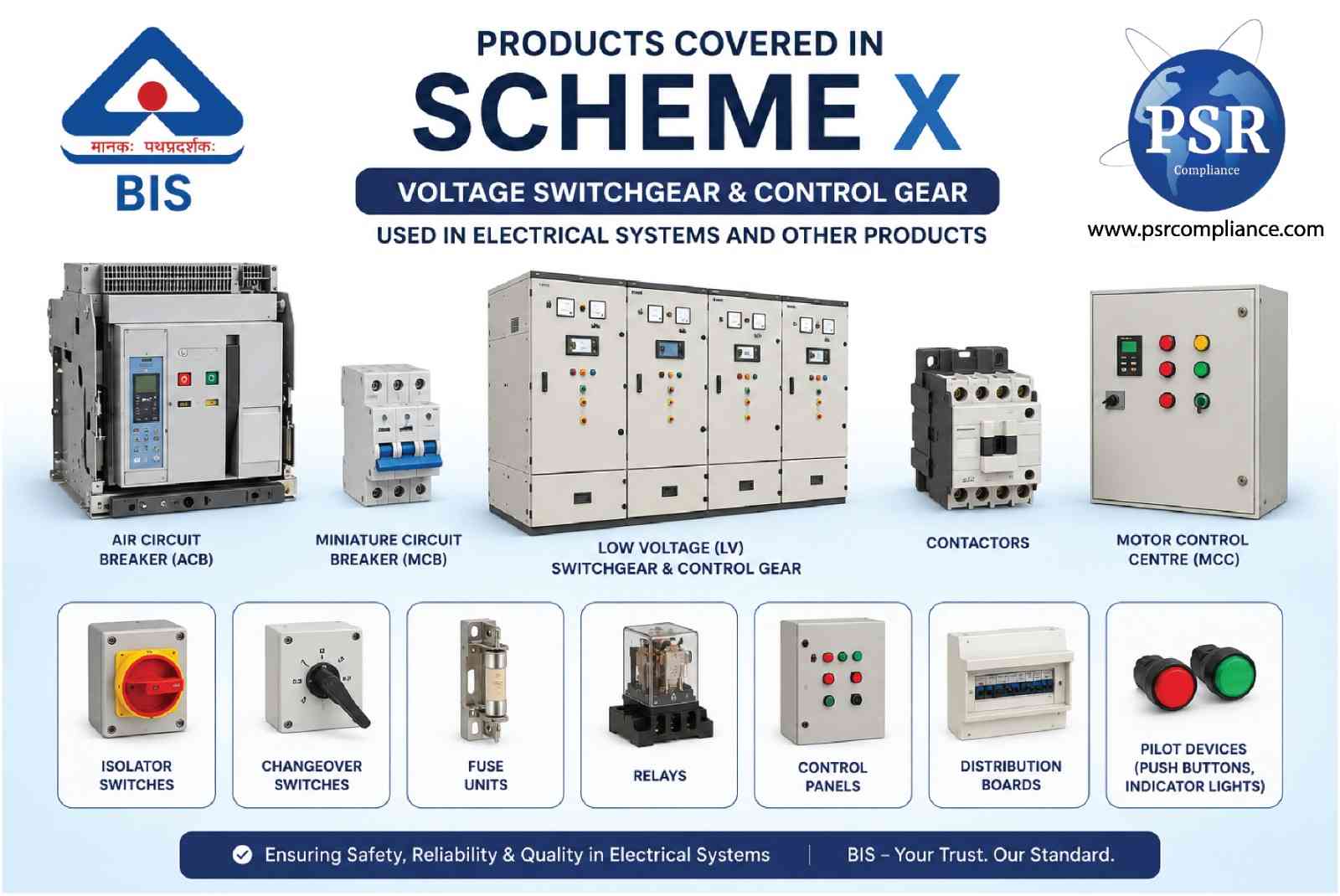
BIS Scheme X Certification has become an important compliance requirement for manufacturers operating in regulated sectors in India. Introduced by the Bureau of Indian Standards (BIS), Scheme X is designed to ensure that notified products meet stringent quality, safety, and performance standards before they are placed on the Indian market.
Manufacturers seeking to sell covered products in India must obtain BIS Scheme X Certification to demonstrate compliance with applicable Indian Standards. The certification process involves documentation review, product testing, factory assessment, and approval from BIS authorities.
Whether you are an Indian manufacturer or a foreign producer exporting products to India, understanding the BIS Scheme X Registration Process is essential for maintaining regulatory compliance and avoiding market restrictions.
What is BIS Scheme X Certification?
BIS Scheme X Certification is a conformity assessment scheme administered by the Bureau of Indian Standards. The scheme applies to specific categories of products notified by the Government of India and requires manufacturers to obtain certification before selling their products in the Indian market.
The objective of Scheme X is to:
-
Improve product quality and safety
-
Protect consumers from unsafe products
-
Promote compliance with Indian Standards
-
Strengthen market surveillance
-
Support fair trade practices
Manufacturers covered under the scheme must obtain approval from BIS before placing products in the market.
Why is BIS Scheme X Certification Important?
Obtaining BIS Scheme X Certification offers several benefits:
Regulatory Compliance
Certification helps manufacturers comply with Indian regulatory requirements and avoid penalties.
Market Access
Certified products can be legally sold and distributed across India.
Consumer Confidence
Products bearing BIS certification are perceived as safe and reliable.
Competitive Advantage
Compliance demonstrates a commitment to quality and enhances brand credibility.
Risk Reduction
Certification minimizes the risk of product recalls and regulatory actions.
Who Needs BIS Scheme X Certification?
The certification requirement generally applies to:
-
Indian manufacturers
-
Foreign manufacturers exporting to India
-
Product brand owners
-
Industrial equipment manufacturers
-
Machinery manufacturers
-
Producers of notified products
Any manufacturer whose product falls under the notified categories should verify whether Scheme X certification is mandatory.
Products Covered Under BIS Scheme X
The exact list of products is determined through government notifications and may be updated periodically.
Examples of products that may require Scheme X certification include:
-
Industrial machinery
-
Pressure equipment
-
Electrical systems
-
Manufacturing equipment
-
Specialized industrial products
-
Safety-critical components
Manufacturers should verify product applicability before initiating certification.
BIS Scheme X Certification Process
Step 1: Product Evaluation
The first step is determining whether the product falls under the Scheme X framework and identifying the applicable Indian Standard.
Step 2: Documentation Preparation
Applicants must prepare technical and legal documentation required by BIS.
Step 3: Product Testing
Products are tested according to relevant standards to verify compliance.
Step 4: Application Submission
The certification application is submitted to BIS along with supporting documents.
Step 5: Factory Audit
BIS officials may conduct a factory inspection to evaluate manufacturing processes and quality control systems.
Step 6: Query Resolution
Any observations or queries raised by BIS must be addressed promptly.
Step 7: Certification Approval
Upon successful completion of the assessment process, BIS grants certification.
Documents Required for BIS Scheme X Certification
The documentation requirements may vary depending on product category, but commonly required documents include:
Business Documents
-
Company Registration Certificate
-
GST Registration
-
Factory License
-
Manufacturing License
Technical Documents
-
Product Specifications
-
Technical Drawings
-
Quality Control Procedures
-
Product Manuals
-
Bill of Materials
Compliance Documents
-
Test Reports
-
Calibration Records
-
Quality Management Documents
-
Inspection Reports
Authorized Signatory Documents
-
Identity Proof
-
Authorization Letter
-
Contact Details
Accurate documentation helps reduce delays and improves approval chances.
Factory Audit Under Scheme X
Factory assessment is one of the most important stages of the certification process.
During the audit, BIS officials may evaluate:
-
Manufacturing facilities
-
Production processes
-
Quality control systems
-
Testing capabilities
-
Raw material controls
-
Inspection procedures
-
Record maintenance
Manufacturers should ensure all compliance systems are properly documented before the audit.
BIS Scheme X Certification Cost
The cost of certification depends on several factors:
-
Product category
-
Testing requirements
-
Number of models
-
Factory audit expenses
-
Government fees
-
Consultant charges
Because each product category has unique compliance requirements, the total cost may vary from one application to another.
Businesses should obtain a detailed cost assessment before beginning the process.
Time Required for BIS Scheme X Certification
The certification timeline depends on documentation readiness, testing schedules, and audit availability.
|
Activity |
Estimated Timeline |
|
Documentation Preparation |
5–10 Days |
|
Product Testing |
15–30 Days |
|
Application Review |
7–15 Days |
|
Factory Audit |
1–3 Days |
|
Query Resolution |
5–15 Days |
|
Final Approval |
30–60 Days |
Early preparation can significantly reduce approval delays.
Common Reasons for Certification Delays
Many applications experience delays due to:
Incomplete Documentation
Missing records often result in additional queries.
Incorrect Product Classification
Applying under the wrong standard can lead to rejection.
Test Report Issues
Non-compliant test reports may require retesting.
Audit Non-Conformities
Factory audit observations can delay certification until corrective actions are completed.
Delayed Responses
Slow responses to BIS queries may extend the approval timeline.
Benefits of Professional Certification Support
Working with experienced consultants provides several advantages:
-
Faster application preparation
-
Accurate documentation
-
Compliance guidance
-
Audit preparation support
-
Query handling assistance
-
Reduced approval risks
Professional support can help manufacturers navigate complex regulatory requirements efficiently.
Why Choose PSR Compliance?
PSR Compliance provides end-to-end assistance for BIS certifications and regulatory approvals.
Our services include:
-
Eligibility Assessment
-
Documentation Support
-
Application Filing
-
Product Testing Coordination
-
Factory Audit Preparation
-
Compliance Consultation
-
Query Resolution Support
-
Certification Renewal Assistance
Our team helps manufacturers achieve certification efficiently while maintaining full compliance with BIS requirements.
Frequently Asked Questions
What is BIS Scheme X Certification?
It is a BIS conformity assessment scheme applicable to notified products requiring compliance with Indian Standards.
Is Scheme X Certification mandatory?
Yes, for products covered under the relevant government notification.
Who can apply for Scheme X Certification?
Indian and foreign manufacturers of notified products can apply.
Is factory inspection required?
Yes, factory audits may be conducted as part of the certification process.
How long does certification take?
The process typically takes between 30 and 60 days, depending on product complexity and documentation readiness.
What documents are required?
Business registration documents, technical specifications, test reports, and quality control records are commonly required.
Can foreign manufacturers obtain Scheme X Certification?
Yes, foreign manufacturers can apply through the prescribed BIS process.
Conclusion
BIS Scheme X Certification is an essential regulatory requirement for manufacturers of notified products in India. The certification demonstrates compliance with Indian Standards, enhances market credibility, and supports long-term business growth. By understanding the certification process, preparing accurate documentation, and ensuring audit readiness, manufacturers can achieve timely approvals and maintain regulatory compliance in the Indian market.
Company Name: PSR Compliance
Phone: +91 7065883416
Email: [email protected]
Office Address: D-49, D Block, Sector 6, Noida, Uttar Pradesh, 201301

 English
 Arabic
 French
 Spanish
 Portuguese
 Deutsch
 Turkish
 Dutch
Dutch
 Italiano
 Russian
 Romaian
 Portuguese (Brazil)
