


 Downloader
 Free FTP
Promote Your Product
Got a product, service, or story to share? Promote it directly to our active community and boost your brand today.
Create an Ad
Publish Bulk Blog Posts
Boost Your Reach! 📝
Have articles, guest posts, or bulk stories to publish? Send your content directly to our editorial team and feature on our platform.
Email Us Your PostsWhy sports field irrigation systems are essential for modern stadiums
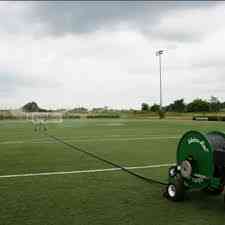
Modern stadiums are not just places where games are played. They are carefully designed spaces where safety, performance, and appearance all matter. One of the most important parts of maintaining a stadium is keeping the grass field in good condition. This is where sports field irrigation plays a key role.
Sports fields need regular and controlled watering to keep the grass healthy, green, and strong. Without proper irrigation, the field can become dry, uneven, or unsafe for players. A good irrigation system ensures that water is spread evenly across the field, supporting healthy grass growth and improving playing conditions.
In simple terms, sports field irrigation is the system used to water large sports grounds in a controlled and efficient way. It is essential in modern stadiums because it helps maintain the quality of the playing surface throughout the year.
Importance of sports field irrigation in stadium maintenance
One of the main reasons sports field irrigation is important is because it keeps the playing surface in top condition. Grass fields are affected by weather, usage, and temperature changes. In hot weather, grass can dry out quickly, while in rainy seasons, it can become uneven if not managed properly.
A proper irrigation system helps balance these conditions by supplying the right amount of water at the right time. This ensures that the grass remains soft, green, and strong enough to handle sports activities.
Another important factor is player safety. A dry or hard field can increase the risk of injuries. Players may slip, fall, or get hurt more easily on uneven surfaces. With a well-maintained irrigation system, the field remains soft and even, reducing the chances of injuries during games.
Sports field irrigation also improves the overall appearance of the stadium. A green and well-watered field looks professional and attractive. This is important for both live audiences and television viewers.
How sports field irrigation systems work in modern stadiums
Sports field irrigation systems are designed to distribute water evenly across large playing areas. These systems are often automated or semi-automated, allowing stadium managers to control watering schedules with precision.
Step 1: Water supply source
The system begins with a water source. This can be stored water or a direct supply that feeds into the irrigation system.
Step 2: Distribution network
Pipes and channels carry water from the source to different parts of the field. These are carefully placed under or around the field to ensure full coverage.
Step 3: Sprinkler activation
Sprinklers are placed across the field to release water in controlled amounts. These sprinklers are designed to spread water evenly so that no area is left dry or overwatered.
Step 4: Controlled timing system
Modern systems use timers or control units to decide when and how long the irrigation should run. This ensures that water is used efficiently and only when needed.
Step 5: Monitoring and adjustment
Ground staff regularly check the condition of the field. Based on weather and usage, they adjust the irrigation schedule to maintain ideal conditions.
Benefits of sports field irrigation for modern stadiums
There are many benefits of using sports field irrigation systems in stadiums. These benefits go beyond just keeping the grass green.
One major benefit is improved field durability. A well-watered field can handle heavy use from training sessions and matches without getting damaged quickly. The grass roots become stronger, making the surface more stable.
Another benefit is water efficiency. Modern irrigation systems are designed to use water wisely. Instead of wasting water, they distribute it in controlled amounts, reducing overall usage while still maintaining field quality.
Sports field irrigation also reduces maintenance effort. Without an irrigation system, workers would need to water the field manually, which is time-consuming and less effective. Automated systems make the process easier and more reliable.
Better game performance is another important benefit. Players perform better on smooth, even surfaces. A properly irrigated field supports faster movement, better ball control, and overall improved gameplay.
The system also helps protect the long-term investment in the stadium. Maintaining a high-quality field ensures that the stadium remains suitable for professional matches for many years.
Why sports field irrigation is necessary for modern stadium development
Modern stadiums are built to meet high standards. These standards include safety, performance, and visual quality. Sports field irrigation plays an important role in meeting all of these requirements.
One reason it is necessary is because of changing climate conditions. Weather is not always predictable, and natural rainfall is not enough to maintain a healthy field. Irrigation systems provide consistent water supply regardless of weather changes.
Another reason is increased usage of stadiums. Many stadiums are used frequently for matches, training sessions, and events. Without proper irrigation, the field would quickly lose its quality. A good system ensures that the grass recovers and remains healthy even after heavy use.
Sports field irrigation also supports professional sports standards. Modern sports require high-quality playing surfaces. Poor field conditions can affect game results and even player performance. Irrigation systems help maintain these standards consistently.
Finally, it supports long-term sustainability. By managing water usage efficiently, stadiums can reduce waste and maintain environmental balance while still keeping fields in excellent condition.
Common challenges solved by sports field irrigation systems
Sports fields often face several challenges, and irrigation systems help solve many of them.
One common challenge is uneven grass growth. Without proper watering, some areas may grow faster than others. Irrigation systems ensure even water distribution, promoting uniform growth.
Another challenge is dry or cracked soil. In hot conditions, soil can lose moisture quickly. Irrigation systems help keep the soil hydrated and healthy.
Overwatering is also a problem in manual systems. Too much water can damage grass roots. Controlled irrigation prevents this by delivering the exact amount needed.
Conclusion
Sports field irrigation is an essential part of modern stadium management. It ensures that playing surfaces remain healthy, safe, and visually appealing throughout the year. By providing controlled and efficient water distribution, these systems support better gameplay, reduce maintenance effort, and improve long-term field durability.

 English
 Arabic
 French
 Spanish
 Portuguese
 Turkish
 Dutch
Dutch
 Italiano
 Russian
 Romaian
 Portuguese (Brazil)
 Greek
Greek
