


 Downloader
 Free FTP
Why should I hire a professional Swimming Pool Cleaning & Maintenance Service?
INTRODUCTION
A Swimming Pool Cleaning & Maintenance Service is essential for keeping swimming pools clean, hygienic, safe, and operationally efficient throughout the year. Swimming pools require continuous care because they are constantly exposed to environmental contaminants, chemical imbalances, debris accumulation, algae growth, and equipment wear. Without regular maintenance, pool water quality can deteriorate quickly, affecting swimmer safety, structural durability, and overall pool performance.
Professional cleaning and maintenance services help manage every aspect of pool care, including filtration systems, water circulation, chemical balancing, surface cleaning, equipment inspection, and sanitation management. These services ensure that the pool remains visually appealing while also preventing long-term structural and operational problems.
Whether for residential pools, rooftop pools, hotel pools, wellness centers, sports facilities, or commercial aquatic environments, professional maintenance plays a critical role in maintaining healthy and efficient swimming conditions.
Importance of Regular Swimming Pool Maintenance
Swimming pools continuously collect contaminants from swimmers, weather exposure, and surrounding environments. Dirt, leaves, oils, bacteria, algae spores, insects, and chemical residues can quickly affect water quality if proper maintenance is neglected.
Regular maintenance helps:
- Maintain clean water
- Prevent algae growth
- Improve swimmer safety
- Protect pool equipment
- Maintain water clarity
- Reduce structural damage
- Improve circulation efficiency
- Extend pool lifespan
Professional maintenance services ensure that these tasks are performed consistently and correctly.
Why Professional Pool Cleaning Matters
Swimming pool cleaning is more than simply removing visible debris from the water surface. Professional cleaning services focus on maintaining overall pool hygiene and operational efficiency.
Removal of Surface Debris
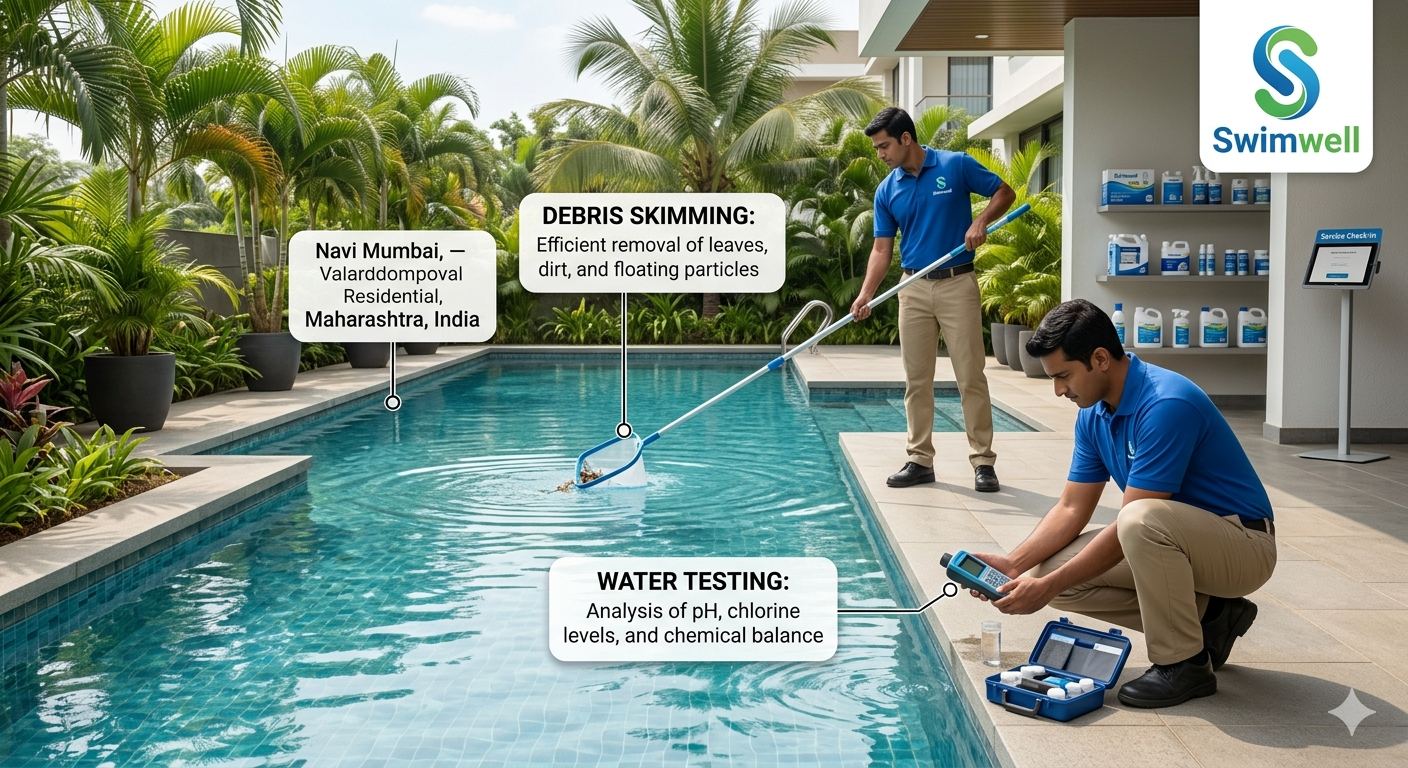
Leaves, insects, dust, and floating particles are removed regularly using skimmers and cleaning equipment.
Benefits
- Improved water clarity
- Reduced contamination
- Better filtration efficiency
- Enhanced visual appearance
Pool Vacuuming
Professional maintenance teams vacuum pool floors to remove settled dirt and sediment.
Advantages
- Cleaner pool surfaces
- Reduced algae risk
- Improved swimmer comfort
- Better water circulation
Brushing Walls and Tiles
Pool walls and tiles are cleaned to prevent algae buildup, mineral deposits, and staining.
Regular brushing helps preserve surface finishes and improve cleanliness.
Importance of Water Chemistry Management
Maintaining balanced water chemistry is one of the most important aspects of swimming pool maintenance.
Chlorine and Sanitization Control
Proper sanitizer levels help eliminate bacteria, viruses, and algae.
Benefits of Correct Sanitization
- Cleaner water
- Healthier swimming conditions
- Reduced microbial growth
- Better water quality
pH Level Balancing
Professional maintenance services monitor and adjust pH levels regularly.
Proper pH Levels Help
- Improve swimmer comfort
- Prevent eye and skin irritation
- Protect pool surfaces
- Improve chemical efficiency
Alkalinity and Calcium Hardness Management
Balanced alkalinity and calcium hardness protect pool equipment and maintain stable water chemistry.
Improper chemical levels can damage surfaces, plumbing systems, and filtration equipment.
Filtration System Maintenance
Filtration systems are essential for maintaining clean and healthy pool water.
How Filtration Systems Work
Water circulates through filters that remove dirt, oils, microscopic particles, and contaminants.
Clean water is then returned to the pool.
Types of Pool Filters
Professional maintenance services commonly manage:
- Sand filters
- Cartridge filters
- Glass media filters
- Diatomaceous earth filters
Each system requires regular inspection and cleaning.
Importance of Filter Cleaning
Dirty filters reduce circulation efficiency and may allow contaminants to remain in the water.
Benefits of Clean Filters
- Improved water clarity
- Better circulation
- Reduced algae growth
- Enhanced sanitation
- Improved equipment efficiency
Routine filter maintenance helps maintain consistent water quality.
Pool Circulation and Water Quality
Good water circulation is essential for proper sanitation and contaminant removal.
Pump Inspection and Maintenance
Pool pumps move water through the filtration system and maintain circulation.
Professional maintenance teams inspect pumps for:
- Flow efficiency
- Mechanical wear
- Leakage
- Pressure irregularities
Return Jets and Skimmers
Return jets distribute filtered water evenly throughout the pool, while skimmers collect floating debris.
Efficient circulation helps prevent stagnant water areas where algae and bacteria can develop.
Algae Prevention Through Professional Maintenance
Algae growth is one of the most common problems in poorly maintained pools.
Causes of Algae Growth
- Low sanitizer levels
- Poor circulation
- Dirty filters
- Warm temperatures
- Inadequate cleaning
How Professionals Prevent Algae
Professional maintenance services include:
- Routine chemical balancing
- Surface brushing
- Filtration monitoring
- Water testing
- Proper circulation management
Preventive maintenance keeps pool water clear and hygienic.
Equipment Inspection and Operational Efficiency
Swimming pools rely on multiple systems that require routine inspection and maintenance.
Pump and Motor Inspection
Maintenance specialists monitor pump performance and mechanical condition.
Plumbing System Monitoring
Leaks and circulation issues can affect water quality and operational efficiency.
Lighting and Automation System Checks
Modern pools often include LED lighting, automation systems, and smart controls that require inspection.
Heating System Maintenance
Heated pools require monitoring of heating equipment and temperature controls.
Professional inspections help identify potential problems early.
Advanced Pool Water Treatment Technologies
Modern swimming pool maintenance services often use advanced sanitation technologies.
UV Water Purification Systems
Ultraviolet systems neutralize microorganisms and improve water hygiene.
Benefits
- Reduced bacteria growth
- Improved swimmer comfort
- Lower chemical dependency
Ozone Water Treatment Systems
Ozone treatment improves oxidation and water purification.
Saltwater Chlorination Systems
Saltwater systems automatically generate chlorine for continuous sanitation management.
Advanced technologies improve overall maintenance efficiency and water quality.
Benefits of Hiring a Professional Swimming Pool Cleaning & Maintenance Service
Cleaner and Healthier Water
Professional maintenance ensures proper sanitation and contaminant control.
Improved Pool Appearance
Routine cleaning keeps the pool visually attractive and inviting.
Reduced Equipment Problems
Regular inspections help prevent mechanical failures and operational disruptions.
Longer Equipment Lifespan
Well-maintained pumps, filters, and circulation systems generally perform more efficiently over time.
Better Swimmer Safety
Clean and balanced water improves swimmer comfort and hygiene.
Reduced Long-Term Maintenance Issues
Preventive maintenance minimizes recurring problems and structural deterioration.
Maintenance for Different Types of Swimming Pools
Professional maintenance services are important for various pool environments.
Residential Pools
Private pools require regular cleaning, chemical balancing, and filtration monitoring.
Rooftop Pools
Rooftop pools need specialized waterproofing inspections and drainage management.
Hotel and Resort Pools
Commercial hospitality pools require high sanitation standards and continuous maintenance.
Wellness and Therapy Pools
Therapy pools require temperature management and enhanced hygiene control.
Commercial Aquatic Facilities
Large public pools require advanced filtration systems and strict maintenance schedules.
Seasonal Pool Maintenance Requirements
Swimming pool maintenance requirements may change throughout the year.
Summer Pool Care
Warm temperatures and increased usage require more frequent sanitation monitoring.
Monsoon Protection
Rainwater can introduce contaminants and dilute pool chemicals.
Winter Maintenance
Even during reduced usage periods, pools require circulation and water quality management.
Seasonal maintenance adjustments help maintain stable pool performance.
Common Signs Your Pool Needs Professional Maintenance
Pool owners should monitor for signs of declining water quality or equipment issues.
Warning signs include:
- Cloudy water
- Algae growth
- Strong chemical odors
- Dirty pool surfaces
- Poor circulation
- Surface staining
- Water imbalance
- Unusual equipment noises
Professional maintenance helps address these issues before they become serious problems.
Importance of Hiring Experienced Pool Maintenance Specialists
Swimming pool maintenance requires technical expertise and routine monitoring.
Professional specialists understand:
- Water chemistry management
- Filtration systems
- Pool sanitation
- Equipment diagnostics
- Leak detection
- Surface cleaning techniques
- Automation systems
Experienced professionals help ensure consistent pool cleanliness and operational efficiency.
Future Trends in Swimming Pool Maintenance
Modern pool maintenance technologies continue to evolve with automation and smart monitoring systems.
Emerging trends include:
- AI-based water monitoring
- Automated chemical balancing
- Robotic cleaning systems
- Smart filtration controls
- Eco-friendly sanitation technologies
- Remote pool management systems
These innovations improve maintenance accuracy and simplify pool care.
How Professional Maintenance Supports Long-Term Pool Durability
Regular cleaning and maintenance help protect the pool structure and equipment from long-term damage.
Professional care helps prevent:
- Surface deterioration
- Water leakage
- Equipment failure
- Chemical corrosion
- Structural weakening
- Persistent contamination problems
Long-term maintenance supports improved pool reliability and durability.
Conclusion
Hiring a professional Swimming Pool Cleaning & Maintenance Service is essential for maintaining clean water, balanced chemistry, efficient circulation, and healthy swimming conditions. Professional maintenance services help prevent algae growth, equipment problems, water contamination, and structural deterioration while improving the overall appearance and performance of the swimming pool.
From filtration system management and chemical balancing to advanced sanitation technologies and equipment inspections, professional maintenance ensures long-term operational efficiency and swimmer safety. Whether for residential, rooftop, wellness, luxury, or commercial pools, regular maintenance is critical for preserving water quality and structural durability. Trusted swimming pool companies continue to adopt advanced maintenance technologies that improve sanitation, efficiency, and long-term pool performance. Swimwell Pools provides professional cleaning and maintenance services designed to deliver hygienic, reliable, and efficient swimming pool operation.
FAQs
1. Why should I hire a professional swimming pool cleaning and maintenance service?
Professional services help maintain clean water, balanced chemistry, efficient filtration, and reliable equipment performance.
2. How often should a swimming pool be professionally cleaned?
Pool cleaning frequency depends on usage, environmental exposure, and pool type, but regular maintenance is essential for healthy water quality.
3. What services are included in professional pool maintenance?
Services may include water testing, chemical balancing, filtration cleaning, vacuuming, surface brushing, equipment inspection, and algae prevention.
4. Can professional maintenance help prevent algae growth?
Yes, regular cleaning, chemical balancing, and circulation management help prevent algae formation.
5. Does professional maintenance improve pool equipment lifespan?
Yes, routine inspections and maintenance reduce strain on pumps, filters, and circulation systems, helping improve durability.
Read Our Previous Blog------>How does Swimming Pool Maintenance help maintain clean water?

 English
 Arabic
 French
 Spanish
 Portuguese
 Deutsch
 Turkish
 Dutch
Dutch
 Italiano
 Romaian
 Portuguese (Brazil)
 Greek
Greek
