


 Downloader
 Free FTP
Promote Your Product
Got a product, service, or story to share? Promote it directly to our active community and boost your brand today.
Create an Ad
Publish Bulk Blog Posts
Boost Your Reach! 📝
Have articles, guest posts, or bulk stories to publish? Send your content directly to our editorial team and feature on our platform.
Email Us Your PostsHow to Maintain Your Car Engine Properly
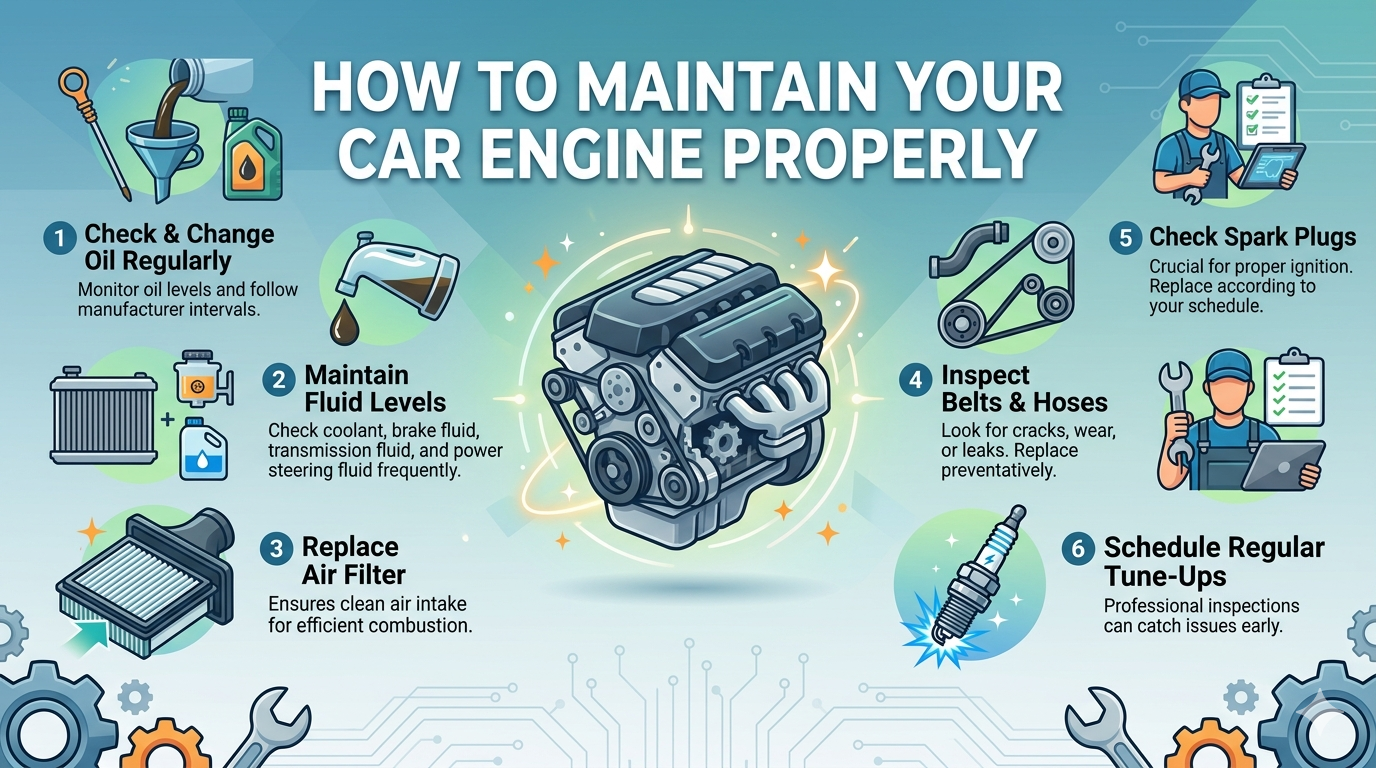
The engine is the heart of the car, and making sure that it is in good shape is key to achieving reliability, performance, and long life. Lots of people who own vehicles pay attention to how their car looks, but they don’t take care of their engine — and that can mean expensive repairs, decreased gas mileage and more. Understanding how to maintain your car engine is crucial for preventing breakdowns, improving fuel economy, and extending the life of your vehicle.
In this guide, we’ll look at some simple and effective ways to take care of your engine for a long life of maximum performance.
Why Engine Maintenance Is Important
There are many moving parts in the engine, all running hot and under pressure. If not treated correctly, these components can fail prematurely, leading to costly repairs or even total engine failure.
Knowing How to Maintain your car engine helps you:
-
Improve fuel efficiency
-
Reduce repair costs
-
Enhance vehicle performance
-
Increase engine lifespan
-
Prevent unexpected breakdowns
-
Maintain vehicle value
Routine maintenance saves you money and it makes for a safer and a better drive.
1. Change Engine Oil Regularly
Nothing is more crucial to How to Maintain your car Engine than Regular Oil Change Use for engine oil at closer intervals. The oil serves as a lubricant for the moving parts, minimizes friction and helps prevent overheating.
Oil is subject to contamination which includes dust, dirt, pollution and even parts of your engine and makes oil less effective over time. Using old oil in an engine can result in accelerated engine wear and damage.
Tips for Oil Maintenance:
-
Follow the oil change schedule in your owner's manual.
-
Use the recommended oil grade.
-
Check oil levels regularly.
-
Replace the oil filter during every oil change.
Fresh oil keeps the engine running smoothly and efficiently.
Read Also: How to maintaine your car? Some car maintenaince tips?
2. Monitor Coolant Levels
The cooling system is crucial for prevention of the engine overheat. The coolant removes heat from the engine and maintains the desired operating temperature.
Learning How to Maintain your car engine includes regularly checking coolant levels and ensuring the cooling system functions properly.
Cooling System Maintenance:
-
Inspect coolant levels monthly.
-
Check for leaks under the vehicle.
-
Flush the cooling system as recommended.
-
Replace damaged hoses and clamps.
Ignoring coolant maintenance can lead to overheating and severe engine damage.
3. Replace Air Filters on Time
For efficient burning, the engine must have a constant supply of clean air. A dirty air filter limits the air flow, which can decrease performance of the engine and the mileage.
Read Also: Find out which car you should buy—Manual or Automatic.
Benefits of a Clean Air Filter:
-
Improved fuel economy
-
Better acceleration
-
Reduced engine wear
-
Lower emissions
Replacing the air filter is a simple yet essential step in How to Maintain your car engine effectively.
4. Check and Replace Spark Plugs
Spark plugs are responsible for igniting the fuel mixture inside the engine's combustion chamber. Bad or failing plugs can cause misfires that lead to poor mileage and a drop in power.
Signs of Worn Spark Plugs:
-
Difficulty starting the car
-
Rough idling
-
Engine misfires
-
Increased fuel consumption
Check the spark plugs periodically and change them as advised by the manufacturer.
5. Use High-Quality Fuel
Fuel quality has a direct impact on engine performance and fuel economy. Low-quality fuel may deposit in the fuel line and combustion chamber.
When considering How to Maintain your car engine, choosing reliable fuel sources is important.
Fuel Maintenance Tips:
-
Use the octane rating recommended by the vehicle manufacturer.
-
Don't run the fuel tank too low.
-
Buy the gas from a well-trusted station.
-
Use fuel-system cleaners from time to time, if you want (recommended).
Clean fuel helps maintain smooth engine operation.
6. Inspect Belts and Hoses
Engine belts and hoses are vital for running a number of systems such as cooling, charging and air conditioning.
Over time, these components can crack, wear, or loosen.
What to Look For:
-
Frayed belts
-
Cracks or leaks in hoses
-
Unusual noises
-
Loose connections
Regular inspections help prevent unexpected failures and expensive repairs.
7. Keep the Engine Clean
A clean engine runs cooler, and leaks and damaged parts are easier to spot.
Engine Cleaning Benefits:
-
Improved heat dissipation
-
Easier maintenance inspections
-
Better appearance
-
Early detection of issues
When learning How to Maintain your car engine, don't overlook the importance of keeping the engine bay clean and free from excessive dirt and debris.
8. Avoid Aggressive Driving
Driving habits significantly impact engine health.
Bad Driving Habits Include:
-
Rapid acceleration
-
Hard braking
-
Excessive speeding
-
Frequent short trips
Gentle driving reduces stress on engine components and helps extend engine life.
Smart Driving Practices:
-
Warm up the engine briefly in cold weather.
-
Accelerate gradually.
-
Maintain consistent speeds.
-
Avoid overloading the vehicle.
Responsible driving is a key factor in How to Maintain your car engine properly.
9. Pay Attention to Warning Lights
Modern vehicles are equipped with sensors that monitor engine performance.
Common Engine-Related Warning Lights:
-
Check Engine Light
-
Oil Pressure Warning
-
Temperature Warning
-
Battery Warning
Ignore dashboard warnings at your own risk. Diagnosis and repairs done early can save a lot of time and expense, and may prevent a small problem from turning into a big one.
10. Follow the Manufacturer's Maintenance Schedule
All the vehicle manufactures give a schedule of maintenance to keep the engine running efficiently.
This schedule typically includes:
-
Oil changes
-
Air filter replacement
-
Spark plug service
-
Coolant replacement
-
Timing belt inspections
Following these recommendations is one of the best ways to understand How to Maintain your car engine and ensure long-term reliability.
11. Check Fluid Levels Frequently
Several fluids contribute to proper engine operation.
Essential Fluids Include:
-
Engine oil
-
Coolant
-
Transmission fluid
-
Brake fluid
-
Power steering fluid
Low fluid levels can increase wear and reduce overall performance. Regular checks can prevent costly damage.
Conclusion
Knowing How to Maintain a Car Engine is important for anyone who owns a car and wants to have a], good performing car without having to pay a ton of money for repairs and maintenance. Regular oil changes, coolant checks, air filter changes, spark plug maintenance, and driving restraint all have their part in making a good engine a better engine.
A little bit of consistent maintenance goes a long way and by catching minor problems early, you can greatly extend the life of your engine and the efficiency of your fuel. A small amount of time spent on engine maintenance today can mean big money and hassle saved down the road. Maintenance of a required engine is not only to take care of your car, it is to be able to provide safe, efficient, and reliable transportation for you for many years to come.

 Arabic
 French
 Spanish
 Portuguese
 Deutsch
 Turkish
 Dutch
Dutch
 Italiano
 Russian
 Romaian
 Portuguese (Brazil)
 Greek
Greek
