


 Downloader
 Free FTP
Promote Your Product
Got a product, service, or story to share? Promote it directly to our active community and boost your brand today.
Create an Ad
Publish Bulk Blog Posts
Boost Your Reach! 📝
Have articles, guest posts, or bulk stories to publish? Send your content directly to our editorial team and feature on our platform.
Email Us Your PostsFrom Destructive Thermal Incineration to Circular Solvent Recovery Systems: How Carbon Commitments are Scaling VOC Capture
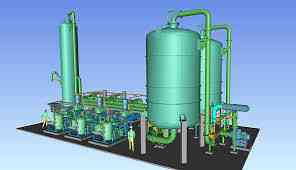
The global chemical processing, petrochemical refining, industrial surface coating, and environmental safety engineering sectors are undergoing a rigorous transformation centered on air-purity compliance, occupational health mandates, and resource conservation. Volatile Organic Compound (VOC) recovery—the specialized engineering process of capturing, separating, and liquefying airborne hydrocarbon vapors before they escape into the atmosphere—serves as a critical pillar of modern industrial emission abatement. Unlike destructive abatement methods like thermal oxidization or flaring, recovery systems utilize advanced chemical and physical mechanisms to capture valuable solvents, gases, and chemical precursors from process streams. This dual-benefit approach prevents ground-level ozone formation while recycling raw materials directly back into production lines. Driven by tightening international clean-air standards, rising solvent procurement costs, and an industry-wide push toward circular manufacturing models, the sector has entered a period of rapid acceleration. Valued at US$ 24.6 Billion in 2023, the global VOC Recovery Market is estimated to grow at a high-velocity CAGR of 14.9% from 2024 to 2034, poised to reach an impressive market valuation of US$ 118.4 Billion by the end of 2034.
The industry is navigating an engineered technology evolution defined by "The Transition from Traditional Carbon Bed Incineration and Vent Flaring to Ultra-Low-Temperature Cryogenic Condensation and Regenerative Multi-Bed Pressure Swing Adsorption (PSA) Configurations." Historically, managing dilute VOC vapor streams involved charcoal filters that were simply incinerated once saturated, or open flaring systems that converted raw emissions into secondary carbon dioxide. Under strict modern air-quality caps, plant operators are upgrading to closed-loop recovery infrastructure. Next-generation systems route solvent-laden air through automated condensation chambers chilled with liquid nitrogen down to sub-zero levels (often below $-100^{\circ}\text{C}$), flash-freezing and liquefying hydrocarbons out of the gas stream at high purities. This mechanical transformation allows manufacturing plants to achieve up to 99.9% vapor abatement efficiency, meeting zero-emission targets while securing a highly reliable, low-cost stream of recycled solvents to buffer against upstream chemical market disruptions.
🚀 Strategic Growth Drivers: The 14.9% Circular Mandate
The strong momentum driving the market toward its US$ 118.4 Billion milestone is sustained by strict air-quality enforcement, chemical cost volatility, and urban environmental protection:
- Strict Environmental Frameworks and Non-Compliance Penalties: Environmental protection agencies worldwide are establishing aggressive limits on fugitive emissions from storage tanks, loading bays, and process vents. Fines for releasing hazardous air pollutants (HAPs) like benzene, toluene, and xylene are rising rapidly, forcing industrial facilities to install verifiable, high-efficiency recovery systems to avoid costly legal penalties and operational shutdowns.
- Rising Global Solvent Volatility and the Financial Returns of Circularity: The market prices of petroleum-derived industrial solvents, cleaning fluids, and chemical thinners fluctuate constantly based on global oil markets. VOC recovery infrastructure offers an exceptional return on investment (ROI) by allowing chemical processors and pharmaceutical groups to capture, re-distill, and reuse their process solvents multiple times, significantly cutting raw material purchasing costs.
- Rapid Growth in Automotive Coating and Flexible Packaging Lines: Modern automotive assembly lines and high-speed flexible packaging printing plants generate massive volumes of solvent vapors during paint-baking and ink-drying cycles. Because these high-throughput factories require continuous air exchange, installing in-line regenerative carbon adsorption or condensation loops is essential to maintain safe working conditions and clean ambient air near major urban centers.
🔬 Process Chemistry & Engineering Innovations: The 2034 Roadmap
Over the forecast decade, industrial chemical laboratories and environmental process engineers will prioritize Separation Materials and Thermal Efficiency:
- Deploying Next-Generation Synthetic Hydrophobic Zeolite Adsorbents: Traditional activated carbon beds pose structural risks when capturing reactive solvents due to localized heat buildup and potential bed fires. Modern systems are increasingly utilizing engineered synthetic zeolites, which feature uniform pore structures and hydrophobic properties that selectively capture organic molecules while ignoring moisture, eliminating fire hazards and extending structural service lifespans beyond 10 years.
- The Scaling of Hybrid Membrane-Separation and Condensation Systems: To efficiently process highly dilute vapor streams, engineering firms are deploying multi-stage hybrid architectures. In these systems, a highly permeable polymer membrane first concentrates the VOC stream by a factor of 10 to 20, allowing a downsized, energy-efficient cryogenic condensation unit to liquefy the concentrated chemicals with minimal electricity consumption.
- Automated Real-Time Photoionization Detection (PID) and Smart Desorption: To prevent solvent breakthrough when carbon beds reach capacity, recovery rigs are integrating automated inline PID sensors linked to machine learning control boards. These smart arrays track real-time vapor concentrations and automatically switch process flows between parallel adsorption beds, optimizing steam or vacuum desorption cycles based on actual chemical loads rather than fixed timers.
🌎 Regional Analysis & Market Realignment
Asia-Pacific: The Megascale Production Core and Industrial Upgrade Epicenter
The Asia-Pacific region holds the primary geographic, volumetric, and operational footprint in the global VOC recovery market, leading the industry with a dominant share of global revenue. This leading position is propelled by massive petrochemical developments, electronics manufacturing hubs, and automotive production clusters across China, India, Japan, and South Korea. Driven by major clean-air initiatives aimed at reducing urban smog and optimizing resource efficiency, regional industries are aggressively retrofitting older factories with automated vapor recovery units (VRUs) at marine terminals, chemical storage farms, and refining plants.
North America: Premium Infrastructure Sourcing and Rigorous Fugitive Emission Control
North America represents a highly sophisticated, high-margin revenue hub characterized by strict regional air-quality standards and dense oil and gas infrastructure. In the United States and Canada, expansion is heavily driven by stringent EPA regulations targeting fugitive vapors from oil refineries, shale processing fields, and chemical storage networks. The North American market heavily rewards Tier-1 environmental engineering firms capable of delivering fully containerized, explosion-proof VRUs featuring advanced cloud-monitoring linkages and certified hazardous-location compliance.
Europe: Pioneer of Circular Process Chemistry and Strict Environmental Auditing
The European market moves forward under highly rigid environmental directives, including comprehensive European Commission Industrial Emissions Directives (IED) and net-zero sustainability frameworks. Across major manufacturing and refining hubs in Germany, France, the Netherlands, and the UK, chemical procurement prioritizes complete resource circularity. European operators lead the global market in adopting zero-emission cryogenic recovery systems that utilize green liquid nitrogen loops, transforming mandatory emission control systems into highly efficient, resource-saving assets.
Conclusion: Unifying Air-Quality Goals with Resource Circularity
By 2034, the Global VOC Recovery Market will operate as an irreplaceable cornerstone of the global industrial technology landscape, representing the precise point where environmental process engineering, advanced materials science, and manufacturing economics converge. Reaching a projected market valuation of US$ 118.4 Billion underscores the reality that leading industrial corporations and municipal regulatory bodies no longer view emission management as a passive compliance expense, but rather as an active, high-yield recovery process essential for protecting operating margins and hitting ESG targets. The environmental process engineers, adsorbent material synthesis groups, and specialized equipment manufacturers that lead this hyper-growth market over the coming decade will be those that successfully deliver high-efficiency, explosion-proof hybrid systems that balance low operational energy draw with ultra-pure chemical separation, ensuring that global refining, computing production, and chemical supply lines can run cleanly, safely, and sustainably.

 English
 Arabic
 Spanish
 Portuguese
 Deutsch
 Turkish
 Dutch
Dutch
 Italiano
 Russian
 Romaian
 Portuguese (Brazil)
 Greek
Greek
