


 Downloader
 Free FTP
Promote Your Product
Got a product, service, or story to share? Promote it directly to our active community and boost your brand today.
Create an Ad
Publish Bulk Blog Posts
Boost Your Reach! 📝
Have articles, guest posts, or bulk stories to publish? Send your content directly to our editorial team and feature on our platform.
Email Us Your PostsThe Cable-Free Factory: Replacing Expensive RS-485 Wiring Runs with LoRaWAN Converters
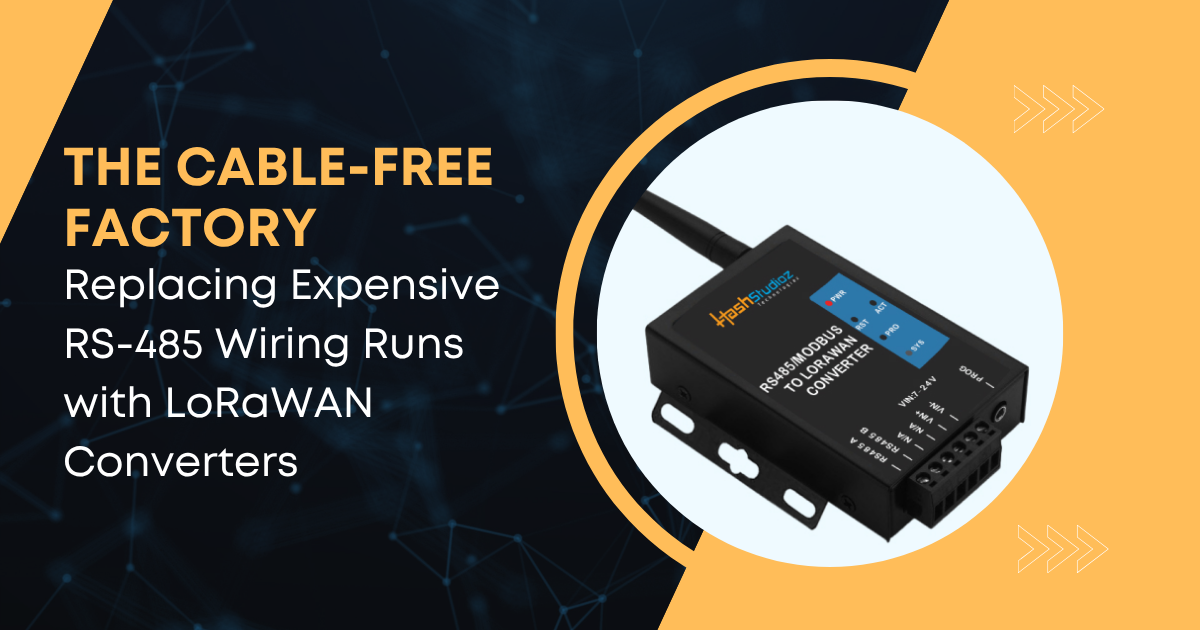
Modern industrial automation depends heavily on reliable data exchange between machines and central control rooms. For decades, copper cables formed the backbone of factory floors worldwide. Engineers rolled out thousands of miles of shielded twisted-pair wires to connect sensors, meters, and motor drives.
However, hardwired networks create substantial financial and operational challenges as production plants expand. Copper prices fluctuate wildly, and installation labor costs continue to climb. Furthermore, routing stiff data cables through concrete walls, high ceilings, and moving gantry cranes introduces severe structural difficulties.
Transitioning to wireless architecture offers a pragmatic solution to these legacy wiring problems. Industrial facilities are adopting long-range wireless networks to bypass physical cabling limits entirely. Integrating a specialized RS485 Modbus to LoRaWAN Converter allows facilities to transmit serial machine data wirelessly across massive factory campuses. This comprehensive article explores the technical process, financial arguments, and structural configurations required to achieve a cable-free factory.
The True Cost of Industrial Copper Cable Runs
Many project managers look only at the baseline purchase price of raw communication cables. They often overlook the hidden peripheral expenses that accumulate during a major factory wiring overhaul. Physical data line deployment involves complex engineering planning, specialized containment hardware, and extensive manual labor.
1. Material and Labor Expenses
Industrial environments require heavy-duty shielded cables to protect data frames from electromagnetic interference. Standard commercial wire fails quickly near high-voltage machinery. Project budgets must also include metal cable trays, rigid conduits, mounting brackets, and weather-proof junction boxes.
-
Conduit Costs: Industrial steel conduit often costs more than the actual data copper wire passing inside it.
-
Labor Rates: Certified industrial electricians demand high hourly wages to install wire containment systems safely.
-
Complex Routing: Pulling cables through blast-proof zones or sanitary food-processing rooms requires specialized seals and expensive premium hardware.
2. Factory Downtime Financial Impact
Installing new physical communication lines usually requires technicians to halt active assembly lines. Electricians cannot drill overhead brackets while heavy machinery operates underneath them.
Statistics reveal that unexpected or planned production shutdowns cost large automotive manufacturing plants up to $22,000 per minute. Stopping a production line for just four hours to lay new sensor cables can erase nearly $5 million in corporate revenue. Wireless installation completely removes this downtime window. Technicians mount wireless modules directly onto active machines without stopping production.
Physical Constraints of Traditional RS-485 Networks
The RS-485 physical layer running the Modbus RTU protocol remains highly dependable for localized machine communication. However, this copper-based technology exhibits clear physical constraints when scaled across modern, multi-building industrial complexes.
1. The Strict Daisy-Chain Topology Limitation
The RS-485 standard enforces a rigid linear daisy-chain wiring layout. Installers must run the cable directly from the master controller to slave node one, then to slave node two, and so on.
Engineers cannot use a simple star or tree topology without buying expensive, active RS-485 hubs. If a factory adds a new sub-meter on the opposite side of the building, electricians must loop the main cable all the way across the plant floor. This looping design wastes hundreds of feet of premium wire. It also introduces extra signal resistance into the communications line.
2. Ground Loop Disruption and Electrical Isolation Failures
Factories feature diverse electrical distribution systems with distinct grounding stakes scattered across different manufacturing zones. Connecting two distant machines via a continuous copper data wire often creates a destructive ground loop.
Voltage differences between separate building grounds force stray electrical currents to flow directly through the signal reference wires. This unwanted current creates severe data frame corruption, causing frequent packet drops. Extreme voltage surges can permanently burn out the delicate transceiver chips inside programmable logic controllers (PLCs). Eliminating the physical copper wire breaks this electrical path, providing absolute isolation.
Technical Foundations of LoRaWAN Technology
LoRaWAN represents a low-power, wide-area networking protocol designed specifically for industrial internet of things (IIoT) telemetry. The technology operates on sub-gigahertz license-free radio frequency bands, typically 915 MHz in North America and 868 MHz in Europe.
1. Superior Signal Penetration Characteristics
High-frequency wireless options like Wi-Fi and Bluetooth struggle inside industrial environments. Thick reinforced concrete, metal storage racks, and moving heavy machinery easily block or scatter 2.4 GHz and 5 GHz radio waves.
-
Sub-GHz Waves: LoRa transmissions use longer wavelengths that bend around large metallic obstacles effectively.
-
Chirp Spread Spectrum: This specialized modulation technique spreads data packets across multiple frequency channels over time.
-
Noise Immunity: The receiver decodes weak radio signals even when they register below the local thermal noise floor.
2. Long Operational Range Statistics
A single standard indoor LoRaWAN gateway easily covers an entire multi-story manufacturing facility. In open industrial yards, the radio signals travel over 6 miles to reach remote water pumps or chemical storage tanks. Statistics from global industrial deployments indicate that a lone LoRaWAN gateway successfully replaces up to 15 miles of distributed copper data cabling.
Operating Mechanics of the LoRaWAN Converter
An RS485 Modbus to LoRaWAN Converter serves as an intelligent protocol translator at the network edge. The device contains a local hardware serial port, an internal microprocessor, and a long-range radio transmitter.
1. Local Protocol Translation Process
The LoRaWAN Converter acts as a local Modbus RTU master or a transparent listener. It connects directly to the short RS-485 terminal pins of the slave sensor using a brief patch cable.
The converter pulls raw binary registers from the sensor using standard Modbus function codes. The internal microcontroller parses these 16-bit registers and strips away the heavy serial protocol headers. It packs the raw data points into a highly compressed binary payload optimized for wireless transmission.
2. Bidirectional Command Execution
Industrial control involves more than just reading sensor values. Operators must also send configuration changes and control outputs back down to field machinery.
LoRaWAN supports bidirectional communication paths through distinct Class C device configurations. When an engineer changes a motor speed setpoint on a cloud dashboard, the network server queues a downlink packet. The local converter receives this radio packet, changes it back into a standard Modbus write frame, and sends it down the local RS-485 copper wire to the target motor controller.
System Architecture: Copper vs. Wireless Star
Transitioning to a cable-free factory transforms the underlying network topology from a vulnerable linear chain to a highly resilient wireless star configuration.
1. Legacy Wired Architecture
In a standard wired layout, a single broken wire in the middle of the factory floor paralyzes the entire downstream network. Identifying the exact location of a physical cable break inside miles of packed metal conduit takes hours of technician labor.
2. Modern Cable-Free Architecture
Deploying an RS485 Modbus to LoRaWAN Converter on each machine eliminates this single point of failure. Every machine communicates independently with a central wireless gateway.
If one converter experiences a mechanical impact or power loss, the other nodes continue transmitting data normally. This isolation simplifies plant troubleshooting and keeps core data channels open.
Real-World Factory Deployment Examples
Examining actual industrial upgrades demonstrates the technical and financial advantages of replacing legacy copper runs with wireless conversion hardware.
1. CNC Machine Shop Retofitting
A heavy manufacturing facility operated 45 CNC milling machines inside a 200,000-square-foot fabrication building. The plant manager needed to collect real-time energy consumption logs from every machine to track electrical peak loads.
An initial electrical quote for hardwired RS-485 cabling totaled $84,000. This high price reflected the need to run overhead metal trays across active crane pathways. It also included two weeks of planned night-shift downtime.
Instead, engineers installed an RS485 Modbus to LoRaWAN Converter on each electrical sub-meter. A single central gateway was mounted on the roof beams. The entire hardware installation cost under $14,000 and took just two weekends to finish. The factory avoided all production shutdowns while gaining reliable sub-metering data every 5 minutes.
2. Chemical Storage Tank Farm Monitoring
A chemical processing plant required continuous level and pressure monitoring across 12 outdoor storage tanks. The tanks sat 1,800 feet away from the main control building, separated by a public railway line.
Excavating a trench under the railway to lay data cables was legally impossible and financially prohibitive. Technicians solved this by wiring the tank sensors to solar-powered wireless converters. The units transmit data effortlessly over the railway tracks to the central facility gateway, bypassing the physical barrier.
Data Payload Optimization and Mapping
LoRaWAN limits wireless packet sizes to maintain low power consumption and reduce channel utilization. Engineers must structure data payloads efficiently rather than sending long text strings.
1. Efficient Data Compaction
A standard Modbus RTU response frame includes slave addresses, function bytes, byte counts, data registers, and cyclic redundancy check codes. Sending this raw frame wirelessly utilizes excessive bandwidth.
The converter strips out the non-essential protocol frames at the edge. If an industrial sensor reads temperature (25.4°C) and pressure (6.2 bar), the converter multiplies these values to eliminate decimal points. It converts them into integers: 254 and 62. It stores these numbers in a tight 4-byte binary payload, minimizing radio transmission time.
Device Registry Configuration Example
The following data register map demonstrates how a wireless converter reads field parameters before wireless packet construction.
|
Source Register |
Variable Name |
Data Format |
Raw Value |
Compacted Payload Bytes |
|
40101 |
Motor Current (A) |
16-Bit Unsigned |
1452 (14.52 A) |
0x05 0xAC |
|
40102 |
Bearing Temp (°C) |
16-Bit Signed |
682 (68.2 °C) |
0x02 0xAA |
|
40103 |
Operating State |
16-Bit Bitmask |
1 (Running) |
0x01 |
Cybersecurity Protocols for Wireless Industrial Networks
Moving data over the airwaves requires robust cryptographic protection to prevent malicious tampering. Industrial LoRaWAN setups utilize a dual-layered AES-128 encryption model to secure telemetry.
1. Network and Application Layer Encryption
The LoRaWAN standard splits security architecture into two independent functional keys. This design ensures absolute data privacy from the field sensor straight to the engineering workstation.
-
Network Session Key (NwkSKey): This key encrypts the outer transport layer. It ensures that only authorized gateways route the machine packets, blocking message injection attacks.
-
Application Session Key (AppSKey): This key encrypts the inner data payload. The local gateway cannot decrypt this layer. Only the final industrial server possesses the key to read the actual machine metrics.
2. Over-The-Air Activation Configuration
Industrial networks avoid using fixed, pre-shared encryption keys because they are vulnerable to physical theft. Instead, converters use Over-The-Air Activation (OTAA) protocols.
Every time a converter power-cycles, it performs a cryptographic handshake with the network server. The server verifies the device credentials and generates fresh, unique session keys for that single operating period.
Step-by-Step Installation Best Practices
Transitioning a facility away from physical data lines requires a systematic deployment strategy to achieve maximum network uptime.
1. Perform a Comprehensive RF Site Survey
Before buying any conversion hardware, technicians must evaluate the radio environment of the plant. Walk the factory floor with a portable LoRa signal generator to measure the Received Signal Strength Indicator (RSSI) and Signal-to-Noise Ratio (SNR) in dark corners. Identify large obstacles like metal transformation substations that might require strategic gateway placement.
2. Configure Local Serial Port Parameters
Match the communication parameters of the wireless converter to the slave sensor exactly. Set identical baud rates (typically 9600 or 19200 bps), data bits, parity verification, and stop bits. Ensure each connected sensor uses a distinct Modbus slave ID.
3. Implement External Antenna Polarization
Industrial machine housings act as shielding blocks that degrade wireless signals. Never place a wireless converter deep inside a sealed steel electrical cabinet without an external antenna extension. Run a low-loss coaxial cable out of the cabinet and mount a high-gain omnidirectional antenna on top of the outer enclosure. Orient all facility antennas vertically to match the radio wave polarization.
Conclusion
Replacing costly, rigid RS-485 copper cable runs with modern wireless networks marks a significant step forward for industrial facilities. Utilizing an RS485 Modbus to LoRaWAN Converter eliminates expensive material budgets, high electrician labor fees, and disruptive plant downtime.
The underlying shift from vulnerable daisy-chain wiring to a resilient wireless star network enhances system reliability. It also simplifies future factory expansions. By filtering and compressing data frames at the edge, these converters deliver secure, long-range telemetry without the burden of physical data cables. This allows plants to achieve true operational flexibility on a modern, cable-free factory floor.

 English
 Arabic
 French
 Spanish
 Portuguese
 Deutsch
 Dutch
Dutch
 Italiano
 Russian
 Romaian
 Portuguese (Brazil)
 Greek
Greek
