Small Business Success with Outsourced Accounting Services Explained
Running a small business comes with constant challenges—managing customers, handling operations, controlling expenses, and planning for growth. Among all these responsibilities, accounting often becomes one of the most time-consuming and complex tasks. This is why many small businesses are now turning to outsourced accounting services as a practical way to improve efficiency, reduce costs, and achieve long-term success.
In 2026, outsourcing accounting is no longer just a cost-saving measure. It has become a strategic decision that helps small businesses operate more smoothly, make better financial decisions, and scale faster in competitive markets.
What Are Outsourced Accounting Services?
Outsourced accounting services involve hiring an external accounting team or firm to manage financial tasks instead of handling them internally. These services can be customized based on business needs and typically include:
- Bookkeeping and ledger maintenance
- Accounts payable and receivable management
- Payroll processing
- Bank reconciliation
- Financial reporting
- Budgeting and forecasting
- Tax preparation support
Instead of building an in-house accounting department, small businesses can access professional expertise on demand.
Why Accounting Is a Challenge for Small Businesses
Many small business owners struggle with accounting because:
- Limited financial knowledge
- Lack of time to manage records
- High cost of hiring skilled accountants
- Increasing compliance requirements
- Manual and error-prone bookkeeping processes
As a result, financial records often become inconsistent, leading to poor decision-making and cash flow issues.
Outsourced accounting services help solve these problems by bringing structure, accuracy, and expertise into financial management.
How Outsourced Accounting Services Drive Small Business Success
1. Improved Financial Accuracy
Accurate financial data is essential for making informed business decisions. Outsourced accounting professionals follow standardized processes and use modern accounting software to reduce errors.
This ensures:
- Clean and organized financial records
- Accurate expense tracking
- Proper reconciliation of accounts
- Reliable financial reporting
Better accuracy leads to stronger financial control and smarter decision-making.
2. Cost-Effective Financial Management
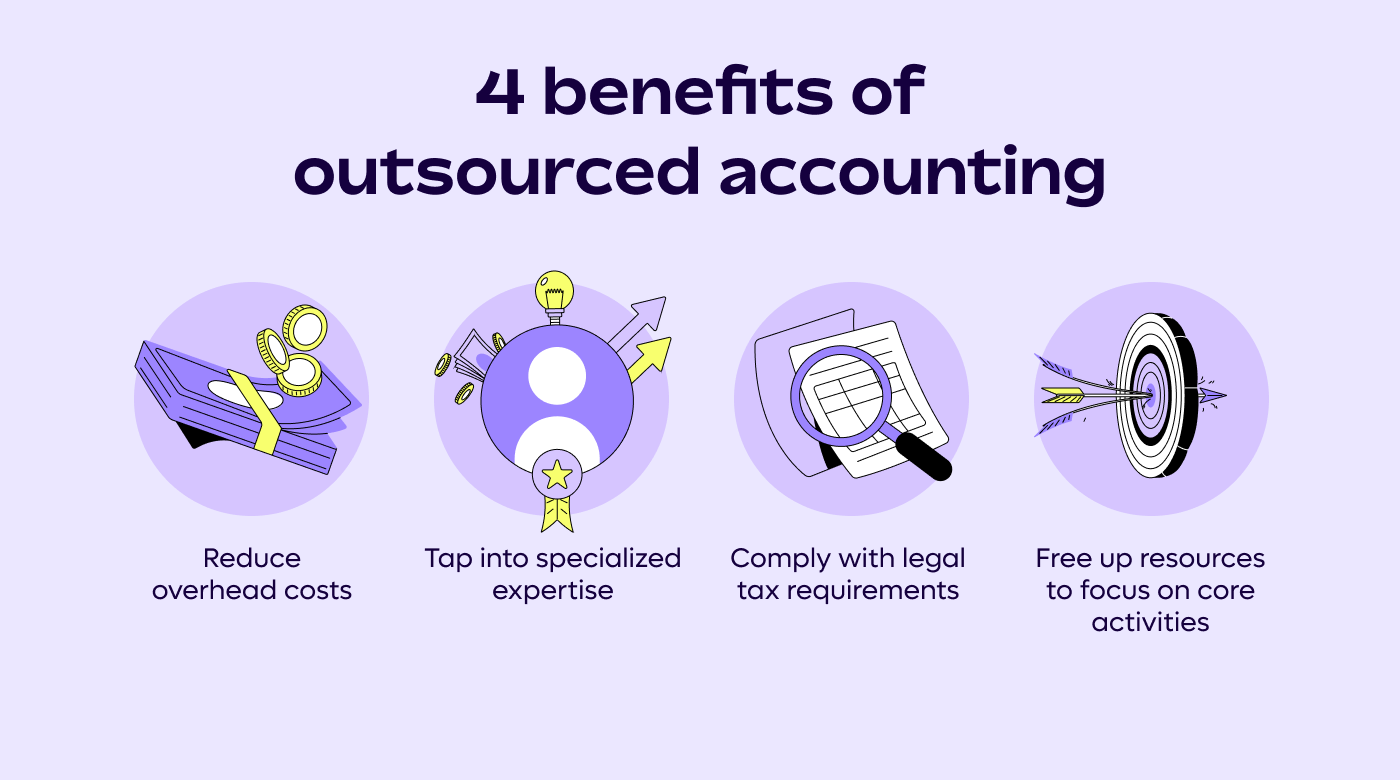
Hiring a full-time accountant or finance team can be expensive for small businesses. Costs include salaries, benefits, training, and software tools.
Outsourcing eliminates many of these expenses. Businesses only pay for the services they use, making it a more flexible and affordable option. This allows small businesses to allocate resources toward growth activities such as marketing, product development, and customer acquisition.
3. More Time to Focus on Core Business Activities
Accounting tasks like invoicing, payroll, and reconciliation can take up valuable time. For small business owners, time is one of the most important resources.
By outsourcing accounting services, owners can focus on:
- Increasing sales
- Improving customer service
- Expanding business operations
- Developing new products or services
This shift from administrative tasks to strategic activities directly supports business growth.
4. Access to Professional Expertise
Outsourced accounting firms employ experienced professionals who understand accounting standards, tax laws, and compliance requirements. This expertise is often difficult for small businesses to maintain in-house.
Benefits include:
- Better financial planning
- Reduced compliance risks
- Updated knowledge of tax regulations
- Improved reporting accuracy
With expert support, small businesses can operate with greater confidence.
5. Better Cash Flow Management
Cash flow is critical for small business survival. Even profitable businesses can face challenges if cash flow is not managed properly.
Outsourced accountants help by:
- Tracking income and expenses
- Monitoring outstanding invoices
- Managing payment cycles
- Forecasting future cash flow
This ensures businesses always have a clear understanding of their financial position.
6. Scalability for Business Growth
As businesses grow, their accounting needs become more complex. Outsourced accounting services offer flexibility to scale up or down based on demand.
For example:
- Increased support during tax season
- Additional services during expansion
- Reduced costs during slow periods
This scalability makes outsourcing ideal for small businesses with changing workloads.
7. Compliance and Tax Support
Tax laws and compliance regulations are constantly evolving. Keeping up with these changes can be difficult for small business owners.
Outsourced accounting professionals ensure:
- Timely tax filings
- Accurate financial documentation
- Compliance with local and federal regulations
- Reduced risk of penalties
This helps businesses stay compliant and avoid unnecessary financial stress.
8. Use of Modern Accounting Technology
Most outsourced accounting providers use cloud-based accounting software and automation tools to streamline processes.
These technologies offer:
- Real-time financial reporting
- Secure data storage
- Automated invoicing and reconciliation
- Easy collaboration between teams
Technology-driven accounting improves efficiency and transparency across financial operations.
9. Reduced Risk of Financial Errors
Manual accounting processes are prone to errors, which can lead to incorrect reporting and financial losses.
Outsourced accounting reduces these risks by:
- Automating repetitive tasks
- Implementing quality checks
- Ensuring standardized workflows
- Maintaining proper documentation
This improves financial reliability and reduces risk exposure.
10. Stronger Business Decision-Making
With accurate and timely financial data, small business owners can make better decisions regarding pricing, investments, and expansion.
Outsourced accounting services provide:
- Clear financial insights
- Monthly and quarterly reports
- Budget tracking
- Performance analysis
These insights help businesses grow strategically rather than reactively.
Common Mistakes Small Businesses Avoid by Outsourcing
By using outsourced accounting services, small businesses can avoid:
- Late tax filings
- Cash flow mismanagement
- Inaccurate bookkeeping
- Poor financial planning
- Compliance issues
Avoiding these mistakes helps businesses stay stable and profitable.
Choosing the Right Outsourced Accounting Partner
Selecting the right provider is crucial for success. Small businesses should look for:
- Industry experience
- Strong data security practices
- Transparent pricing
- Cloud accounting expertise
- Good communication and reporting systems
- Scalable service options
A reliable partner acts as a long-term financial support system for the business.
Conclusion
Outsourced accounting services have become a powerful tool for small business success. They help reduce costs, improve financial accuracy, and allow business owners to focus on growth instead of administrative tasks.
In today’s competitive environment, small businesses need more than just basic bookkeeping—they need strategic financial support. Outsourcing provides access to expert knowledge, advanced technology, and scalable solutions that help businesses stay organized and financially strong.
As we move through 2026, outsourcing accounting is proving to be a key driver of efficiency and success for small businesses across industries. Those who adopt it early gain a clear advantage in managing finances, improving decision-making, and achieving sustainable growth.
- Art
- Causes
- Crafts
- Dance
- Drinks
- Film
- Fitness
- Food
- Jocuri
- Gardening
- Health
- Home
- Literature
- Music
- Networking
- Alte
- Party
- Religion
- Shopping
- Sports
- Theater
- Wellness